
Reviewed · DMZ TOURS
DMZ 2nd Tunnel and Cheorwon Peace Observatory with Admission
The Second Tunnel gives this tour its unusual edge: you can walk into a passage built beneath the border, then visit a mountain observatory overlooking the DMZ and a war-damaged train at Woljeongri Station. Cheorwon’s borderland is also a protected home for cranes and other wildlife.
I like two things in particular: you stay with your private group and vehicle rather than changing to a large tour bus, and the stops connect military history with the area’s present-day ecology. Guides Jun, Moon, and Wendy are among the names associated with the tour, with praise for clear historical explanations and a personal touch.
One consideration is the $245.29 per-person price, especially since lunch is extra at 15,000 KRW per person. It is an eight-hour day, too, so this suits you best if you want a focused history outing rather than a quick photo stop.
- The Second Tunnel reaches to within 300 meters of the Military Demarcation Line, and visitors can explore it to the stated endpoint.
- You enter the civilian-controlled area in the tour vehicle, following a lead vehicle in single file.
- The Peace Observatory’s round-trip monorail ticket is included, saving you the climb to the top of the mountain.
- Woljeongri Station preserves a bombed train wreck, a stark reminder of the Korean War.
- The DMZ’s protected habitat is part of the story, with migratory birds, cranes, and other animals living in an area largely untouched by people for more than 70 years.
Why Cheorwon gives the DMZ a different perspective
The Demilitarized Zone is often approached as a place to look across a border. This tour adds a less familiar angle by taking you to Cheorwon, where underground military infrastructure, wartime losses, and a long-protected natural area sit within the same day’s route.
That combination matters. At the tunnel, you encounter the physical reality of military planning; at the observatory, the border becomes a broad view of land and settlements; at Woljeongri, a damaged train makes the war’s impact tangible. You also hear about how the area has become habitat for wildlife, including migratory birds and cranes.
The route is an eight-hour private outing from Seoul. That gives the stops room to register, but it is not a casual add-on between city sights. I would set aside the day and go because you want to think about the Korean War and division, not simply collect a few border photos.
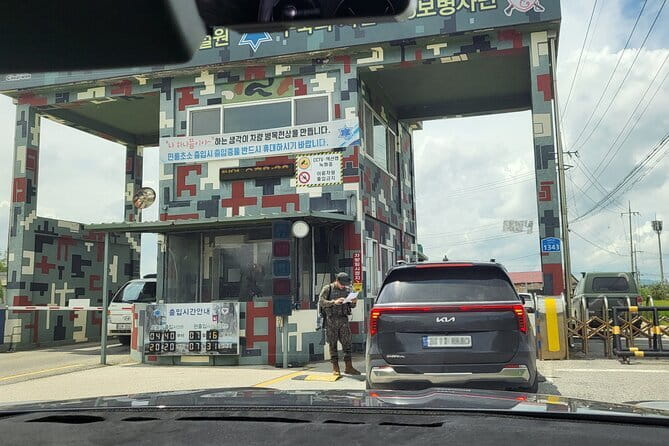
Registration at the Cheorwon Peace Center
Before entering the civilian-controlled area, the group registers the vehicle’s license number and the names of the people on board at the Cheorwon Peace Center. It is a practical first stop, but it also marks a change in the day: access is controlled, and the group follows the designated lead vehicle in single file.
A useful distinction from some other DMZ outings is that you do not switch to a large tourist bus here. The tour includes private transportation, and the group enters in its tour vehicle. That can make the day feel more direct and keeps your group together, though it does not mean you can drive wherever you like. You follow the lead vehicle through the controlled area.
This arrangement is especially appealing if you prefer a private outing to sharing a bus with a large group. The tour is listed as private, so only your party participates. Bottled water and an air-conditioned vehicle are included, small comforts that matter on a full-day excursion.
More DMZ tours from Seoul:
- Best DMZ Tour Korea from Seoul (Red Suspension Bridge Optional)
★ 5.0 · 41,422 reviews - DMZ Tour: 3rd Tunnel, Option(Suspension Bridge, Boat) from Seoul
★ 5.0 · 21,373 reviews - DMZ tour south Korea from Seoul (NK experience hall, defector)
★ 5.0 · 20,599 reviews
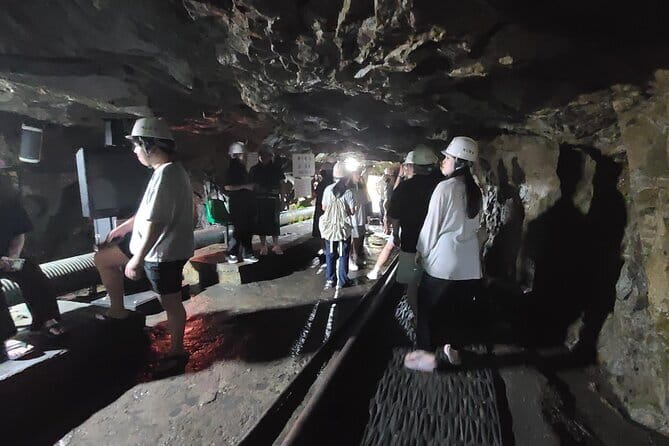
Walking into the Second Tunnel
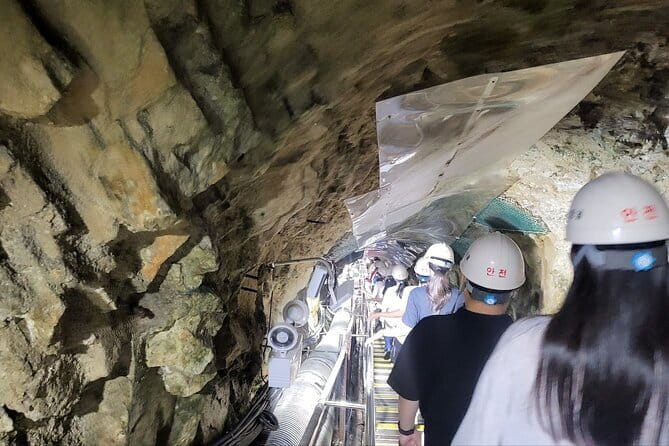
The Second Tunnel was discovered on March 24, 1975, after two soldiers reported hearing explosions while on sentry duty on November 20, 1973. The account gives the tunnel an unsettling beginning: sounds underground led to the discovery of a passage built beneath a heavily guarded border.
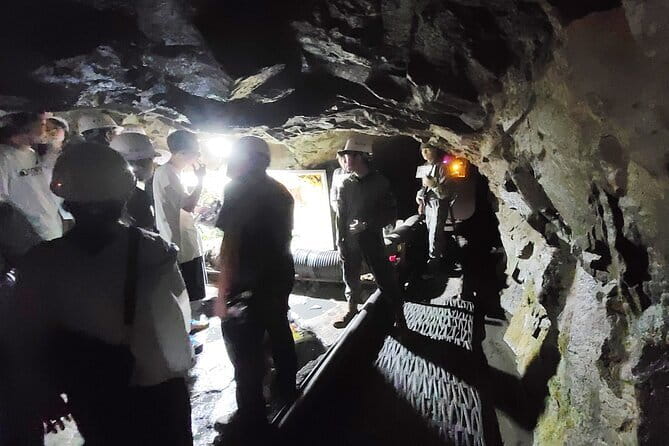
The tunnel is described as twice as long and deep as the Third Tunnel. You can explore it to an endpoint 300 meters from the Military Demarcation Line. That distance puts the site’s purpose into focus. This is not just an underground corridor to admire; it was part of a military effort to move toward the South.
The visit is likely to be the most physically immediate part of the tour, simply because you go inside the tunnel rather than viewing it only from above. The supplied details do not specify the route’s surface, temperature, or physical requirements, so ask the operator if you need those particulars before booking. What is clear is that you should expect a close look at a site tied directly to the military history of the border.
I like that the tunnel visit is paired with broader context rather than left to speak for itself. Guides Jun and Moon are associated with explanations of the Korean War, while Wendy has been praised for keeping the day moving and making the experience personable. Guide assignments can vary, so treat those names as examples rather than a promise of who will lead your tour.
Taking the monorail to the Peace Observatory
At the Cheorwon Peace Observatory, a monorail carries you to the top of the mountain. A round-trip ticket is included in the tour price, and the ride offers a practical way to reach the viewpoint without making the climb on foot.
From the observatory, you can look out over the DMZ and take in the area’s terrain and ecology. The sights described include the Pyeonggang tableland, North Korea’s propaganda town, the fortress of Gung-Ye’s castle town, and Kim Il Sung’s highland. The viewing point also brings the Battle of Bloody Ridge into the story.
The battle’s human cost is presented in blunt figures: 1,250 North Korean soldiers and 1,030 South Korean soldiers died in the fierce fighting. Those numbers give the view a weight that a scenic overlook alone would not have. The tour also connects Cheorwon’s loss of territory to Kim Il Sung, including the account that he cried for three days after losing the land. Treat that as a story presented in the site’s historical interpretation, rather than a detail you can verify from the viewpoint.
The observatory is also a place to consider the DMZ as more than a line on a map. The area has been largely untouched by human activity for more than 70 years and has become habitat for cranes, migratory birds, and other animals. Wildlife sightings are not guaranteed, but the protected ecosystem is a meaningful part of what makes this section of the DMZ distinct.
Seeing the war-damaged train at Woljeongri Station

Woljeongri Station offers a quieter, concrete ending to the route. Behind the station building is the wreck of a train bombed during the Korean War. The train was used by the North Korean army and was bombed by United Nations forces.
The remains are a simple but affecting historical object. Unlike a distant view across the border, the wreck gives you something close and physical to consider: a train that once served a military purpose and was caught up in the fighting. It also makes the tour’s final stop feel different from the observatory. One looks outward across the divided land; the other draws your attention to an object damaged in the war.
If you want every stop to be an elaborate museum visit, this may feel brief. Its value is in the starkness of the remains and in the way they complete a day that has moved from an underground tunnel to the broad view from the mountain.
More Seoul tours and experiences:
- Seoul: DMZ Tour with Optional Suspension Bridge
★ 4.8 · 5,277 reviews - Signature DMZ Tour: Exclusive Defector Talk & Suspension Bridge
★ 5.0 · 4,459 reviews - Thrilling Korean DMZ 3rd Tunnel Tour from Seoul + Red Bridge Rush
★ 5.0 · 3,097 reviews - DMZ Past and Present: Korean Demilitarized Zone Tour from Seoul
★ 5.0 · 2,481 reviews
What the $245.29 price includes
At $245.29 per person, this is not a budget outing. The price includes private transportation in an air-conditioned vehicle, bottled water, DMZ admission, and the round-trip monorail ticket. The private format and the controlled-area access are central to the value: you remain with your own group and do not have to transfer to a group tourist bus.
Lunch is not included. Plan on an additional 15,000 KRW per person for it. The information provided does not specify the meal or where it is served, so check with the operator if you have dietary needs or want to know the lunch arrangements in advance.
For a history-focused day, the price may make sense if you value private transportation and the chance to visit several distinct Cheorwon sites in one trip. It is harder to justify if you mainly want a quick look at the DMZ, or if you are comparing it only by the number of stops. The experience’s strongest point is the connection between those stops: military history, a controlled border area, the observatory, and a landscape protected for decades.
The tour is booked, on average, 11 days in advance. That is a useful planning clue, not a guarantee that a particular date will be available. Free cancellation is offered up to 24 hours before the start time; changes made inside that 24-hour window are not accepted.
Who should choose this tour
I would recommend this outing if you want an educational day and are curious about the human and environmental sides of the DMZ. The tunnel, battle history, North Korean propaganda town, station wreck, and protected habitat give you plenty to consider. It is also described as suitable for children as an educational trip, though the tour information does not give a minimum age or specific child-focused activities.
It is a good fit for people who prefer a private group and direct transport over changing buses. The guides’ historical explanations are part of the experience, and Jun, Moon, and Wendy are names connected with especially warm and informative guiding. Still, your assigned guide may differ.
I would look elsewhere if your priority is the lowest possible price, a short excursion, or a day with no military history. This tour devotes its full eight-hour span to Cheorwon and its border sites. That focus is the point, but it asks for both time and interest.
Should you book the Cheorwon DMZ tour?

Book it if you want a substantial look at the DMZ beyond the most familiar viewpoints. The Second Tunnel and Woljeongri train wreck give the day a direct connection to the Korean War, while the observatory and protected habitat show what this border region is like today. The private vehicle setup and included monorail make the logistics easier to follow.
Skip it if the price is your main concern, or if you want only a brief introduction to the DMZ. For an eight-hour, history-led day with several distinct stops, though, this tour offers a thoughtful way to understand why reunification remains an emotional subject for many Koreans.
FAQ
How long is the tour?
The tour lasts approximately eight hours.
What sites are included?
The route includes the Cheorwon Peace Center, the Second Tunnel, the Cheorwon Peace Observatory, and Woljeongri Station.
Do I have to change to a tourist bus?
No. The group enters the civilian-controlled area in its tour vehicle and follows a lead vehicle in single file.
Is the tour private?
Yes. Only your group participates.
Is admission to the DMZ included?
Yes. The DMZ admission fee is included, along with a round-trip ticket for the observatory monorail.
Is lunch included in the price?
No. Lunch costs an additional 15,000 KRW per person.
How far does the Second Tunnel extend toward the Military Demarcation Line?
The visitor route reaches an endpoint 300 meters from the Military Demarcation Line.
Can I cancel for a full refund?
Yes, if you cancel at least 24 hours before the experience’s start time. Cancellations made less than 24 hours in advance are not refunded.
Latest reviews from Seoul
- From Seoul: Hwacheon Ice Fishing and Lighting Festival Tour★ 4.5 · 4 reviews
- Unique Native Experience : Han River Picnic, Board game, BBQ★ 5.0 · 3 reviews
- You’re Invited to Our Home in Seoul: The Only Cooking Class!★ 5.0 · 8 reviews
- Seoul: Gangneung BTS K-Pop & K-Drama Filming Locations Tour★ 4.6 · 14 reviews
- Yun Korean Cooking Class in Seoul★ 5.0 · 6 reviews
- 2-Hour Private Kayaking and Paddleboarding Experience in Hanriver★ 5.0 · 3 reviews
- Day Trip to Yongin Daejanggeum and Korean Folk Village from Seoul★ 4.0 · 9 reviews
- K-Pop Making Class with a Producer!★ 5.0 · 3 reviews
DMZ Tours, compared.
Best DMZ Tour Korea from Seoul (Red Suspension Bridge Optional)
Read our review →
DMZ Tour: 3rd Tunnel, Option(Suspension Bridge, Boat) from Seoul
Read our review →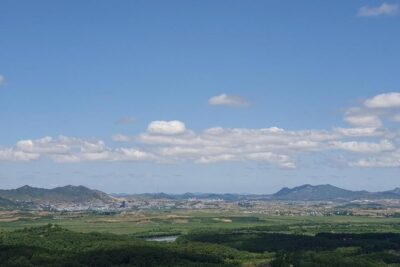
DMZ tour south Korea from Seoul (NK experience hall, defector)
Read our review →

Signature DMZ Tour: Exclusive Defector Talk & Suspension Bridge
Read our review →
Thrilling Korean DMZ 3rd Tunnel Tour from Seoul + Red Bridge Rush
Read our review →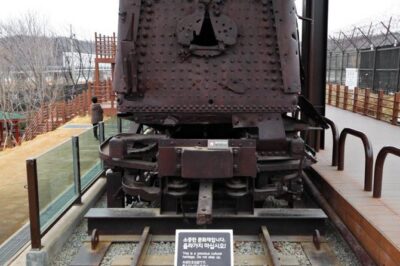
DMZ Past and Present: Korean Demilitarized Zone Tour from Seoul
Read our review →
Ultimate Korea DMZ Tour from Seoul (Gondola & Suspension Bridge)
Read our review →Browse the lists this tour appears in