
Reviewed · SEOUL WALKING TOURS
Seoul History Walking Tour
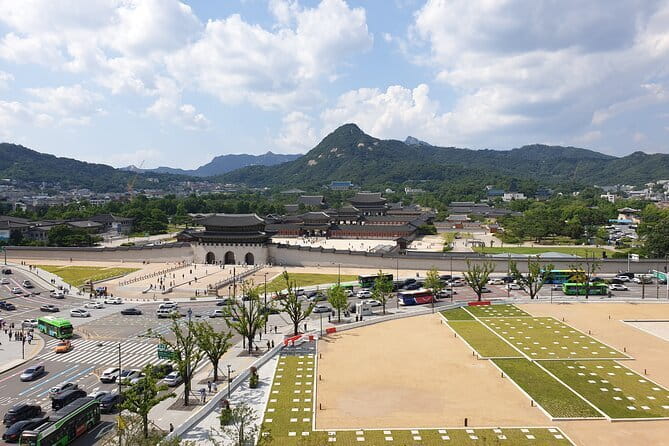
Seoul’s past is not tucked away in a single palace or museum. On this walk, the city’s story unfolds across streets, plazas, memorials, a stream, and a Buddhist temple, linking 630 years of rule, upheaval, and change. You move from the Joseon Dynasty toward a modern democracy, with stops that put famous figures and public events in their actual city setting.
I like two things in particular: the route connects big national events to places you can see and walk through, and the small group size, capped at eight, leaves room to ask questions. The afternoon also brings you to both major monuments and less obvious sites, including the former Russian Legation and the first school for girls.
The main consideration is time on your feet. At about three and a half hours, this is a substantial walk, and bottled water is not included. Bring your own, especially if you prefer to have water with you throughout the afternoon.
At a glance
- A 15-stop route: Begin at Bosingak and finish at Jogyesa Temple, taking in landmarks that span royal, colonial, and democratic history.
- A small group: The tour has a maximum of eight participants, a useful size for hearing the guide and asking questions.
- History in the streets: See where public protest, royal flight, women’s education, and national memory connect to Seoul’s center.
- An afternoon departure: The tour starts at 2:30 pm and lasts about three and a half hours.
- Traditional snacks included: You also receive an informative memento; bottled water is extra.
- A modest price for a guided overview: At $26.60 per person, the value rests on the breadth of the route and the guide’s explanations, not on paid admission.
Seoul’s history, told one city block at a time
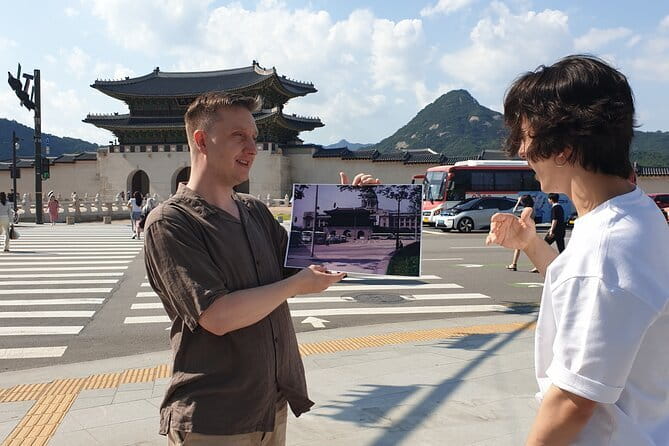
The tour’s strength is its range. Rather than spending the whole afternoon inside one palace, you cross different parts of the historic center and see how Seoul’s public spaces carry layers of meaning. The route moves through Joseon-era memories, the pressure of foreign powers, Korea’s fight for independence, and the later struggle for democracy.
That breadth makes the walk a good first orientation. You’ll meet major figures such as King Sejong and Admiral Yi Sun-sin, then consider how their stories sit alongside more recent protests and political change. The guide is Australian, and the tour is designed around explanation and questions rather than simply pointing out buildings.
The supplied comments about the guide named Eric are especially useful if he leads your departure. One participant described the information as helpful for the rest of a Korea visit, while another praised the guide’s willingness to answer questions. The guide may vary, so don’t assume Eric will lead every tour, but the format appears well suited to curious visitors who want context as they walk.
More walking tours in Seoul:
- Seoul moonlight walking tour with local historian
★ 5.0 · 940 reviews - Seoul: Nighttime Hidden Gems Walking Tour
★ 5.0 · 775 reviews - Seoul: Evening Dark History, Folklore & Ghost Story Walking Tour
★ 5.0 · 593 reviews
Bosingak and Cheonggyecheon: bells, water, and daily life
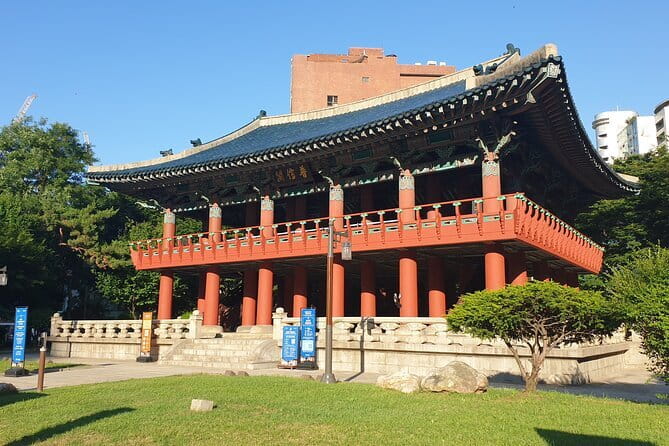
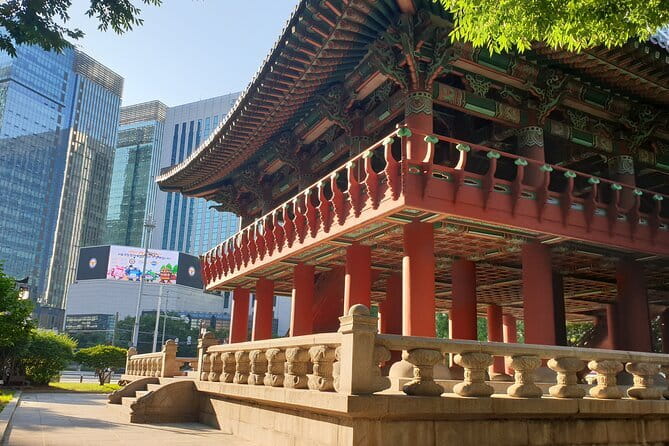
You meet at Bosingak Bell Pavilion, where the first question sets the tone: why did Seoul’s city bells ring 28 times at night and 33 times in the morning? The stop lasts about 15 minutes. The point is not just to admire a bell pavilion, but to start thinking about how public rhythms shaped life in the old city. Your guide supplies the historical explanation.
From there, the walk spends about 40 minutes at Cheonggyecheon Stream, the longest single stop. The stream provides a natural thread through the tour’s larger history: what role did it play during the Joseon Dynasty, the Korean War, and modern times? That question gives the guide room to connect changing city life across very different eras.
This is a valuable early stop because it turns history into something tied to a real urban feature, rather than a list of kings and dates. It also takes up a meaningful share of the tour, so expect more discussion here than at the brief architectural and plaza stops that follow.
City Hall and Seoul Plaza: a modern capital on display
At Seoul City Hall, you have about five minutes to consider the building’s architecture, inside and out. This is a short pause, not a full visit, so think of it as a quick look at how the present-day city presents itself.
The nearby Seoul Plaza gets about 10 minutes. Its guiding question is how the square reflects the hearts of modern citizens. That framing shifts attention from architecture to public life: a city plaza can be a civic stage, and the tour uses it to introduce Seoul as more than a former royal capital.
These stops help keep the route balanced. After the stream’s long historical span, you get a look at the institutions and public spaces of modern Seoul before turning back toward the older political story. If you’re hoping for an extended indoor visit at City Hall, this schedule does not promise one.
Jeongdong and Deoksugung: views and a curious local saying
At Jeongdong Observatory, the group spends about 10 minutes looking out over the palace and cityscape. The view is an opportunity to take in how much of the surrounding city is visible from one perch. It offers a change of pace from street-level interpretation, though the stop is brief.
Then comes Deoksugung Doldam-gil, the stone-wall road beside the palace. The tour asks why a Korean saying links walking along this wall with your spouse to eventual divorce. It is an unusual bit of local lore amid the weightier political history, and a reminder that a city’s stories include jokes and sayings as well as turning points.
Together, these stops offer a useful pause before the tour turns to foreign pressure and the loss of Korean independence. You get a view, a local story, and a hint of the palace setting without spending the afternoon on a single monument.
More history tours in Seoul:
- Hanbok Photoshoot and History Tour at Gyeongbokgung Palace
★ 5.0 · 276 reviews - From Seoul: Dae Jang Geum Park Historic K-Drama Set Tour
★ 4.9 · 143 reviews - Seoul: City Highlights and Historical Experience No Shopping
★ 5.0 · 74 reviews - Street photoshoot and Seoul Hidden gem History Walking Tour
★ 5.0 · 68 reviews
Jungmyeongjeon and Ewha: independence and women’s education
At Jungmyeongjeon Hall, the guide explains how Imperial Japan forced Korea to surrender its independence. The stop lasts about 10 minutes, but the subject is central to understanding the pressures that shaped modern Korea. The route places this history at a specific site, giving a difficult political story a physical address.
The next stop, Ewha Museum, turns to social change. The question here is how Korea’s first school for girls helped change views of women’s roles. You spend about 10 minutes at the stop, enough for the guide to introduce the school’s importance within a broader account of Korean society.
These two stops work well together. One looks at national sovereignty under foreign pressure; the other asks how education challenged limits within Korean society. The tour does not treat history as only the story of rulers and generals, and that wider lens is one of its more worthwhile features.
The former Russian Legation: a monarch’s escape
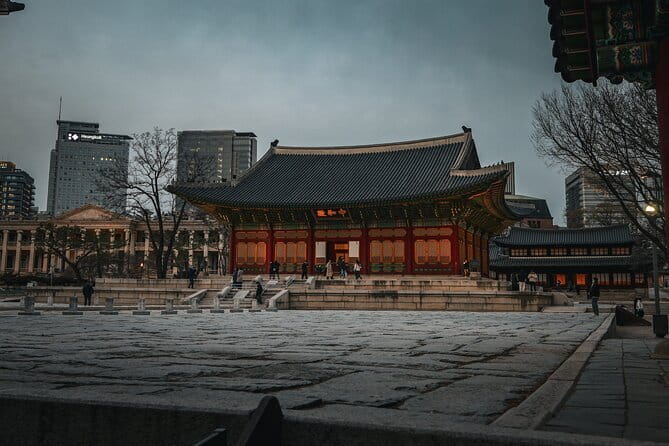
The Former Russian Legation gets about 20 minutes, making it another of the route’s longer pauses. Here you hear why Korea’s penultimate monarch fled his palace in the middle of the night and stayed at the legation for a year.
The stop offers a close-up of a moment when Korea’s royal leadership faced intense outside pressure. It also gives the guide room to explain the politics behind an episode that can sound startling when reduced to a single sentence. If you’re drawn to the tangled shifts of power around the end of the Joseon era, this is likely to be one of the more memorable parts of the walk.
Yi Sun-sin and Sejong: two leaders in the public square
The Statue of Admiral Yi Sun-sin is a 10-minute stop focused on how the general saved Korea and changed the course of world history. The tour even signals that the claim should not be exaggerated. That is a welcome cue: you can expect an account of Yi’s importance, but also a guide who is meant to put the heroic language in proportion.
A short walk brings you to the Statue of Sejong the Great, also allotted about 10 minutes. The question is why Sejong is considered the greatest king of the Joseon Dynasty. Together, these statues give you a chance to compare two celebrated figures: a military leader and a monarch remembered for his rule.
The statues are public monuments, not museum galleries, so the value lies in the stories attached to them and their place in the city. If you already know these names, the guide’s explanations can add context; if you don’t, this is an efficient introduction to two figures who remain central to Korean public memory.
Gwanghwamun Square: protest and democratic change

At Gwanghwamun Square, you spend about 25 minutes on a question that reaches into modern Korea: how many protests does it take to change a democracy? The stop is the tour’s longest after Cheonggyecheon, and it brings the story of political struggle into a prominent civic space.
The tour’s overview includes South Korea’s struggle for democracy against dictatorship. Here, that history becomes less abstract. The square helps frame protest as part of public life and gives the guide a place to discuss how citizens push for political change.
This section may be especially meaningful if you want to understand contemporary Korea beyond its royal past. It also gives the afternoon a strong arc: after hearing about lost independence and changing rulers, you consider the role ordinary citizens have played in shaping modern government.
Rooftop views, a long-running protest, and Jogyesa
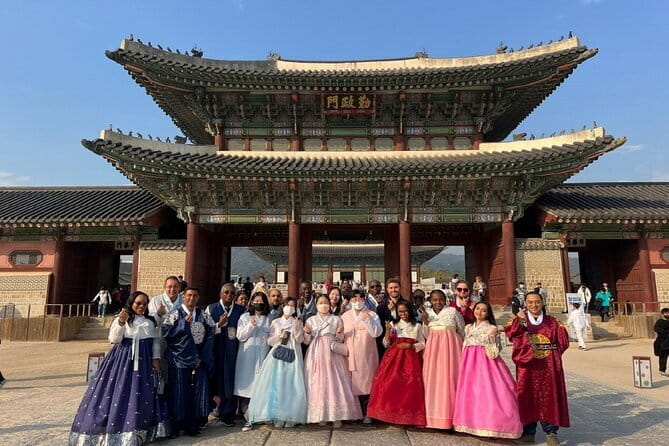
The National Museum of Korean Contemporary History offers about 15 minutes, including time to see how much history you can take in from its rooftop. The stop connects the tour’s street-level route to a broader view of the city and its recent past.
Next is the Embassy of Japan, where the guide explains why the site is associated with the world’s longest-running protest. You spend about 10 minutes here. It is a direct reminder that the history discussed on the walk is not only sealed in the past; some political issues continue to be expressed in public.
The tour finishes at Jogyesa Temple, after about 10 minutes focused on how the ringing of bells connects people with the universe. It is a thoughtful final stop, echoing the opening visit to Bosingak while shifting the meaning of bells from civic timekeeping to spiritual reflection. The tour ends directly up the street from where it began, and the guide can help you find your way.
Is $26.60 good value?
At $26.60 per person, I see the value in the quantity and variety of interpretation. You get roughly three and a half hours with a guide, 15 stops, traditional Korean snacks, and an informative memento. There are no admission costs listed for the stops, so you are mainly paying for the route, the guide’s historical framing, and the convenience of having the city’s stories connected for you.
The maximum group size of eight matters here. A compact group can make it easier to hear explanations and ask questions than a much larger walking tour. That is particularly useful on a route that moves quickly between subjects, from royal history to modern protest.
Group discounts are available, and the ticket is mobile. The tour is booked an average of 81 days in advance, so planning ahead may be wise if your dates are fixed. You can cancel for a full refund up to 24 hours before the start time; changes or cancellations inside that window are not accepted.
Who should book this walk?
I’d choose this tour if you want a strong first look at central Seoul and prefer history explained on location. It suits visitors interested in both the Joseon era and modern political change, and it is particularly useful if you want a guide who can connect monuments, public spaces, and events into one account.
It may be less suitable if you want long visits inside buildings or prefer a slow, unstructured afternoon. Several stops last only five to 10 minutes, while a few receive more time. You’ll also want to be comfortable walking for about three and a half hours and bring your own water.
Book it if you value a compact, guided overview that moves beyond palace highlights and includes democracy, women’s education, and public protest. If your main goal is to explore one site at length, choose a focused visit instead. For an accessible introduction to the city’s political and cultural history, this route offers a lot for its price.
FAQ
How long is the Seoul History Walking Tour?
The tour lasts about three hours and 30 minutes.
What time does the tour start?
It starts at 2:30 pm.
Where does the tour begin?
The meeting point is Bosingak Bell Pavilion, at 54 Jong-ro in Seoul’s Jongno District.
Where does the tour end?
It ends at Jogyesa Temple, directly up the street from the starting point. The guide can assist with directions.
How many people can join the tour?
The group has a maximum of eight participants.
Are snacks and water included?
Traditional Korean snacks and an informative memento are included. Bottled water is not included.
Can I cancel for a refund?
You can cancel at least 24 hours before the experience starts for a full refund. Cancellations or changes made less than 24 hours before the start time are not accepted.
Latest reviews from Seoul
- From Seoul: Hwacheon Ice Fishing and Lighting Festival Tour★ 4.5 · 4 reviews
- Unique Native Experience : Han River Picnic, Board game, BBQ★ 5.0 · 3 reviews
- You’re Invited to Our Home in Seoul: The Only Cooking Class!★ 5.0 · 8 reviews
- Seoul: Gangneung BTS K-Pop & K-Drama Filming Locations Tour★ 4.6 · 14 reviews
- Yun Korean Cooking Class in Seoul★ 5.0 · 6 reviews
- 2-Hour Private Kayaking and Paddleboarding Experience in Hanriver★ 5.0 · 3 reviews
- Day Trip to Yongin Daejanggeum and Korean Folk Village from Seoul★ 4.0 · 9 reviews
- K-Pop Making Class with a Producer!★ 5.0 · 3 reviews
Seoul Walking Tours, compared.
Seoul moonlight walking tour with local historian
Read our review →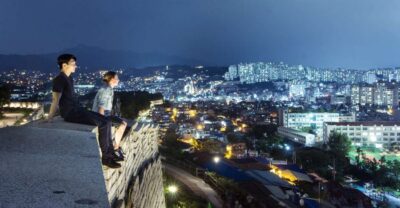
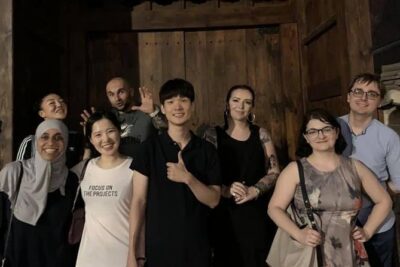
Evening Dark History, Folklore & Ghost Story Walking Tour
Read our review →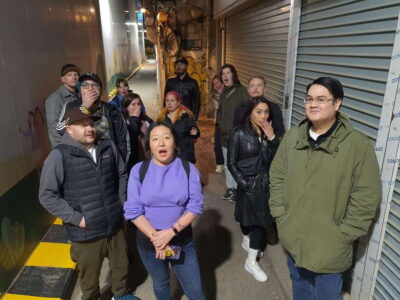
Dark Side of the City and Ghost Stories Walking Tour
Read our review →
Gangnam Walking Tour on Youth and Society in Seoul Korea
Read our review →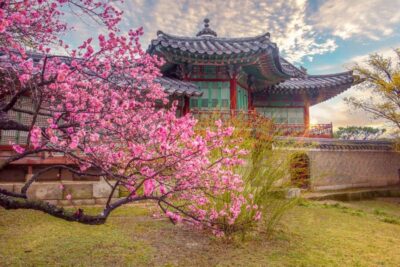
Gyeongbok Palace and Bukchon Hanok Walking Tour
Read our review →
Highlights & Hidden Gems With Locals: Best of Seoul Private Walking Tour
Read our review →
Street photoshoot and Seoul Hidden gem History Walking Tour
Read our review →Browse the lists this tour appears in