
Reviewed · SEOUL PRIVATE TOURS
Seoul: War Memorial of Korea Private Guided Museum Tour
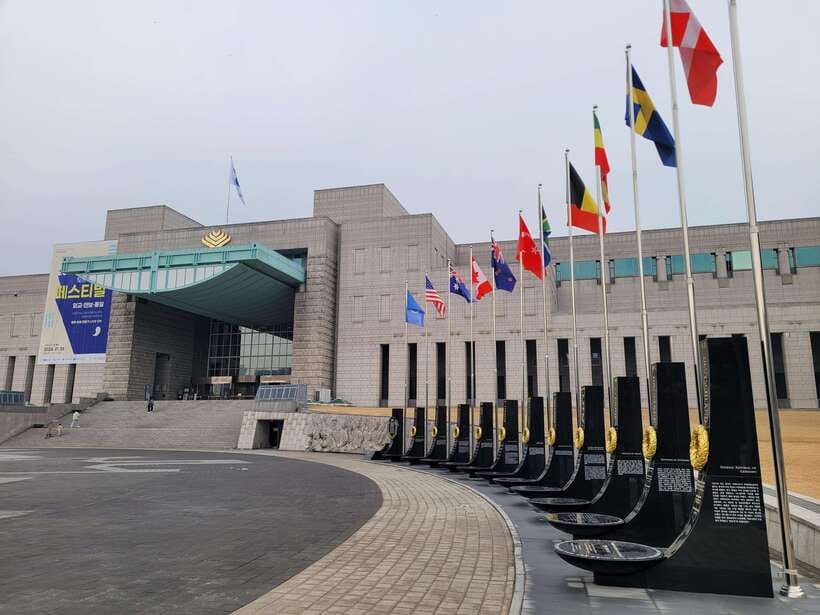
The Korean War helps explain why the peninsula remains divided, and this two-hour tour tackles that story inside Seoul’s War Memorial of Korea. Rather than simply walking past displays, you’ll hear how the conflict developed and consider what the museum’s presentation includes, and what it leaves out.
I like two things here: the private group is capped at five, so you can ask questions without competing with a crowd, and the guides bring experience in history and peace studies to a subject that needs more than a battlefield timeline. One consideration: two hours can feel tight for such a large museum and a complex history.
At a glance
- Korean War Rooms I–III: The tour focuses on the memorial’s main galleries about the war.
- A civil and international conflict: Your guide frames the Korean War from more than one point of view.
- A small private group: The price covers up to five people, with only your group on the tour.
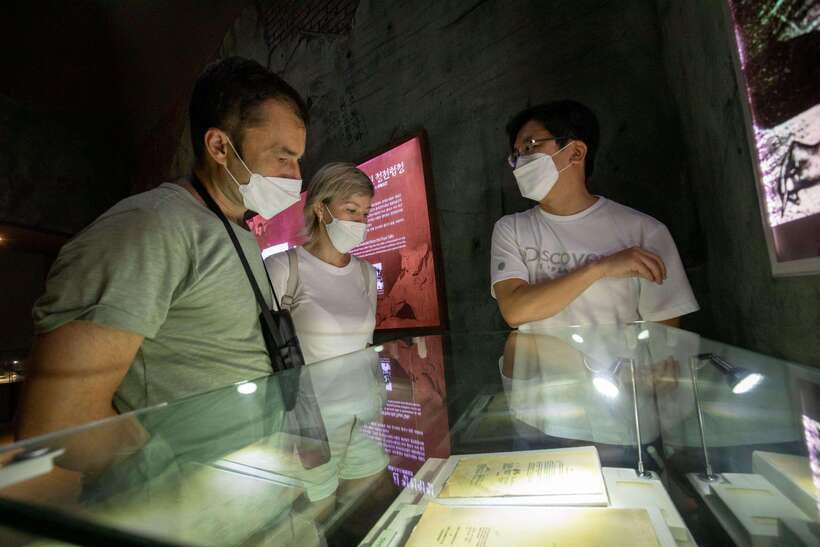
- Extra material: Guides bring pictures and copies of documents to add context to the displays.
- A useful DMZ primer: The history helps prepare you for a DMZ visit, though the tour itself takes place at the memorial.
- Meet at the Statue of Brothers: Find your guide beneath the statue near the south-west corner of the outdoor exhibits.
Why the Korean War deserves two hours
The Korean War lasted from 1950 to 1953, but its effects reach well beyond those dates. It shaped the division of the peninsula and remains central to understanding modern North and South Korea. If you plan to visit the DMZ, this museum tour offers useful historical grounding before you see the border’s present-day realities.
The guide’s approach is especially relevant here. The tour treats the war as both a civil conflict and an international one, inviting you to look beyond a simple account of armies and battles. You’ll hear about events from different sides of the peninsula and consider how the memorial tells the story.
That does not mean every question can be settled in two hours. The subject is vast, and the museum contains more than one tour can cover. But a focused route through the Korean War Rooms gives you a framework for understanding the displays instead of trying to assemble the story from labels as you go.
More private tours in Seoul:
- Private DMZ Tour (No Shopping): 3rd Tunnel & Suspension Bridge
★ 5.0 · 607 reviews - Seoul City Private Full-Day Tour Including Lunch
★ 5.0 · 469 reviews - Private DMZ the 3rd Tunnel Tour from Seoul (optional Red Bridge)
★ 5.0 · 429 reviews
Meeting beneath the Statue of Brothers
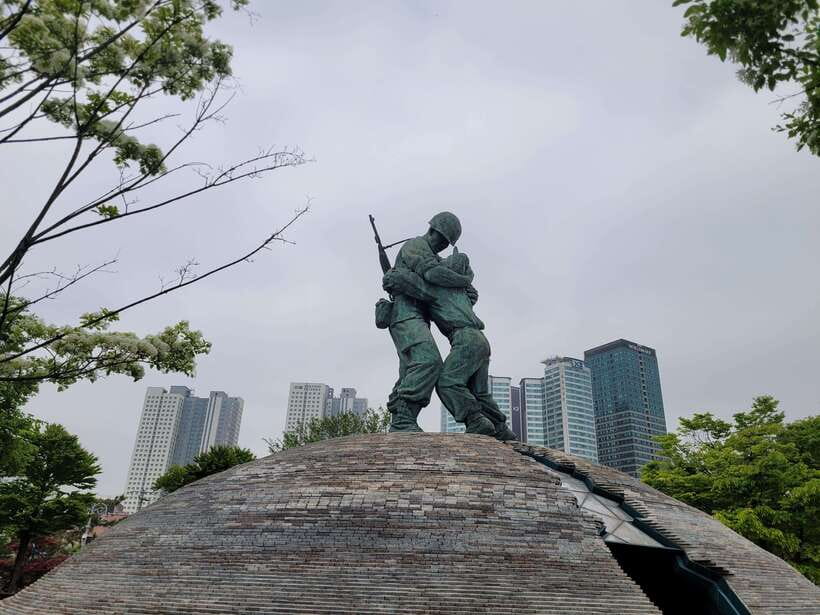
The meeting point is beneath the Statue of Brothers, in the south-west corner of the War Memorial’s exterior exhibit area. The statue is easy to find from Exit 12 of Samgakji Station, served by Subway Lines 4 and 6. Your guide waits with a sign reading Korean War Memorial Guided Tour by Gangwon Peace Tours.
Arriving at the right corner matters because the memorial grounds are extensive. Allow yourself enough time to reach the outdoor exhibit area and locate the statue, rather than aiming only for the museum entrance. The tour begins outdoors, then moves inside for the two-hour walking visit.
The itinerary ends at the War Memorial. You can continue exploring on your own afterward, but the guided portion is built around the Korean War Rooms I–III rather than a full tour of every part of the institution.
Inside Korean War Rooms I–III
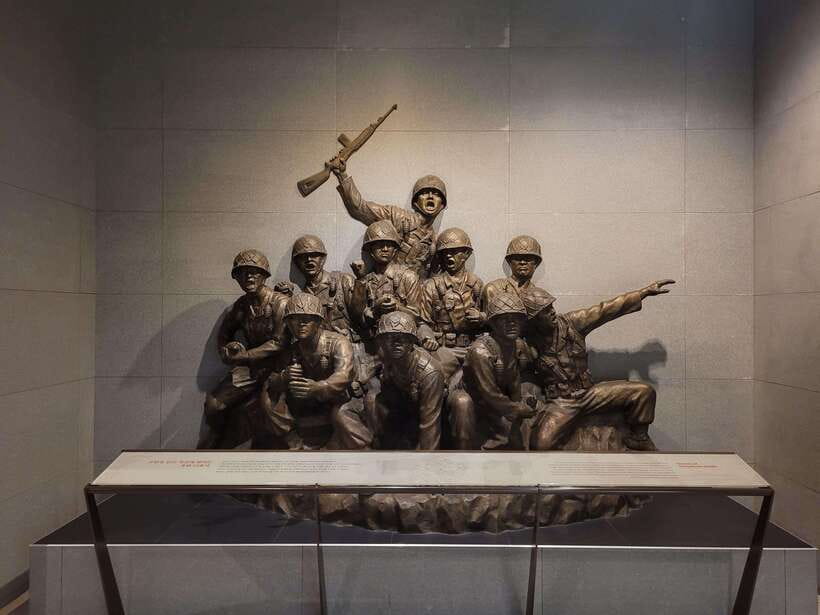
These three rooms are the core of the experience. Your guide leads you through the museum’s presentation of the war, helping connect its events and political context. That guidance is valuable in a subject where dates, alliances, and changing front lines can quickly become hard to keep straight.
The tour also looks at how the memorial frames the conflict. The guides aim to bring out details and perspectives that may not be immediately apparent from the exhibition alone. They use supplementary pictures and copies of documents to support that discussion. The supplied information does not specify which documents or images are used, so the exact material may vary.
The emphasis is not only on military history. Guides have backgrounds in Korean history and politics, peace activism and studies, and DMZ tours. That mix can help you think about the war’s social and political effects, as well as the military events that dominate many displays.
You should expect a serious subject, presented in an accessible walking format. The tour’s reviews praise guides for clear explanations, careful structure, and thoughtful answers to follow-up questions. Kichan Lee is named by several participants; one review also refers to a guide as T. The guide assigned to your date may differ.
A balanced account, with room for questions
A major strength of this experience is its stated effort to present the Korean War from a neutral and balanced perspective. That matters at a memorial, where a museum’s choices about what to show, emphasize, or omit can shape how you understand the conflict. The guide adds another layer by discussing both sides and the broader context.
Several people who took the tour describe the guides as objective and especially strong on the war’s social dimensions. That is useful if you want more than a sequence of campaigns and political decisions. You can ask questions as you go, and guides are described as willing to respond in detail.
Still, balance is an approach, not a promise that every point of disagreement will be resolved. The tour gives you a guided interpretation of a complex history, not an exhaustive academic account. If you have a particular historical question, bring it along and ask; a private group makes that exchange easier.
The museum itself remains part of the experience. Your guide can add context to its displays, but the walk is still shaped by what the memorial exhibits and the time available. The tour’s attention to the museum’s framing is one reason it may be more rewarding than simply browsing alone.
More museum visits in Seoul:
- DMZ Tour + The War Memorial of Korea Museum
★ 5.0 · 28 reviews - Color Pool Museum
★ 4.0 · 22 reviews - SEOUL: Gugak – Korean Traditional Music Museum&Concert Tour
★ 4.7 · 17 reviews - Gyeongju UNESCO Sites Tour by KTX train; The Museum Without walls
★ 4.5 · 11 reviews
Why the small group makes a difference
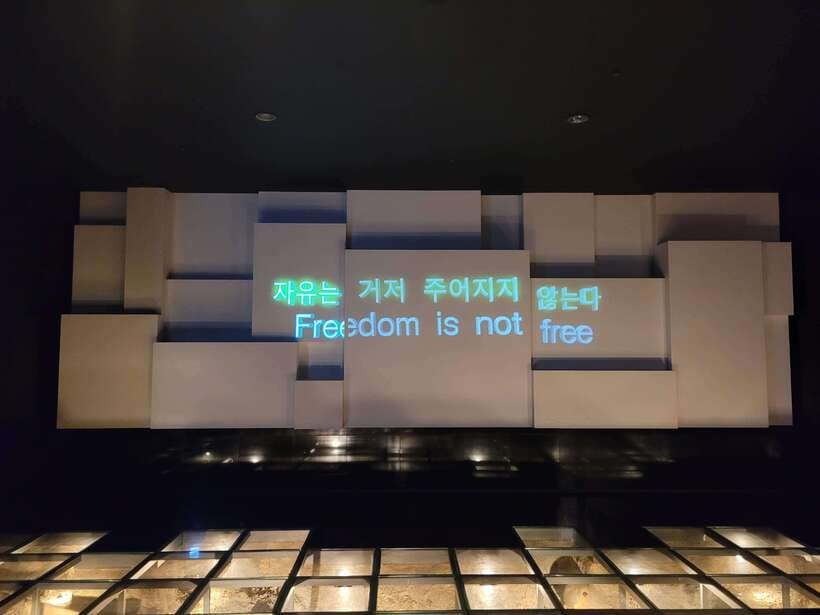
This is a private tour for one group of up to five people. The listed price is $100 per group, not per person. For two people, that works out to $50 each; for five, it comes to $20 each. The value improves as you fill the group, but even a pair may find the added interpretation worthwhile if Korean history is a priority.
The private format also gives you space to ask questions and follow the guide’s explanations at a human pace. You are not sharing the guide with a large mixed group, and the visit can stay focused on the Korean War rather than broad museum coverage.
The trade-off is that this is a short, concentrated tour. One participant felt the subject could have used another hour, and that is easy to understand: the war’s origins, international involvement, social effects, and lasting division are a lot to handle in 120 minutes. Treat the tour as a strong introduction, not the last word.
How it fits before a DMZ visit
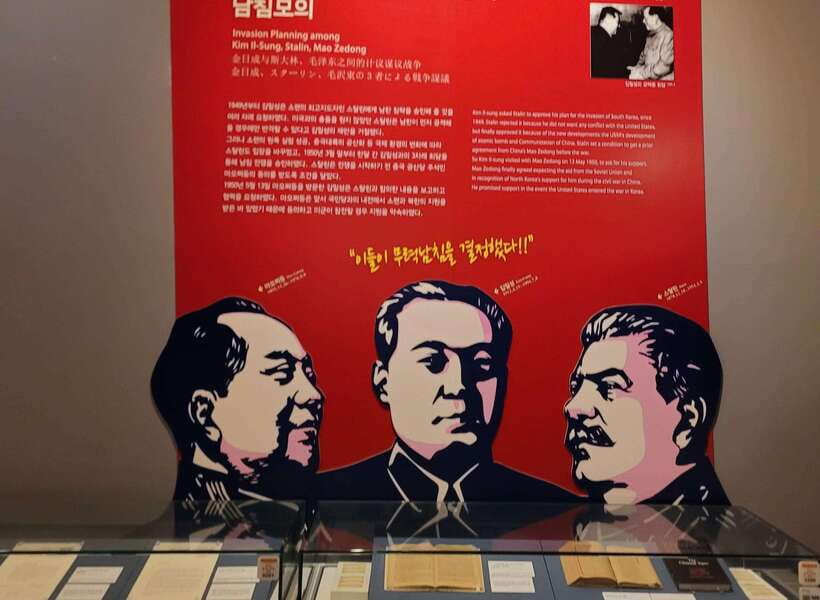
The Korean War is the necessary background for understanding the division of the peninsula. A visit to the memorial first can help you place the DMZ in a longer story, rather than seeing it only as a present-day border. The tour is described as a prerequisite in the sense that it is useful preparation, but there is no indication that it is a formal requirement for joining a DMZ tour.
If your Seoul schedule includes both experiences, this museum visit can give the later trip more meaning. You’ll have already heard a guided account of the war and its impact, and you can carry that context with you when considering the peninsula’s ongoing division.
The two-hour format also makes it a manageable addition to a city itinerary. It is focused enough to fit into a morning or afternoon, while still giving you a more informed starting point for further reading or a later DMZ visit.
Practical details before you book
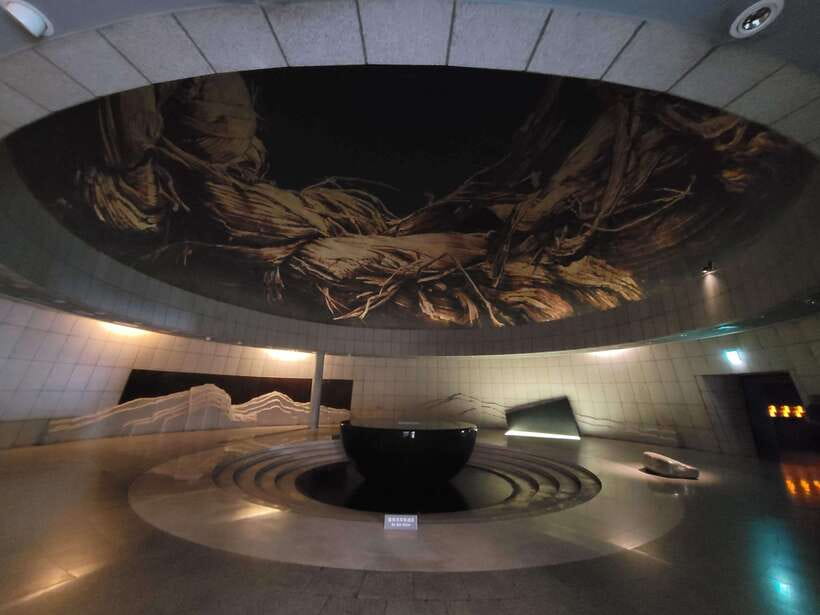
The tour lasts two hours and is conducted in English. It includes a guide and a walking tour; food and drink are not included. Wear comfortable footwear for moving through the museum, and plan to meet at the Statue of Brothers rather than assuming the guide will meet you inside.
The activity is listed as wheelchair accessible. It is not suitable for people with visual or hearing impairments, according to the tour information. Alcohol and drugs are not allowed.
You can reserve without paying immediately, and cancellation up to 24 hours before the tour qualifies for a full refund. Starting times depend on availability, so check the schedule that fits your plans.
Who should book this tour?
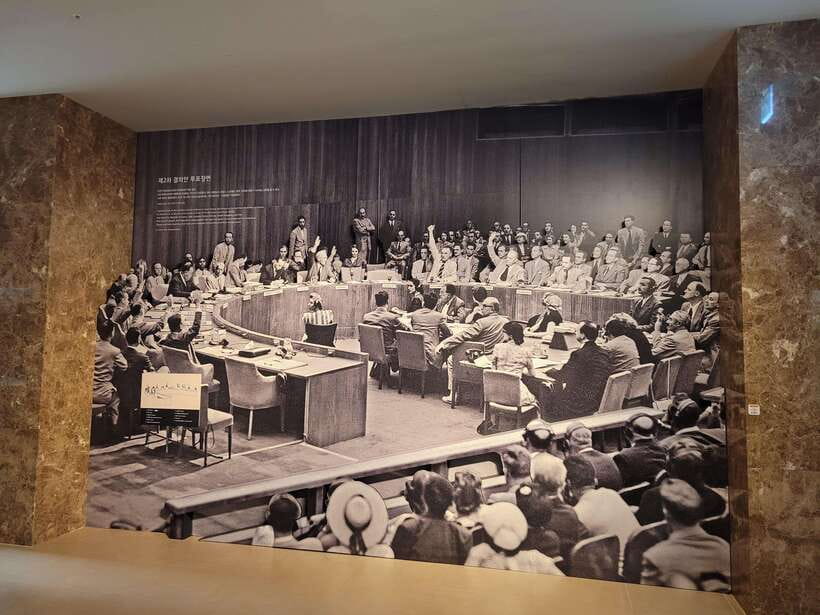
I’d choose this tour if you want to understand the history behind modern Korea, especially if you plan to visit the DMZ. It is also a good fit if you prefer asking questions and hearing a guide connect museum displays to wider political and social context.
The strongest reasons to book are the private group size, the guides’ backgrounds in Korean history and peace studies, and the chance to hear a more considered account than a self-guided walk may provide. The favorable feedback focuses most on clear explanations, balanced treatment, engaging delivery, and the ability to answer questions.
You may want to skip it if you have only a short museum visit in mind and prefer to explore independently. And if you want a detailed treatment of every aspect of the war, two hours will feel like an introduction. For most visitors with a serious interest in Korea’s modern history, though, it is a worthwhile way to make the memorial’s central galleries more legible.
FAQ
How long is the tour?
The guided walking tour lasts two hours.
How much does the tour cost?
The price is $100 per private group of up to five people.
What language is the tour in?
The tour is conducted in English.
Where is the meeting point?
Meet beneath the Statue of Brothers in the south-west corner of the War Memorial of Korea’s exterior exhibit area.
How do I get to the meeting point?
The Statue of Brothers is easy to find from Exit 12 of Samgakji Station on Subway Lines 4 and 6.
Which museum areas does the tour cover?
The tour focuses on Korean War Rooms I–III at the War Memorial of Korea.
Is the tour private?
Yes. It is a private group tour for up to five people.
Is the tour wheelchair accessible?
Yes, the activity is listed as wheelchair accessible.
What is included in the price?
The price includes a tour guide and a walking tour. Food and drink are not included.
Latest reviews from Seoul
- From Seoul: Hwacheon Ice Fishing and Lighting Festival Tour★ 4.5 · 4 reviews
- Unique Native Experience : Han River Picnic, Board game, BBQ★ 5.0 · 3 reviews
- You’re Invited to Our Home in Seoul: The Only Cooking Class!★ 5.0 · 8 reviews
- Seoul: Gangneung BTS K-Pop & K-Drama Filming Locations Tour★ 4.6 · 14 reviews
- 2-Hour Private Kayaking and Paddleboarding Experience in Hanriver★ 5.0 · 3 reviews
- Yun Korean Cooking Class in Seoul★ 5.0 · 6 reviews
- Day Trip to Yongin Daejanggeum and Korean Folk Village from Seoul★ 4.0 · 9 reviews
- K-Pop Making Class with a Producer!★ 5.0 · 3 reviews
Seoul Private Tours, compared.
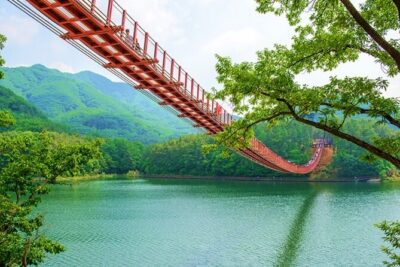
Private DMZ Tour (No Shopping): 3rd Tunnel & Suspension Bridge
Read our review →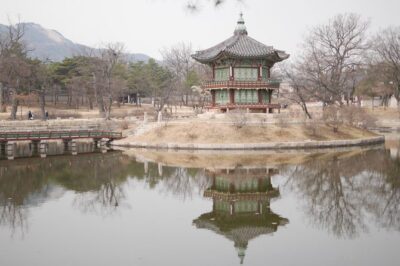
Seoul City Private Full-Day Tour Including Lunch
Read our review →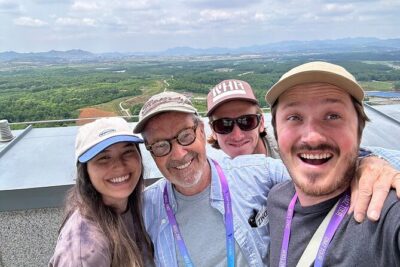
Private DMZ the 3rd Tunnel Tour from Seoul (optional Red Bridge)
Read our review →
Seoul Highlights & Hidden Gems Tours by Locals: Private + Custom
Read our review →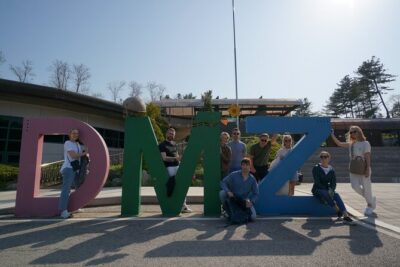
Premium Private DMZ Tour & (Suspension Bridge or N-Tower) include lunch
Read our review →
Flexible Private Guided Tour in Seoul (Optional Incheon Layover)
Read our review →

Full-day Customizable Private Seoul Highlight Tour
Read our review →Browse the lists this tour appears in