Reviewed · SEOUL TOURS
Discover Eastern Korea in 4days: All-Inclusive Experience
Busan’s seafood counters, Gyeongju’s royal tombs, a traditional village in Andong, and Seoraksan’s rocky peaks make this a four-day route with real range. You cover a lot of Eastern Korea without having to arrange each hotel, meal, admission, and long transfer yourself.
I like the mix of major historical sites and everyday food experiences, especially Jagalchi Market and the traditional dessert-making session. I also like that three hotel nights, most meals, entrance fees, and an English-speaking guide are included in the $1,200 price.
The main caution is the transport plan: the tour begins at Seoul Station, but the first listed sightseeing stop is in Busan, and one past participant had to take the KTX independently. Confirm exactly how the first-day journey works before paying, and remember that your first pickup and final hotel drop-off are not included.
At a glance: four days, five regions

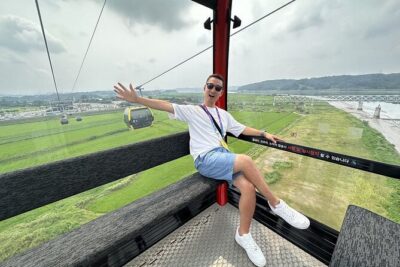
- Busan opens with seafood and sea views: Walk through Jagalchi Market, then ride the Songdo Sea Cable Car above the coast.
- Gyeongju gives the tour its historical core: Bulguksa Temple, Daereungwon’s royal tombs, the national museum, and Cheomseongdae Observatory fill day two.
- Andong adds living tradition: Make Korean desserts, then visit Hahoe Folk Village, a UNESCO World Heritage Site with more than 600 years of history.
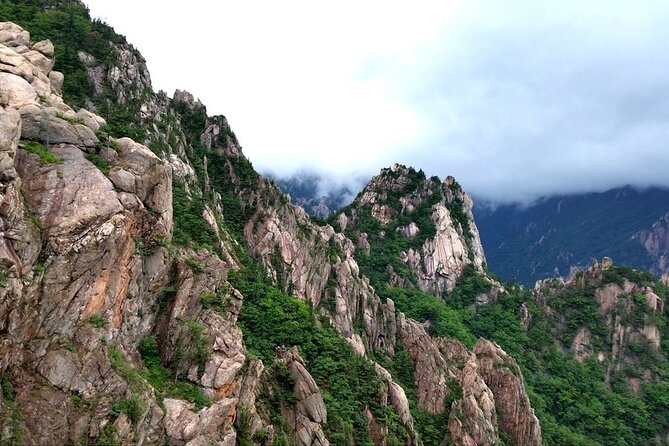
- Seoraksan brings a change of pace: The final day includes a two-hour visit to Jujeongol Valley, known for rock formations, peaks, and streams.
- Most major trip costs are bundled: Three hotel nights, all entrance fees, four lunches, three breakfasts, and two dinners are included.
- The route is active and group-based: Expect an air-conditioned vehicle, a maximum group size of 35, and a moderate fitness requirement.
A broad route from Seoul to the east coast
This tour is best understood as a fast-moving sampler, not a slow stay in any one place. Over four days, you move from Busan’s port-city character to Silla-era monuments, a historic village, and a national park. That variety is the chief appeal: each day feels different, and the included transport and guide save you from stitching together a complicated route on your own.
The trade-off is time. Most stops last between 20 minutes and two hours, so you’ll see signature places rather than explore every corner. If you prefer long museum visits, independent meals, or a day with no coach time, this schedule may feel brisk.
The tour is marketed as an all-inclusive, no-shopping program. In practice, that means the core sightseeing, accommodation, transport during the tour, and many meals are covered. It does not include every expense: travel insurance, personal purchases, drinks, tips, and the first-day pickup and final-day drop-off are excluded.
More four-day trips in Seoul:
- Discover Western Korea in 4days: All-Inclusive Experience
★ 5.0 · 6 reviews - Jeonju & Yeosu: 4-Day Foodie & Artist Journey
★ 5.0 · 3 reviews
Day one: Busan’s market stalls and coastal cable car
The first day pairs Jagalchi Market with the Songdo Sea Cable Car. Jagalchi is one of Busan’s best-known seafood markets, and an hour gives you time to see the rows of stalls and get a feel for the city’s close ties to the sea. Lunch is included, though the precise menu is not specified. The tour says it serves a range of traditional Korean foods, so you can expect food to be part of the experience rather than an afterthought.
The cable car is the day’s scenic counterpoint. It runs about 1.6 kilometers between Songdo Beach Station and Songdo Sky Park, with broad views of the coastline during the ride. Two hours are allocated, which includes more than simply sitting in the car, but the schedule does not spell out how much time is spent at either end.
Here is the detail to sort out before booking: the meeting point is listed as Seoul Station at 8:00 a.m., while the day-one directions say to meet the guide at Busan Station. A past participant described being given KTX tickets and making the journey to Busan independently after joining a larger group. That arrangement may depend on the group structure, but it is important enough to ask the operator for a clear, current explanation. Find out where you board, whether a guide accompanies you on the train, and what happens if your group is small.
Day two: Busan’s APEC hall and Gyeongju’s Silla remains
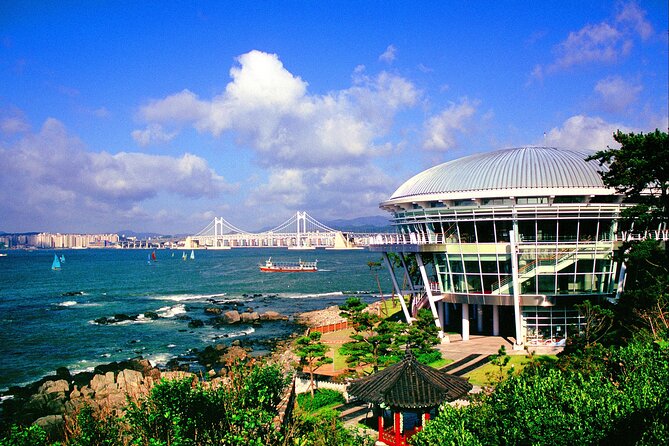
The morning begins at Dongbaekseom Island and Nurimaru APEC House, the venue of the 2005 APEC Summit. The modern glass-walled building is a striking change from the historic places that follow. One hour is allotted, enough for a focused visit rather than a leisurely walk around the area.
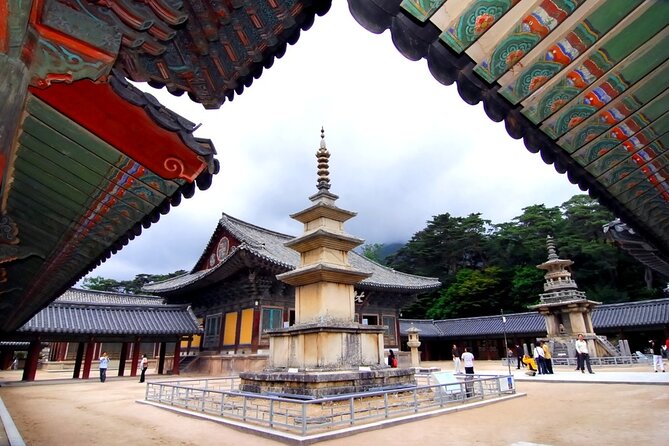
Then the route heads to Gyeongju, Korea’s ancient Silla capital. Bulguksa Temple is the first major stop, with 90 minutes to see a UNESCO World Heritage Site known for its Buddhist architecture and setting. Admission is included. The schedule is compact, so you’ll want to listen closely to your guide’s explanations and keep an eye on departure times.
At Daereungwon Tomb Complex, large grassy burial mounds mark the resting places of Silla royalty. The hour-long visit offers a visual introduction to the power of the old royal court. The tour highlights the precious objects associated with the tombs, including gold crowns, then gives you another 90 minutes at Gyeongju National Museum to see important Silla-era artifacts.
The museum is a useful companion to the tombs: objects that might otherwise seem like isolated treasures gain context after you have seen the royal burial grounds. Cheomseongdae Observatory closes the day with a short 20-minute stop. This ancient structure is a symbol of Gyeongju and a reminder of the Silla interest in observing the sky. The time is enough for a look and photographs, not an extended visit.
This is the most history-packed day, and also the one most likely to feel scheduled. You get a strong overview of Gyeongju’s major sites, but there is little room to linger. If you want to study every museum display or explore the city independently, consider a separate stay in Gyeongju before or after the tour.
Day three: traditional sweets and Hahoe’s old village
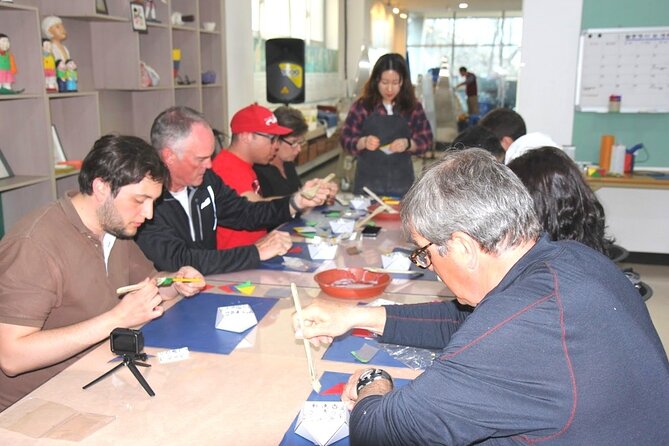
The morning’s dessert-making session at Momyeongjae is a welcome change from monument visits. At the Korean Traditional Culture Center, instructors guide you through making a Korean traditional dessert. The 90-minute activity gives you a practical encounter with food culture: you do more than eat a dish, you take part in preparing it.
The experience is included in the price, along with the day’s lunch. The exact dessert and recipe are not specified, so don’t book expecting a particular sweet. The value is in having a structured cultural activity and a chance to work with an instructor, rather than simply stopping at a shop.
Next comes Andong Hahoe Folk Village, a UNESCO World Heritage Site with more than 600 years of history. The village is presented as a living cultural place, not just a collection of old buildings. Two hours allows time to walk through its traditional setting and take in the contrast with the cities and museum halls visited earlier.
For me, Hahoe is an important counterbalance to the tour’s grand historical sites. Gyeongju gives you royal power and monumental architecture; Andong shifts attention toward the forms of community and daily life that shaped Korean tradition. Still, two hours is a brief introduction. If you value unhurried village visits, you may wish the schedule allowed more time.
More Seoul tours and experiences:
- Best DMZ Tour Korea from Seoul (Red Suspension Bridge Optional)
★ 5.0 · 41,422 reviews - DMZ Tour: 3rd Tunnel, Option(Suspension Bridge, Boat) from Seoul
★ 5.0 · 21,373 reviews - DMZ tour south Korea from Seoul (NK experience hall, defector)
★ 5.0 · 20,599 reviews - Seoul: DMZ Tour with Optional Suspension Bridge
★ 4.8 · 5,277 reviews
Day four: Seoraksan’s Jujeongol Valley
The final day starts in Pyeongchang and heads to Jujeongol Valley in Seoraksan National Park. Two hours are set aside to see the park’s dramatic rock formations, high peaks, and clear streams. After several days of temples, royal sites, and village architecture, the natural setting provides a welcome change in scale.
The tour describes a moderate physical fitness requirement, so treat this as more than a quick roadside photo stop. The information provided does not specify the walking distance, trail surface, or elevation, so ask the operator if you have concerns about mobility or stamina. The tour is listed as suitable for ages 1 to 80-plus, but that broad age range does not mean every part of the route will suit every person equally.
The tour ends at AMID Hotel Seoul in Insadong. Since the final drop-off is not included, check how you will get there from the last sightseeing stop and whether the group transport ends at the hotel or nearby. This is another small detail worth settling before departure.
What the $1,200 price covers, and what it does not
At $1,200 per person, this is a substantial outlay, but the price bundles several costs that can add up quickly on a four-day trip. You get three nights in twin or double accommodation, an air-conditioned vehicle, an English-speaking guide or driver-guide, all tour entrance fees, and a generous meal count: four lunches, three breakfasts, and two dinners.
The package makes particular sense if you value convenience and want a guide to connect the sites. You avoid booking separate hotels and admission tickets, and the group transport links destinations that would take effort to arrange independently. Past participants praised the hotel quality, Korean food, and professional service. One specifically praised guide Mr. Jay for keeping the group informed and managing expectations; another commended Mark and the driver. Those names are useful examples of the service experienced, not a promise about who will lead your departure.
The price is not literally all-inclusive. You pay separately for insurance, drinks, tips, laundry, phone use, and other personal expenses. You also need to arrange the first pickup and last drop-off. Most important, clarify the first-day train plan, since the Seoul meeting point and Busan starting stop are not fully reconciled in the schedule details.
The tour averages 4.6 out of 5 from 16 ratings, a positive signal but a modest sample. A strong experience appears to depend partly on clear coordination and good guiding. Ask direct questions about the train, group composition, and transfer arrangements rather than assuming every detail is handled in the same way for every departure.
Group size, pace, and who will enjoy it most
The maximum group size is 35. That is large enough to make the experience feel like a group coach tour, not a private trip. A capable guide can help keep the day moving, but you’ll need to be ready for shared schedules and group departure times. The vehicle type varies with group size.
This tour suits you if you want a guided introduction to several regions, enjoy a mix of food, history, and scenery, and prefer having hotels and many meals arranged. It is also a good fit if you have limited time in Korea and want to see places beyond Seoul without planning every transfer yourself.
It is less suitable if you want to set your own pace, spend half a day in one museum, or choose every meal. The itinerary is full, and the listed stops are brief. A moderate level of fitness is expected, and Seoraksan’s terrain may require more walking than the city visits.
The tour is available to a wide age range, from 1 to 80-plus, but families should weigh the long days and frequent changes of place against the needs of younger children. The description does not give exact daily driving times or walking distances, so ask before booking if those details will shape your decision.
Practical details to check before you book
The stated start time is 8:00 a.m. at Seoul Station, and the stated end point is AMID Hotel Seoul, at 38 Insadong 5-gil. Confirmation is provided within 48 hours of booking, subject to availability. The experience is near public transportation, and mobile tickets are offered.
Cancellation terms are relatively clear: cancel at least six full days before the start for a full refund. Cancellations two to six full days ahead receive a 50 percent refund, while cancellations less than two full days ahead are nonrefundable. Poor weather may lead to a different date or a full refund. Keep in mind that the cutoff follows local time.
Before committing, ask the operator to confirm the Seoul-to-Busan travel arrangement, where your guide meets you on day one, and how the last transfer to Seoul works. Those practical answers matter more than small itinerary details, because they determine whether the tour’s most ambitious feature, covering several regions in four days, feels smooth or stressful.
Should you book this Eastern Korea tour?
I’d consider booking it if you want a carefully packed introduction to Busan, Gyeongju, Andong, and Seoraksan, and you value having accommodation, entrance fees, transport, and most meals arranged. The combination of market food, Silla history, dessert-making, village life, and mountain scenery gives the route more character than a string of city landmarks.
I’d pause if independent travel is your priority, or if unclear train logistics would make you uneasy. Ask the operator to explain the first day in writing, and check how the final transfer works. If those points are settled and you’re comfortable with a brisk group schedule, the tour offers a practical way to see a wide slice of Eastern Korea in four days.
FAQ
Where does the tour start and end?
The stated meeting point is Seoul Station, with an 8:00 a.m. start. The listed end point is AMID Hotel Seoul in Insadong. Hotel pickup on the first day and drop-off on the last day are not included.
How many nights of accommodation are included?
The price includes three nights in twin or double rooms.
Which meals are included?
The tour includes four lunches, three breakfasts, and two dinners. Drinks and other personal expenses are not included.
Are entrance fees included?
Yes. All entrance fees during the tour are included.
How large can the group be?
The tour has a maximum of 35 participants. The vehicle type varies according to group size.
How physically demanding is the tour?
A moderate level of physical fitness is recommended. The tour is listed as suitable for ages 1 to 80-plus, but specific walking distances and trail details are not provided.
What is the cancellation policy?
Cancel at least six full days before the start for a full refund. Cancellations two to six full days ahead receive a 50 percent refund, and cancellations less than two full days ahead are nonrefundable. If poor weather cancels the experience, you may be offered another date or a full refund.
Latest reviews from Seoul
- From Seoul: Hwacheon Ice Fishing and Lighting Festival Tour★ 4.5 · 4 reviews
- Unique Native Experience : Han River Picnic, Board game, BBQ★ 5.0 · 3 reviews
- You’re Invited to Our Home in Seoul: The Only Cooking Class!★ 5.0 · 8 reviews
- Seoul: Gangneung BTS K-Pop & K-Drama Filming Locations Tour★ 4.6 · 14 reviews
- Yun Korean Cooking Class in Seoul★ 5.0 · 6 reviews
- 2-Hour Private Kayaking and Paddleboarding Experience in Hanriver★ 5.0 · 3 reviews
- Day Trip to Yongin Daejanggeum and Korean Folk Village from Seoul★ 4.0 · 9 reviews
- K-Pop Making Class with a Producer!★ 5.0 · 3 reviews
Seoul Tours, compared.
Best DMZ Tour Korea from Seoul (Red Suspension Bridge Optional)
Read our review →
DMZ Tour: 3rd Tunnel, Option(Suspension Bridge, Boat) from Seoul
Read our review →
DMZ tour south Korea from Seoul (NK experience hall, defector)
Read our review →

Signature DMZ Tour: Exclusive Defector Talk & Suspension Bridge
Read our review →
Thrilling Korean DMZ 3rd Tunnel Tour from Seoul + Red Bridge Rush
Read our review →
DMZ Past and Present: Korean Demilitarized Zone Tour from Seoul
Read our review →