
Reviewed · DMZ TOURS
Korea DMZ Private Tour with War Memorial Tour as Service
The most striking part of this tour is walking through the Third Infiltration Tunnel, a passage North Korea built beneath the border and South Korea found in 1978. It turns the DMZ from a distant line on a map into a place you can enter, examine, and think about.
I like two things about this private outing: you travel with just your own group, and the guides can bring personal military or family connections to the history. You also visit Tongilchon, a village inside the Civilian Control Zone, which adds a glimpse of ordinary life near a heavily guarded border.
One consideration: the view from Dora Observatory depends on the weather. Fog or rain can hide Gaesung, the North Korean city you come to see, and the tunnel walk calls for a moderate level of fitness.
Key points to know before you go
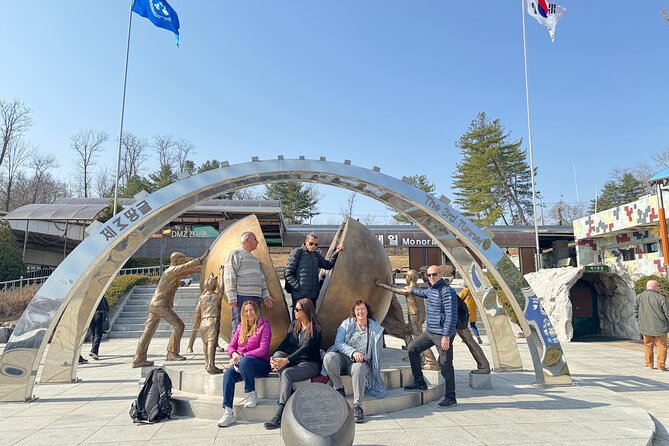
- The tunnel is the tour’s most physical and memorable stop. You watch a short Korean War film, visit an exhibition hall, then walk into the tunnel.
- Dora Observatory offers a view across the border. Binoculars are available on the rooftop, but clear weather makes a big difference.
- Tongilchon is inside the Civilian Control Zone. The brief stop offers a rare look at a village close to the border, plus a shop selling DMZ souvenirs.
- Private means private transportation and no other pickup stops. You share the tour only with your own group, up to three people at the listed price.
- Guides bring different kinds of experience. The team includes former military veterans and a second-generation North Korean; guides named for this tour include John, Dylan, Julie, Brian, and Chuck.
- Lunch is not included. The tour lasts about 6 to 8 hours, so plan for a substantial part of your day.
What the private format changes
The price is $299 per group of up to three, not $299 per person. That makes the cost easier to weigh if you are traveling as a couple or small family: you get private transportation and an English-speaking guide without sharing the vehicle or making pickup stops for other groups.
A private tour also gives you a more direct way to ask questions about a complicated subject. Guides on this tour include former military personnel and a second-generation North Korean, and the named guides include John, Dylan, Julie, Brian, and Chuck. Their backgrounds vary, so you can expect personal context alongside the military and historical details, though you cannot assume which guide you will be assigned.
The experience takes about 6 to 8 hours. That is a sizeable block of a Seoul visit, but the distance to the border and the several stops make a quick trip unrealistic. Private transport helps keep the day focused on your group, while DMZ regulations still require a transfer to a Paju city shuttle bus at Imjingak.
The tour is booked, on average, about 31 days in advance. That is useful context if your dates are fixed, though it is not a guarantee that every departure sells out or that a particular guide will be available.
More DMZ tours from Seoul:
- Best DMZ Tour Korea from Seoul (Red Suspension Bridge Optional)
★ 5.0 · 41,422 reviews - DMZ Tour: 3rd Tunnel, Option(Suspension Bridge, Boat) from Seoul
★ 5.0 · 21,373 reviews - DMZ tour south Korea from Seoul (NK experience hall, defector)
★ 5.0 · 20,599 reviews
Imjingak Park: memorials at the edge of the DMZ
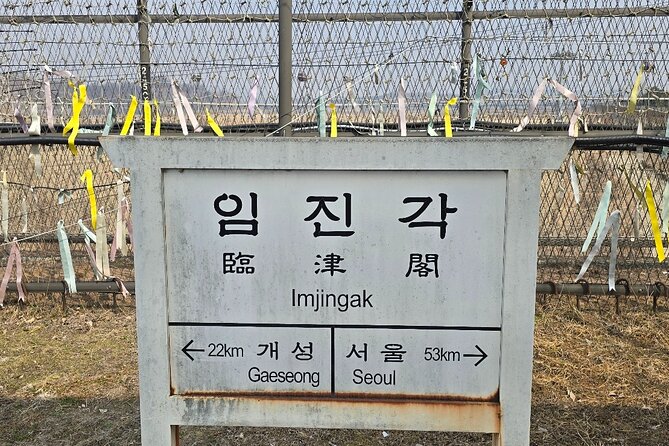
The tour begins at Imjingak Pyeonghwa Nuri Park, where you handle DMZ ticketing and see several sites tied to the division of Korea and the Korean War. The stop is scheduled for about an hour, and admission is included.
The steam locomotive at Jangdan Station is a stark reminder of a railway interrupted by war and division. Nearby, the Freedom Bridge and Mangbaedan Altar connect public memorials with family loss and separation. These are not abstract themes here: the sites give the visit an emotional footing before you move toward the border itself.
You also see the display known as 30 Years Lost, recognized as a UNESCO Memory of the World. Together, the park’s memorials make a useful introduction to the human cost of division, rather than treating the DMZ only as a military curiosity.
There is one practical wrinkle. Under DMZ regulations, you transfer to a shuttle bus operated by Paju city. That is part of the access process, not a sign that your private tour has turned into a shared sightseeing group for the rest of the day.
The Third Infiltration Tunnel: the day’s most active stop
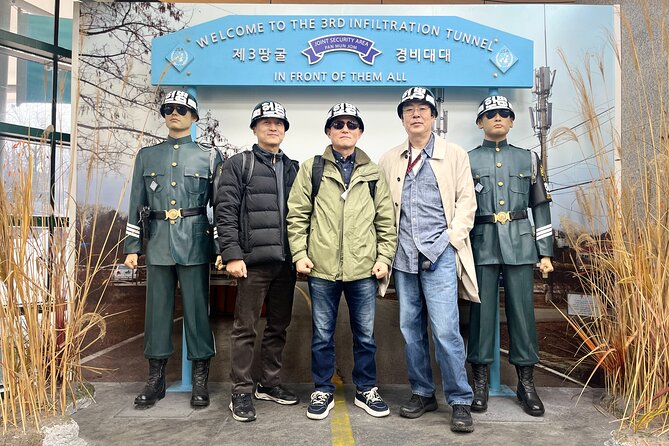
At the Third Infiltration Tunnel, you first watch a short film about the Korean War and visit the exhibition hall. The main event is walking into the tunnel itself, built by North Korea and discovered in 1978. The route gives you a close, physical sense of an attempted passage beneath the border.
This is the stop most likely to stay with you. The guide can explain the tunnel’s military significance while you see the space firsthand, and that combination makes the history easier to grasp than a display case alone. Some guides have served in the Korean military, and Dylan is described as a former military officer, so the tour may include details grounded in service as well as broader history.
Be realistic about the physical side. The tour information calls for moderate fitness, and the tunnel visit involves walking. If you are unsure how comfortable you will be, consider that before booking; the tour does not describe an alternative tunnel activity.
The tunnel’s atmosphere is serious, not theatrical. It is a place to pay attention, listen, and let the scale of the situation register. The sequence of film, exhibition, and walk helps build context before you step inside.
Dora Observatory: a view that depends on the sky
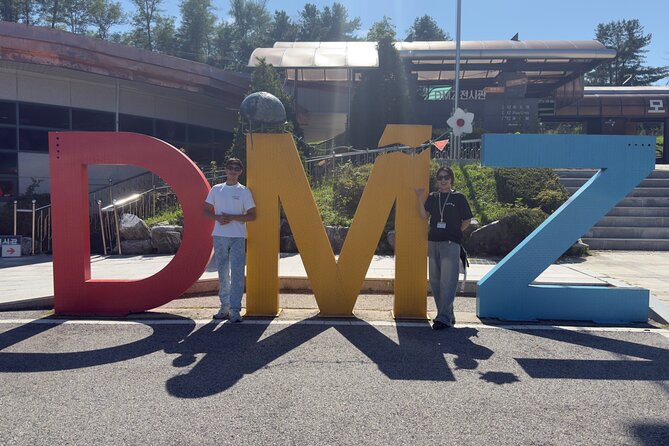
At Dora Observatory, you look toward Gaesung, a North Korean city. The stop lasts about 45 minutes, and you can go to the rooftop and use binoculars for a closer look.
The viewpoint is a rare chance to see across the border, but the view is not guaranteed. Thick fog has obscured the scene for some visitors, and rain can also make conditions less favorable. If the forecast is clear, you have a better chance of making out what lies beyond the line; if it is not, the guide’s explanations still help put the location in context.
That uncertainty is worth factoring into your expectations. This is not a panorama with a guaranteed payoff on every day. Think of it as a chance to look toward a closed-off place, with visibility shaped by weather rather than by the tour operator.
The binoculars help when conditions cooperate. Take time to listen to the guide as well as look through them: the value of the stop is not only what you can see, but what the view means in the setting of a divided country.
More private tours in Seoul:
- Private DMZ Tour (No Shopping): 3rd Tunnel & Suspension Bridge
★ 5.0 · 607 reviews - Seoul City Private Full-Day Tour Including Lunch
★ 5.0 · 469 reviews - Private DMZ the 3rd Tunnel Tour from Seoul (optional Red Bridge)
★ 5.0 · 429 reviews - Seoul Highlights & Hidden Gems Tours by Locals: Private + Custom
★ 5.0 · 359 reviews
Tongilchon: a short stop in the Civilian Control Zone
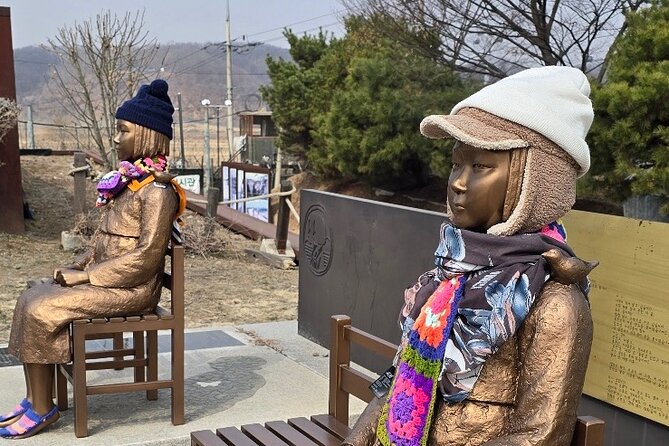
The last scheduled stop is Tongilchon, also called Unification Village, within the Civilian Control Zone. You spend about 15 minutes there, with a chance to visit a shop selling DMZ-themed souvenirs.
This is a brief visit, so do not expect a long walk through village life or an extended conversation with residents. Its value is in seeing that people live and work close to the border, in an area with special access rules. After the memorials, tunnel, and observatory, the village adds a human-scale note to a day otherwise shaped by conflict and security.
The souvenir shop may be of interest if you want a small memento, but it is not the reason to book the tour. The distinctive part is the location itself, inside the Civilian Control Zone, and the way it rounds out the day’s picture of the area.
What the guides add to the experience
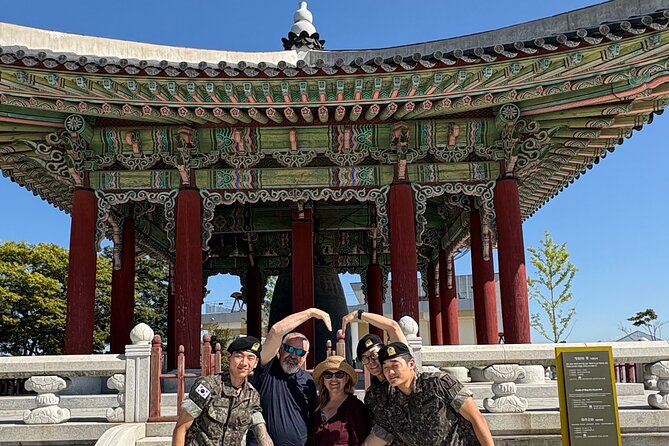
A DMZ visit can easily become a series of stops and signs unless someone helps connect them. This tour’s strongest asset is the guide-led explanation, especially because the guides include former military veterans and a second-generation North Korean. Their personal backgrounds can give the history a human voice without replacing the larger context.
John is associated with vivid explanations of the DMZ’s history and current realities. Dylan is a former military officer whose firsthand service can bring a military perspective; he has also been described as attentive to practical needs, including lending a raincoat when rain arrived. Julie, Brian, and Chuck are also named guides, with Chuck noted for sharing a family connection to the Korean War.
Those names are useful when comparing tours, but they are not a promise that you will have a particular guide. What you can reasonably expect is an English-speaking guide and a tour built around expert interpretation. If having a former service member lead your visit matters to you, ask about guide assignment when arranging the tour rather than assuming.
Price, timing, and what to plan for
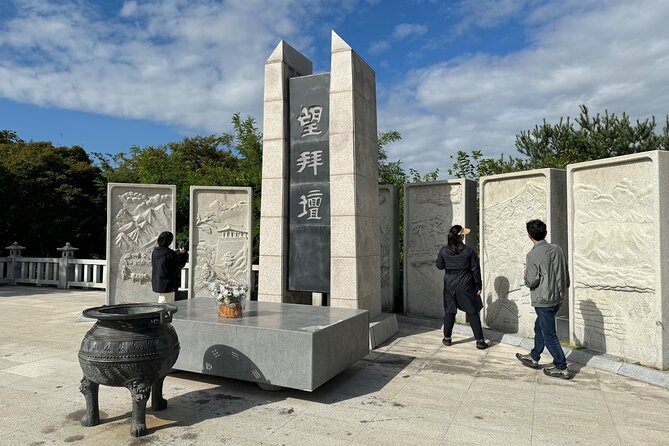
At $299 for a group of up to three, the price works best for a small party that values privacy and direct access to a guide. For a solo visitor, it is a higher per-person expense; for three people sharing the group price, it is easier to justify against the convenience of private transport and a dedicated guide.
Admission fees and private transportation are included, as is an English-speaking guide. Lunch is not included, and the overall duration is about 6 to 8 hours. Since the day takes up much of your schedule, keep other plans flexible rather than trying to squeeze in a fixed afternoon activity.
The tour offers pickup, but the details of the pickup point should be confirmed when you book. You will not be making stops to collect other groups, though the required transfer to the Paju city shuttle at Imjingak still applies. The tour is described as near public transportation, but the private vehicle is the central way it gets you between the stops.
Weather is an important planning factor, especially for Dora Observatory. A clear forecast can improve the chance of seeing Gaesung, while fog may block the view. Even in poor weather, the tunnel and memorial sites remain meaningful parts of the day, but the observatory’s visual payoff can be limited.
Who should book this DMZ tour
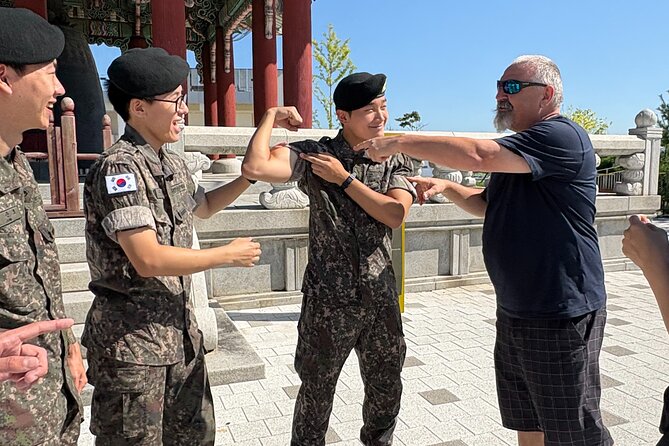
I would choose this tour if you want more than a quick photo stop at the border. The tunnel walk, memorials, observatory, and village make for a varied day, and the private guide format gives you room to ask questions about the war, military history, and modern realities of division.
It suits couples, families, and small groups who want to travel together without additional pickup stops. It is also a good fit if a guide’s personal connection to Korea’s military or family history matters to you. The subject can be moving, and the tour is best approached with curiosity and respect rather than as a novelty outing.
Think twice if your mobility makes walking through the tunnel difficult, if you have only a few hours to spare, or if your main reason for going is to get a guaranteed view of North Korea. The observatory is weather-dependent, and the full experience is a half-day or longer commitment.
Should you book?
Book this tour if you value an expert guide, private transport, and time to connect the DMZ’s memorials with the reality of the border. Its strongest elements are the tunnel walk and the chance to hear context from guides with military or personal ties to the subject.
If you are traveling with two other people, the $299 group price offers a practical way to keep the outing private. Go in prepared for a full day, bring a flexible attitude toward the weather, and do not count on a clear view from Dora Observatory. The tunnel and the stories around it are the sturdier reasons to make the trip.
FAQ
How long does the tour take?
The tour lasts about 6 to 8 hours.
What is the price?
The listed price is $299 per group of up to three people.
Is this a private tour?
Yes. Only your group participates, and the tour uses private transportation without stops to pick up other groups.
Is pickup offered?
Yes, pickup is offered. A transfer to a Paju city shuttle bus is required at Imjingak under DMZ regulations.
What is included in the price?
Private transportation, admission fees, and an English-speaking guide are included.
Is lunch included?
No. Lunch is not included.
How much walking is involved?
The tour includes walking in the Third Infiltration Tunnel, and participants should have a moderate level of physical fitness.
Can you see North Korea from Dora Observatory?
The observatory faces the North Korean city of Gaesung, and binoculars are available on the rooftop. Visibility depends on conditions; fog can block the view.
Latest reviews from Seoul
- From Seoul: Hwacheon Ice Fishing and Lighting Festival Tour★ 4.5 · 4 reviews
- Unique Native Experience : Han River Picnic, Board game, BBQ★ 5.0 · 3 reviews
- You’re Invited to Our Home in Seoul: The Only Cooking Class!★ 5.0 · 8 reviews
- Seoul: Gangneung BTS K-Pop & K-Drama Filming Locations Tour★ 4.6 · 14 reviews
- Yun Korean Cooking Class in Seoul★ 5.0 · 6 reviews
- 2-Hour Private Kayaking and Paddleboarding Experience in Hanriver★ 5.0 · 3 reviews
- Day Trip to Yongin Daejanggeum and Korean Folk Village from Seoul★ 4.0 · 9 reviews
- K-Pop Making Class with a Producer!★ 5.0 · 3 reviews
DMZ Tours, compared.
Best DMZ Tour Korea from Seoul (Red Suspension Bridge Optional)
Read our review →
DMZ Tour: 3rd Tunnel, Option(Suspension Bridge, Boat) from Seoul
Read our review →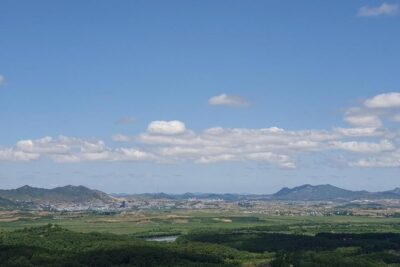
DMZ tour south Korea from Seoul (NK experience hall, defector)
Read our review →

Signature DMZ Tour: Exclusive Defector Talk & Suspension Bridge
Read our review →
Thrilling Korean DMZ 3rd Tunnel Tour from Seoul + Red Bridge Rush
Read our review →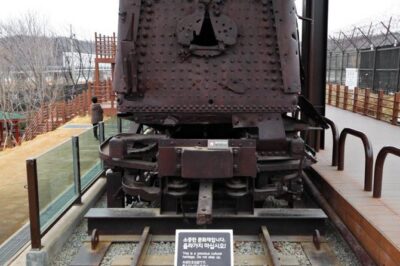
DMZ Past and Present: Korean Demilitarized Zone Tour from Seoul
Read our review →
Ultimate Korea DMZ Tour from Seoul (Gondola & Suspension Bridge)
Read our review →Browse the lists this tour appears in