
Reviewed · SEOUL HIKING TOURS
Bukhansan National Park- The Summit Course
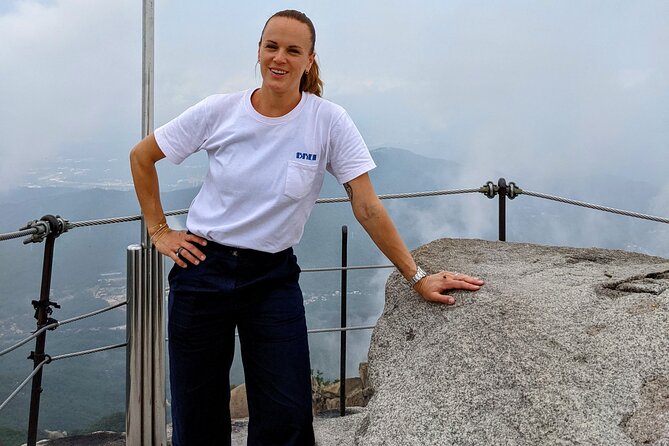
Baegundae is Seoul’s highest peak, but reaching its 836-meter summit is no casual stroll. The route saves time by taking a direct approach, yet the climb gains about 600 meters over just 2.1 kilometers, then finishes with a steep, rope-assisted scramble.
I like two things especially: guide Koa handles the mountain logistics and keeps the group moving safely, and the optional stop for handmade tofu offers a satisfying taste of local food after the effort. An early start also helps you get on the trail before it grows busier.
The trade-off is the climb itself. Rocky ground, a demanding uphill stretch, and a 20-to-30-minute section on steep rock make this a poor match for anyone with a strong fear of heights, bad knees, or limited fitness.
The essentials before you book
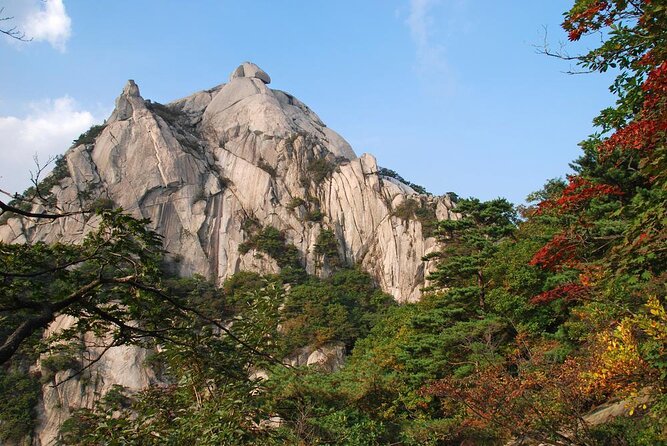
- Baegundae reaches 836 meters: It is Seoul’s highest peak, with a final stretch that involves steep, rope-assisted climbing.
- The uphill is short but strenuous: You gain roughly 600 meters in 2.1 kilometers, usually over 100 to 120 minutes.
- Guide Koa leads in English: The guided format helps with pacing, route choices, and practical safety on the mountain.
- The summit scramble is optional: If heights are not for you, you can rest while the rest of the group makes the final climb.
- Lunch is an extra: If time allows, you can join the group at a tofu restaurant, where a meal costs about 9,000 to 15,000 KRW.
- Meet at the right station exit: Find Koa outside Exit 2 of Bukhansan Ui station, not Bukhansan Bogungmun station.
A direct route to Seoul’s highest summit
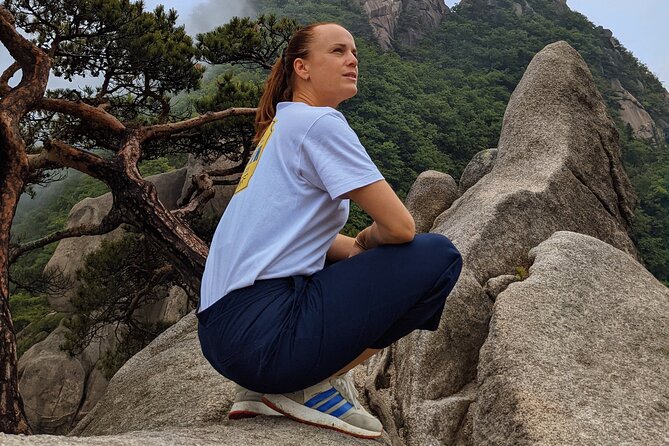
Bukhansan National Park sits along Seoul’s edge, making this hike an unusual chance to trade the city for mountain trails without setting aside a full day. Baegundae, at 836 meters, is the goal. The tour takes a direct route intended to reach the summit in about four hours of hiking rather than the roughly six hours associated with a longer outing.
The advertised activity lasts 4.5 hours, so leave room in your plans for a little variation. Trail pace, time at the summit, and the optional lunch can affect how the day feels, and lunch is only possible if the schedule allows.
The shortcut saves time, not effort. The climb rises about 600 meters over 2.1 kilometers, and the uphill portion typically takes 100 to 120 minutes. Picture a long flight of stairs repeated many times, but with rocky ground underfoot. You do not need to be an athlete, but you should be comfortable with sustained uphill walking and a demanding half-day outdoors.
More hikes near Seoul:
- Seoul: Guided City Wall Sunset Hike with Korean Dinner
★ 4.9 · 227 reviews - Private Hiking tour to Bukhansan Peak(Baegundae: 836.5m) with Mountain Expert
★ 5.0 · 113 reviews - Fortress Night Hike & Snack at a Local Market
★ 5.0 · 112 reviews
The early meeting at Bukhansan Ui station
The day starts outside Exit 2 of Bukhansan Ui station, where you meet Koa. Take care with the station name: Bukhansan Bogungmun is a different station, and going to the wrong one could cost you the start.
The group leaves at 8:15 a.m. sharp and can wait only 15 minutes for late arrivals. Check the route to the meeting point the night before using Naver Map, and set out early. That small bit of planning matters more here than it might on a city tour: the trail start, group timing, and summit attempt all depend on getting together on time.
The early departure is a practical advantage. Bukhansan can get busier later in the day, and starting early gives you a better chance of hiking before the crowds build. It also makes the schedule easier to manage if you want to join the optional lunch afterward.
Two hours of steady uphill work
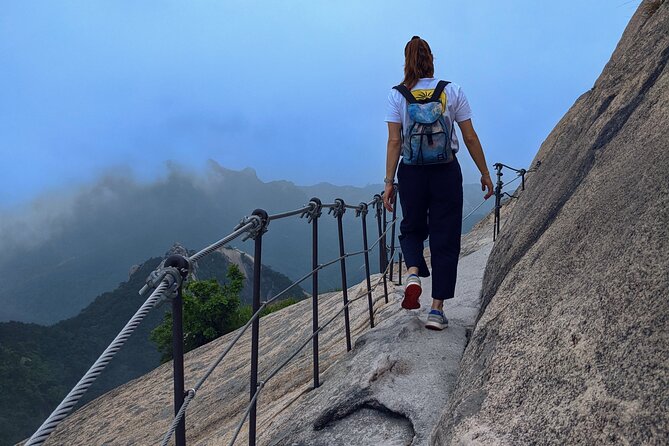
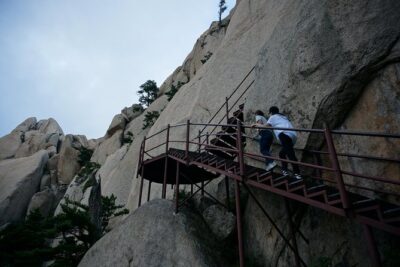
Once the hike begins, the main test is not distance but steepness. The ascent covers 2.1 kilometers and climbs around 600 meters, with a typical uphill time of 100 to 120 minutes. The ground is rocky, and the effort can feel harder than the word moderate suggests, especially if you are used to exercising on level surfaces.
I would treat this as a challenging hike, not a gentle sightseeing walk. A strong general level of fitness will help, but comfortable knees and confidence on uneven ground matter too. One useful feature of the out-and-back route is that you can stop if you cannot continue uphill. The guide can pick you up on the way back, according to the tour information, so you are not expected to force your way to the summit.
Koa’s role is more than pointing out the way. Hikers describe a well-paced climb, practical tips for moving up and down, and a guide who works to keep the group safe and engaged. He is also reported to remember people’s names and chat with everyone along the way. That personal touch can make a long uphill stretch feel more companionable, especially if you are hiking with people you have just met.
The group has been described as small, though no exact number is specified. That can make it easier to hear instructions and settle into a shared pace. It also means the outing has a social side: you may find yourself swapping stories with hikers from other countries as the trail unfolds.
Ropes, rock, and the final climb
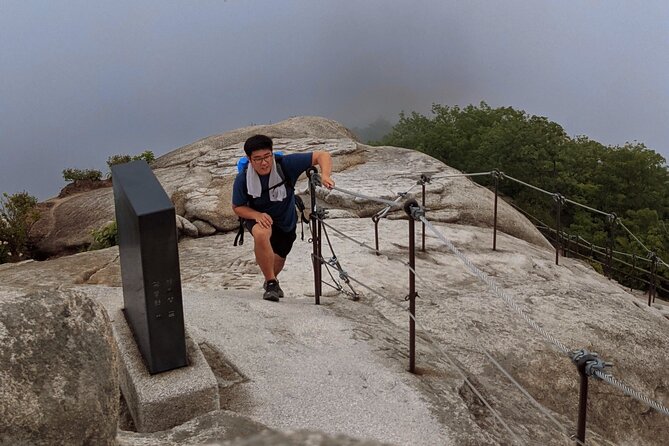
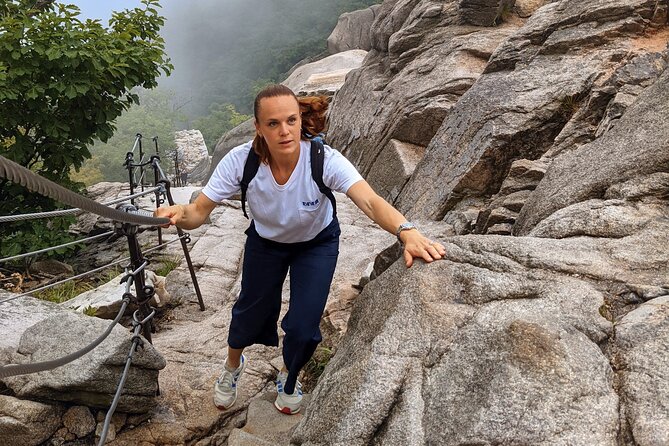
The summit approach is the most memorable and demanding part of the hike. For roughly 20 to 30 minutes, you may face rock slopes angled between 25 and 45 degrees, with ropes provided to assist your climb. This is not technical climbing, but it asks you to use your hands, pay attention to your footing, and stay comfortable with exposure.
The rope-assisted section is also the point to be honest with yourself. If you have a strong fear of heights, you can sit out the final summit climb and take a break while the others continue. The tour does not make the peak an all-or-nothing test, which is a sensible option on a mountain where confidence and comfort matter as much as determination.
Koa’s safety guidance is particularly useful here. A guide can offer tips for the ascent and descent, but no guide can remove the steepness or make the route suitable for everyone. If you have bad knees, limited mobility, or little experience on rocky trails, think carefully before booking. The tour description calls for moderate fitness, but in practice the combination of sustained climbing and a steep summit section can feel more demanding.
The reward is the summit itself and the satisfaction of reaching Seoul’s highest point. The reviews describe the final climb as exhilarating for those who enjoy steep terrain, while also stressing that it can feel scary. That is the right way to frame it: exciting if you like a physical challenge, uncomfortable if heights and exposed rock unsettle you.
More national park trips in Seoul:
- Bukhansan National Park: The Summit Course
★ 5.0 · 53 reviews - Seoraksan National Park Ulsanbawi Hiking from Seoul
★ 5.0 · 15 reviews - Seoul: Mt. Seoraksan National Park Autumn Foliage Day Tour
★ 4.3 · 15 reviews - Private Day Trip to Seoraksan National Park
★ 5.0 · 14 reviews
A descent that calls for care
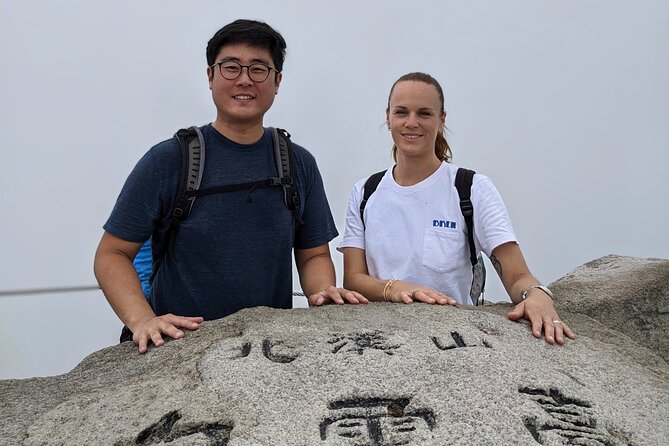
After the summit, you return toward the meeting point. The stated route comes back down the same way, so expect to retrace ground rather than take a completely separate circuit. One group has experienced Koa choosing a different trail for the descent, but that should not be treated as a guaranteed feature.
Downhill hiking can be tough on knees and requires care on rocky surfaces. Take the guide’s advice, keep your pace controlled, and do not let the satisfaction of reaching the top turn the return into a race. The same route that felt steep going up can require steady attention on the way down.
Crampons and hiking poles can be borrowed at about the one-third point of the hike. Their usefulness may depend on conditions, so do not assume you will need or use them on every outing. The tour also provides bug spray, a first-aid kit, and a raincoat if needed. Water is not included, but you can buy it at a convenience store at the start. Bring enough for a strenuous hike rather than counting on finding a purchase point later.
Handmade tofu after the trail
If your schedule allows, the group may stop for lunch at a restaurant specializing in tofu dishes. The restaurant makes its food from scratch, and the meal is optional, paid for individually, and costs about 9,000 to 15,000 KRW. Meat is also available, while vegetarian and vegan diners have options.
This is a welcome finish for anyone who enjoys a meal as part of the outing rather than treating the hike as a standalone workout. Tofu made in-house can be a more interesting way to sample a familiar ingredient, and the shared meal gives the group time to unwind after the climb. Some groups have also enjoyed makgeolli with lunch, but do not assume it will be part of your outing.
Keep the optional nature of lunch in mind when planning. It depends on time, and it is not included in the $67 tour price. If you need to leave promptly, or have a tight schedule after the hike, you can skip the meal.
What $67 buys you
At $67 per person, this tour is not simply a paid route to the summit. You are paying for an English-speaking guide, help with the day’s logistics, safety advice on a challenging trail, and a direct route designed to fit the hike into a half-day. Bug spray, a first-aid kit, a raincoat if needed, and the chance to borrow poles and crampons are included.
The price makes the most sense if you value guidance and a simpler plan. Bukhansan is a popular mountain, but the steep route, rocky footing, and rope-assisted summit can be intimidating if you are unfamiliar with the area. Having Koa manage the group and offer practical tips can reduce the stress of figuring it out alone. The early meeting and clear departure time also help you use the rest of your day.
On the other hand, this is not a bargain if you mainly want a gentle nature walk or expect a long guided sightseeing program. The climb is the experience, and the optional lunch costs extra. You also need to bring your own water, and the route remains physically demanding regardless of the guide’s support.
You can reserve now and pay later, and cancellations made at least 24 hours in advance qualify for a full refund. Those terms offer some flexibility, but they do not change the main booking question: are you ready for a steep, rocky hike with a short section of exposed climbing?
Who should choose this summit course
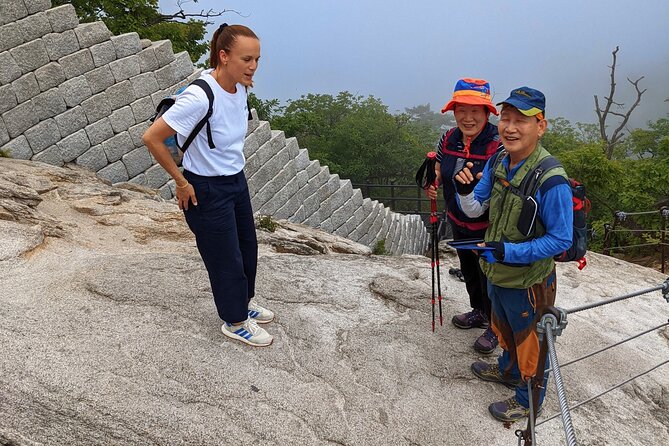
I would recommend this hike to fit visitors who want a real mountain challenge close to Seoul and are comfortable with uneven ground. It suits people who enjoy a strong uphill effort, are curious about the city’s highest peak, and appreciate a guide who can keep the day organized and social.
It is less suitable for anyone with a strong fear of heights, bad knees, or a preference for flat, easy walking. If you are unsure about the summit scramble, remember that the final section can be skipped. Still, the hike before it is already steep, so skipping the summit does not turn the outing into an easy walk.
Book it if the summit and the physical challenge are the point. Consider another activity if you want a low-effort look at the national park, need a flexible start time, or cannot commit to the 8:15 a.m. meeting. For the right hiker, the combination of a direct climb, capable guidance, and an optional tofu lunch makes this a rewarding way to spend a morning.
FAQ
How long does the hike take?
The activity is listed as 4.5 hours. The hiking route is described as taking about four hours, with the uphill portion usually taking 100 to 120 minutes.
How difficult is the climb?
Expect a sustained, steep hike. The ascent gains about 600 meters over 2.1 kilometers, and the final summit section involves steep rock and ropes.
Can I skip the summit scramble?
Yes. If you have a fear of heights, you can take a break instead of doing the final 20-to-30-minute summit section.
Where do I meet the guide?
Meet Koa outside Exit 2 of Bukhansan Ui station. Do not confuse it with Bukhansan Bogungmun station.
What time does the group leave?
The group leaves at 8:15 a.m. sharp and can wait up to 15 minutes for late arrivals.
Is lunch included in the price?
No. Lunch is optional and paid for individually. If the schedule allows, the group may eat at a restaurant specializing in handmade tofu dishes. Expect to pay about 9,000 to 15,000 KRW.
What equipment is provided?
Bug spray, a first-aid kit, and a raincoat if needed are included. Crampons and hiking poles can be borrowed at about one-third of the way into the hike.
Is water provided?
No. You can buy water at a convenience store at the beginning of the activity.
Latest reviews from Seoul
- From Seoul: Hwacheon Ice Fishing and Lighting Festival Tour★ 4.5 · 4 reviews
- Unique Native Experience : Han River Picnic, Board game, BBQ★ 5.0 · 3 reviews
- You’re Invited to Our Home in Seoul: The Only Cooking Class!★ 5.0 · 8 reviews
- Seoul: Gangneung BTS K-Pop & K-Drama Filming Locations Tour★ 4.6 · 14 reviews
- Yun Korean Cooking Class in Seoul★ 5.0 · 6 reviews
- 2-Hour Private Kayaking and Paddleboarding Experience in Hanriver★ 5.0 · 3 reviews
- Day Trip to Yongin Daejanggeum and Korean Folk Village from Seoul★ 4.0 · 9 reviews
- K-Pop Making Class with a Producer!★ 5.0 · 3 reviews
Seoul Hiking Tours, compared.
Guided City Wall Sunset Hike with Korean Dinner
Read our review →
Private Hiking tour to Bukhansan Peak(Baegundae: 836.5m) with Mountain Expert
Read our review →
Seoul Mountain Hike: Temples, Folklore & Traditional Meal
Read our review →
Private Hiking to Bukhansan & Korean Style Spa(Include Lunch)
Read our review →
Seoraksan National Park Ulsanbawi Hiking from Seoul
Read our review →Browse the lists this tour appears in