
Reviewed · SEOUL WALKING TOURS
Deoksugung & Jeongdong-gil: A Walk in Korea’s Rich Heritage
Deoksugung is a striking place to start: a Joseon palace in central Seoul that helps set up the story of a country moving through royal rule, imperial ambition, and rapid change. I like that this walk links palaces with sites tied to Korea’s modern history, and that it puts traditional and Western-style landmarks along the same route rather than treating them as separate worlds.
I also like the local guide and small-group limit of 15, which can make it easier to ask questions as you walk. One consideration: the palace stops are brief, and the roughly three-hour outing covers several sites, so this is an introduction rather than a long visit to any one landmark.
The useful details at a glance
- Starts at Deoksugung Palace: Meet at 99 Sejong-daero at 9:30 am.
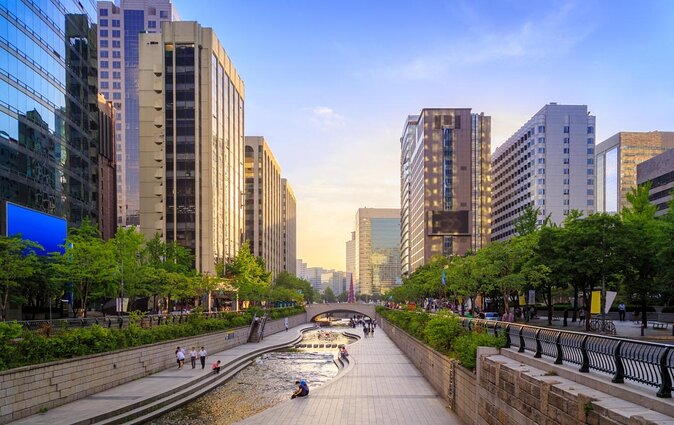
- Ends near Cheonggyecheon: The listed endpoint is Cheonggyecheon in Jongno District.
- Connects six named stops: You’ll see two palaces, a museum, a theater, Jungmyeongjeon Hall, and Gwanghwamun Square.
- Focuses on a turning point: The walk explores Korean history from the late 19th to early 20th century.
- Includes an English-speaking guide: The group is capped at 15 people.
- Costs $48 per person: Lunch and personal purchases are not included.
A walk through a period of change
This route is less about spending hours inside one palace and more about reading Seoul’s history across a set of places. Deoksugung and Gyeonghuigung introduce the royal setting; the museum and Jungmyeongjeon Hall bring in education, religion, and imperial-era events; the theater and Gwanghwamun Square show how the city’s public life continues to use its past.
That mix is the walk’s main appeal. You get a guided framework for understanding how these landmarks relate, instead of simply collecting palace photographs. The guide is included in the $48 price, and the stops are close enough to fit into a half-day walk. The listed admission for the stops is free, so you are not paying for a bundle of ticketed attractions.
The itinerary assigns about 110 minutes to the six stops, while the full tour lasts roughly three hours. The remaining time allows for walking between locations and other transitions, though the precise pacing is not specified. Bring comfortable walking shoes and be ready to keep moving. If your priority is a slow, detailed palace visit, you may prefer to set aside separate time for that.
More walking tours in Seoul:
- Seoul moonlight walking tour with local historian
★ 5.0 · 940 reviews - Seoul: Nighttime Hidden Gems Walking Tour
★ 5.0 · 775 reviews - Seoul: Evening Dark History, Folklore & Ghost Story Walking Tour
★ 5.0 · 593 reviews
Starting at Deoksugung Palace
The meeting point is Deoksugung Palace, at 99 Sejong-daero in Jung District. The walk starts at 9:30 am, and the palace is a fitting first stop: it was built during the Joseon Dynasty and is also known as Gyeongun-gung. Its central location sets up the tour’s central theme, the meeting of Korea’s older royal past with the changes of the late 19th and early 20th centuries.
The scheduled visit is 20 minutes. That is enough for an introduction and a look around, but not a substitute for exploring the palace at length. The admission ticket is listed as free. If you want to linger, consider returning another time rather than expecting the group to wait while you make a longer visit.
A guide can make a short stop more meaningful by supplying the context that a quick glance cannot. That matters here, because the walk’s value comes from following connections between sites, not from treating each one as an isolated photo stop.
Gyeonghuigung and the royal story
The next palace is Gyeonghuigung, also called Gyeonghui Palace, in Seoul’s Jongno-gu district. It was built in 1623 during the Joseon Dynasty as a royal residence. The stop is also scheduled for 20 minutes, with admission listed as free.
This second palace gives the route a useful point of comparison with Deoksugung. You are not simply visiting two versions of the same attraction: the guide can place both in the broader royal history that forms the starting point for the tour’s later stories. The short visit keeps the walk moving, though it leaves little room for an in-depth exploration of either palace.
If you are interested in the royal period, pay attention to how the guide links the first two stops to the later imperial sites. The itinerary’s emphasis is on the transition into modern Korean history, so the palaces work as context for what follows.
A school’s story at Appenzeller Noble Memorial Museum
The Appenzeller Noble Memorial Museum occupies the former home of Baekjae Hakdang, a missionary school that later expanded into a university. That institution is now known as Pai Chai University in Daejeon. The museum presents the school’s history and its Methodist foundations.
The stop is only 10 minutes, so expect a compact introduction rather than a long museum visit. Its value lies in broadening the walk beyond royal buildings. Education and religious institutions are part of the story too, and this site offers a specific example of how a school grew from its original form into a university.
This stop may be especially useful if you want the tour to explain more than palace history. If you prefer to read every display at your own pace, the group schedule may feel quick. The listed admission is free.
More history tours in Seoul:
- Hanbok Photoshoot and History Tour at Gyeongbokgung Palace
★ 5.0 · 276 reviews - From Seoul: Dae Jang Geum Park Historic K-Drama Set Tour
★ 4.9 · 143 reviews - Seoul: City Highlights and Historical Experience No Shopping
★ 5.0 · 74 reviews - Street photoshoot and Seoul Hidden gem History Walking Tour
★ 5.0 · 68 reviews
A pause at Jeongdong Theater
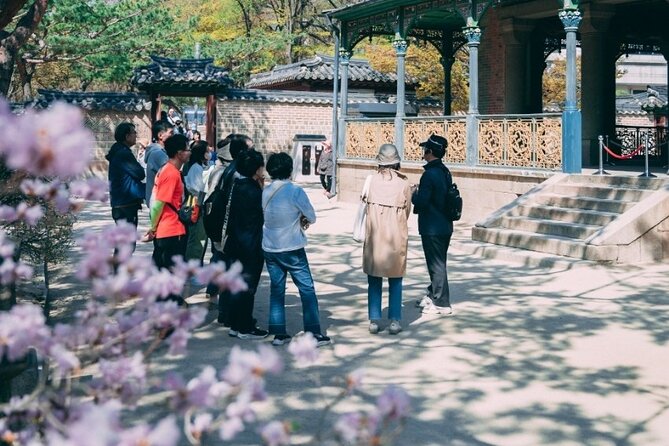
At Jeongdong Theater, the group has a 25-minute stop. The theater presents concerts, plays, and musicals that incorporate elements of traditional Korean culture. During the walk, the stop is also intended for coffee or another drink and a restroom break.
That practical pause is welcome on a three-hour outing. It gives you a chance to sit briefly, take care of necessities, and reset before the next history stop. Drinks are not included in the tour price, so bring a little extra if you plan to buy one.
The theater also reinforces the walk’s theme: tradition is not confined to a palace courtyard or museum display. Here, it appears in contemporary performance. The tour does not include a show, so treat this as a brief stop and break, not a performance visit.
Jungmyeongjeon Hall and an imperial turning point
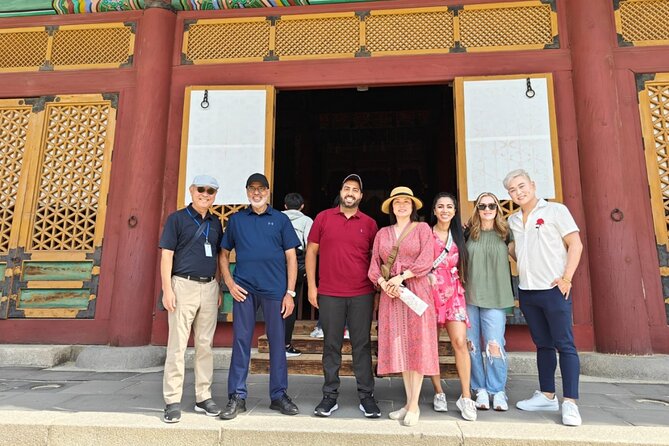
Jungmyeongjeon Hall was built in 1899 as the Korean Empire’s imperial library. After a fire at Deoksugung Palace in 1904, it became the temporary residence of Emperor Gojong. The hall is also associated with the signing of the Eulsa Treaty, an event central to the period covered by the walk.
The scheduled visit is 15 minutes. That is a short window for a place tied to several major events, making the guide’s explanation especially important. This is one of the stops where a clear account of the setting and its role can help you understand why the late 19th and early 20th centuries are the tour’s focus.
Jungmyeongjeon gives the route a sharper historical edge. The earlier palaces establish royal life; this hall connects the story to the Korean Empire and a period of serious political change. If that era interests you, listen closely and consider allowing yourself extra time to revisit the site independently.
Gwanghwamun Square and the city today
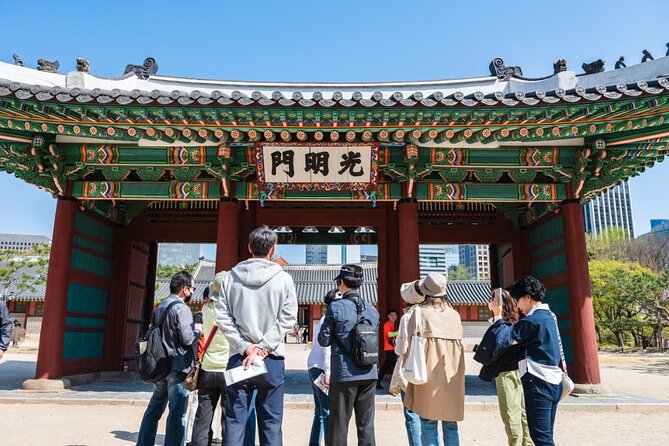
Gwanghwamun Square is a large public space in central Seoul, built in 2009. It includes a large fountain and a statue of King Sejong the Great, among other features. The group spends about 20 minutes here before continuing toward the listed endpoint at Cheonggyecheon.
The square works as a modern counterpoint to the palaces and older buildings. It is a public gathering place for locals and visitors, so the tour’s history lesson arrives in a setting that remains part of everyday city life. The stop helps bring the route back to present-day Seoul rather than ending with the imperial period.
The tour ends at Cheonggyecheon Stream in Jongno District. Since that is the stated endpoint, you can plan to continue your day from there. The information provided does not specify a final guided visit at the stream, so think of it as the place where the walk concludes rather than a separate extended stop.
Is $48 a fair price?
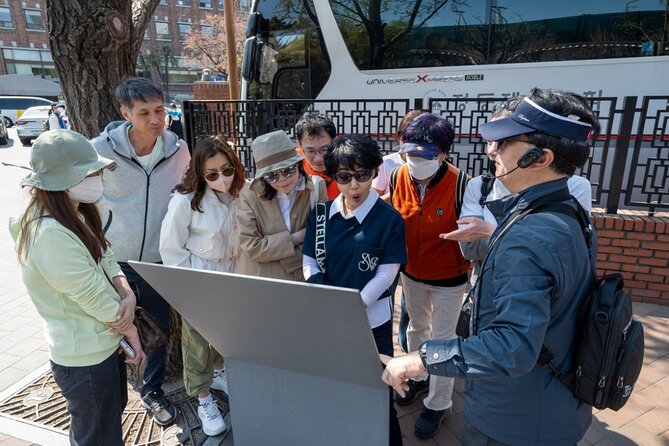
At $48 per person, the price buys a roughly three-hour guided walk with an English-speaking guide and a maximum group size of 15. Lunch and personal spending are extra. Admission at the listed stops is free, so the main value is the guide’s interpretation and the convenience of connecting several sites in one route.
That value depends on how you like to explore. If you enjoy walking tours that explain how landmarks fit together, a guide can make this collection of places more coherent than a solo stroll. If you are comfortable researching the history yourself and want long, unhurried visits, you may get more from visiting selected sites independently.
One guide named Sam has been associated with the walk and described as fun and informative. Your guide may differ, so do not book on the assumption that Sam will lead your tour. The overall feedback is very positive, with a 5.0 rating from nine reviews, and the strongest praise is for the guide’s engaging introduction to Seoul and its history.
Who will get the most from this walk?
I’d choose this tour if you are new to Seoul and want a structured first look at its royal and modern history. It also suits anyone curious about the transition from the Joseon Dynasty to the Korean Empire, and anyone who likes seeing palaces alongside institutions connected to education, religion, performance, and public life.
It is less suited to a visitor who wants extensive time inside each palace or museum. The route has six stops, and several are scheduled for only 10 to 20 minutes. You can still appreciate the sites, but the tour is designed to keep moving and build a broad picture.
The group maximum of 15 is a practical plus for a guided walk, and the tour is near public transportation. Most people can participate, according to the activity details, though the route is on foot. It requires good weather and a minimum number of participants; if the operator cancels for either reason, you’ll be offered another date or experience, or a full refund.
Should you book it?
Book this walk if you want a concise, guided introduction to Seoul’s late 19th and early 20th centuries, with royal landmarks and modern city spaces in the same outing. Its strongest point is the route’s variety, especially the shift from Deoksugung and Gyeonghuigung to Jungmyeongjeon Hall and Gwanghwamun Square.
Skip it if you want long, independent visits at each stop. At $48, the tour makes the most sense for someone who values a guide’s context and an organized half-day route more than extended time inside any single attraction.
FAQ
How long is the tour?
It lasts approximately three hours. The listed time at the six stops adds up to about 110 minutes, with the rest of the outing covering transitions and walking.
What time does the walk start?
The start time is 9:30 am.
Where does the tour begin?
It begins at Deoksugung Palace, 99 Sejong-daero, Jung District, Seoul.
Where does the tour end?
The listed endpoint is Cheonggyecheon in Jongno District, Seoul.
Is the tour led in English?
Yes. A professional English-speaking tour guide is included.
How much does the tour cost?
The price is $48 per person.
Is lunch included?
No. Lunch and other personal consumption are not included.
How many people can join?
The tour has a maximum group size of 15 travelers.
What happens if the weather is poor or the minimum group size is not met?
If the tour is canceled because of poor weather or because the minimum number of participants is not reached, you’ll be offered a different date or experience, or a full refund.
Latest reviews from Seoul
- From Seoul: Hwacheon Ice Fishing and Lighting Festival Tour★ 4.5 · 4 reviews
- You’re Invited to Our Home in Seoul: The Only Cooking Class!★ 5.0 · 8 reviews
- Unique Native Experience : Han River Picnic, Board game, BBQ★ 5.0 · 3 reviews
- Seoul: Gangneung BTS K-Pop & K-Drama Filming Locations Tour★ 4.6 · 14 reviews
- Yun Korean Cooking Class in Seoul★ 5.0 · 6 reviews
- 2-Hour Private Kayaking and Paddleboarding Experience in Hanriver★ 5.0 · 3 reviews
- Day Trip to Yongin Daejanggeum and Korean Folk Village from Seoul★ 4.0 · 9 reviews
- K-Pop Making Class with a Producer!★ 5.0 · 3 reviews
Seoul Walking Tours, compared.
Seoul moonlight walking tour with local historian
Read our review →
Evening Dark History, Folklore & Ghost Story Walking Tour
Read our review →
Dark Side of the City and Ghost Stories Walking Tour
Read our review →
Gangnam Walking Tour on Youth and Society in Seoul Korea
Read our review →
Gyeongbok Palace and Bukchon Hanok Walking Tour
Read our review →
Highlights & Hidden Gems With Locals: Best of Seoul Private Walking Tour
Read our review →
Street photoshoot and Seoul Hidden gem History Walking Tour
Read our review →Browse the lists this tour appears in