
Reviewed · SEOUL WALKING TOURS
(Closed) Korea’s White House Walking Tour Blue House
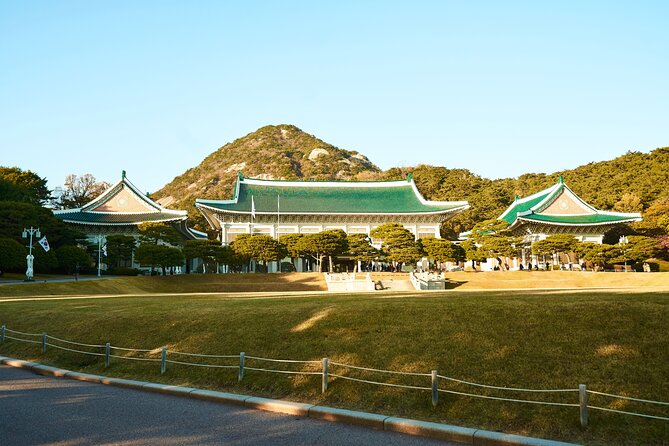
The Blue House was Korea’s presidential home and office for more than 70 years, and access to its grounds offers a rare look at the place where public decisions and private presidential life met. The experience is marked closed, though, so confirm it is available before building your Seoul plans around a visit.
If it does run, I like two things in particular: the small group of no more than nine, which gives you room to ask questions, and the chance to see several distinct buildings rather than just the famous blue roof. Guide Jungho is singled out for clear English, strong historical storytelling, and thoughtful help with directions.
The main consideration is the price: $199 per person is a sizable outlay for a 2.5-hour walk, even with reserved entry and a licensed guide. Also, the provided details do not promise access to the interiors, so check what areas are open if seeing inside the buildings matters to you.
- Seven stops connect presidential work and home life, from the former press center to a traditional pavilion.
- The group is capped at nine, a useful size for hearing explanations and asking questions.
- Jungho is the named guide, praised for his English, clear meeting instructions, and engaging history lessons.
- The tour starts at 10 a.m. at Gyeongbokgung Station and returns to the same meeting point.
- The listed price is $199 per person, with reserved entrance and a licensed English-speaking guide included.
- Availability needs checking: the experience is marked closed, despite its description referring to a limited period of public access.
A rare look at Korea’s presidential grounds
The Blue House, or Cheong Wa Dae, is not simply a grand residence with a photogenic roof. It served as both the presidential home and office for more than seven decades, giving the grounds an unusual mix of political history, formal reception spaces, press facilities, and quiet domestic buildings.
For much of that time, the public could not enter. The tour description ties the opening of the gates to a change in government, while also warning that public access would not last indefinitely. Since this experience is now marked closed, treat the tour details as a guide to what it offered, not proof that you can book it today.
If access becomes available again, a guided visit makes sense here. The place carries history that may not be obvious from its buildings alone. A good guide can explain why a reception hall, an office, or a press center mattered, and connect those spaces to Korea’s modern politics and culture.
That context is a major part of the value. You are not just looking at a group of official buildings; you are following the changing functions of a presidential compound. The guide is licensed and speaks English, and Jungho is specifically praised for conversational fluency and lively explanations.
Seven stops, from formal receptions to quiet pavilions
The itinerary lists seven stops, with individual visits ranging from five to 20 minutes. Those listed stop times add up to about 85 minutes, while the full tour lasts approximately two hours and 30 minutes. The remaining time appears to allow for walking between locations and explanation along the way, though the exact pacing is not specified.
More walking tours in Seoul:
- Seoul moonlight walking tour with local historian
★ 5.0 · 940 reviews - Seoul: Nighttime Hidden Gems Walking Tour
★ 5.0 · 775 reviews - Seoul: Evening Dark History, Folklore & Ghost Story Walking Tour
★ 5.0 · 593 reviews
Yeongbingwan: welcoming important visitors
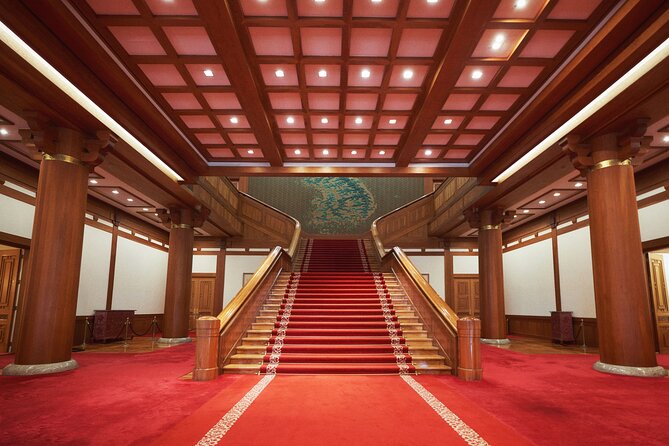
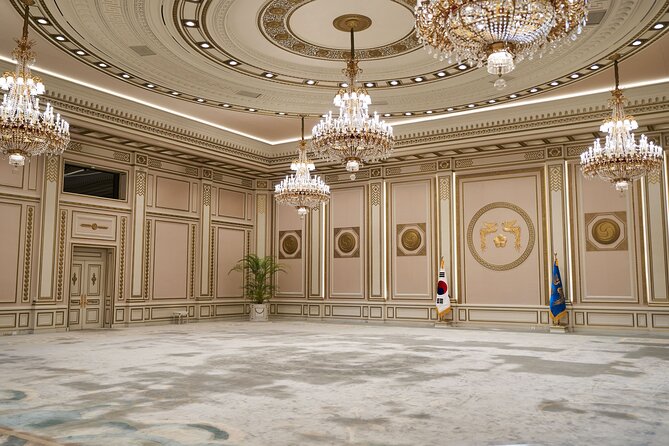
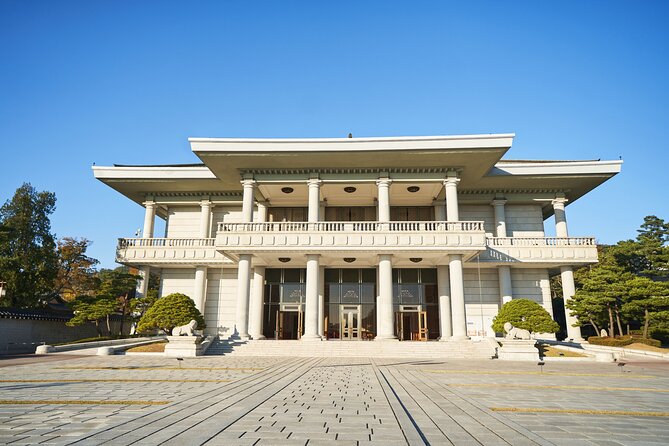
The tour begins at Yeongbingwan, a reception building used for important foreign visitors. Presidents met world leaders here, and formal dinners and meetings took place inside. Its modern appearance offers a contrast with the more traditional structures elsewhere on the grounds.
The stop is listed at 10 minutes. That is enough time for an introduction to the building’s role and appearance, but not a lengthy visit. The description does not confirm interior access, so do not assume you will see the rooms where dinners or meetings were held.
The main Blue House: the symbolic blue roof
The main Blue House served as the president’s workplace. Meetings took place here, and major decisions were made within its walls. Its blue roof became a recognizable symbol of the Korean government.
You have 20 minutes at this stop, one of the longer allocations. The building combines modern and traditional design, a useful visual reminder that the compound was both a working seat of government and a symbol of national identity. A guide can help you read the architecture as more than a backdrop for photographs.
The former presidential office site
A second stop at the Blue House grounds marks the location of the old main presidential office, which stood before the current main building was constructed. Korean presidents worked there and held important meetings, making this a point where the site’s history reaches further back than the building most visitors recognize.
This stop is also listed at 20 minutes. Its value depends on the guide’s explanation: the former office is not described as a surviving building, but as a place where earlier presidential work took place. If you like connecting physical locations to political change, this should be one of the more meaningful pauses.
More Seoul tours and experiences:
- Best DMZ Tour Korea from Seoul (Red Suspension Bridge Optional)
★ 5.0 · 41,422 reviews - DMZ Tour: 3rd Tunnel, Option(Suspension Bridge, Boat) from Seoul
★ 5.0 · 21,373 reviews - DMZ tour south Korea from Seoul (NK experience hall, defector)
★ 5.0 · 20,599 reviews - Seoul: DMZ Tour with Optional Suspension Bridge
★ 4.8 · 5,277 reviews
The presidential residence
The residence was separate from the president’s office, providing privacy for the president and family. The description places it in a quieter, tree-surrounded area and notes that it contained bedrooms and living spaces.
The visit is scheduled for 10 minutes. That gives you a brief look at the domestic side of presidential life, though the supplied details do not say which rooms or interiors are open. The separation between home and office is worth noticing: even within a secure compound, the family’s private space had a different purpose from the rooms used for government business.
Chimnyugak House: a pause among the trees
Chimnyugak is a small traditional pavilion surrounded by trees. The group pauses here while the guide discusses its architecture and history. At 10 minutes, this stop also offers a quieter counterpoint to the formal reception and office buildings.
A pavilion may seem like a modest detail on a political tour, but it can help you see how the compound blends working government spaces with places designed for rest and reflection. The description promises a short break, not a long rest stop, so think of it as a change of pace rather than a place to linger.
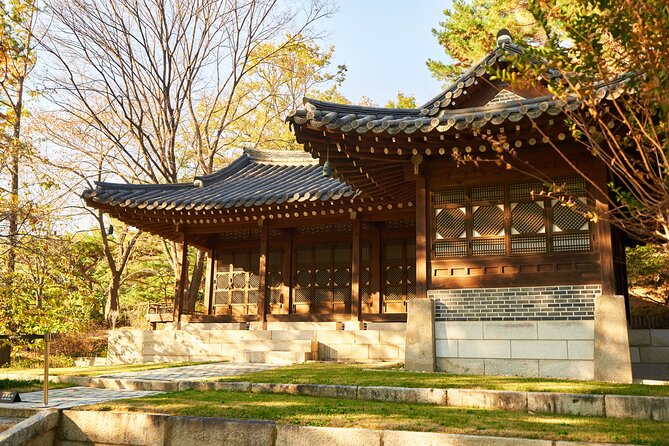
Sangchunjae: traditional architecture and special meetings
Sangchunjae is described as one of the most beautiful traditional buildings on the grounds. It was used for special visitors and quiet meetings, and the tour includes a walk around its wooden structure.
You have 10 minutes here. This is a good stop for noticing architectural contrast: the main office projects government authority, while a traditional wooden building suggests a different, more intimate setting for receiving people. The description does not specify whether you enter the building, so expect an exterior visit unless access is confirmed.
Chunchugwan: where the press gathered
The final listed stop is Chunchugwan, the former press center. Korean and international reporters came here for official announcements, and the group stands where the president addressed the press. At five minutes, this is a short concluding stop, but it gives the visit a clear link to the public side of presidential work.
Together, these stops tell a fuller story than a single photo stop at the main building could. You move from international diplomacy to the president’s office, then to the family residence, traditional pavilions, and the press. That range is the tour’s strongest idea.
What a small group and a strong guide add
A maximum of nine people is a practical advantage on a site where history and details matter. You are less likely to be lost in a crowd, and it is easier to hear the guide or ask a question. It does not guarantee a private-feeling visit, but it is a far more manageable size than a large coach group.
Jungho is the guide named in the available details. His strengths, as described, are excellent conversational English, clear directions to the meeting point, and the ability to make Korean history engaging. One visitor also noted that he walked them back to the metro station. That was a personal kindness, not a stated part of the tour, so do not count on it as a standard service.
The guide’s role matters especially here because the buildings have official functions that may not be self-explanatory. Jungho has been praised for answering questions, using quiz-style interaction, and connecting the site to wider Korean history. If you enjoy asking questions or want more than a quick walk and a few photographs, that style may suit you.
The experience has a five-out-of-five rating from 15 ratings, with 100 percent recommending it. That is a strong record, but the sample is small. The repeated praise for Jungho is more useful than the perfect score alone: the guide appears to be a central part of what makes the visit worthwhile.
Is $199 a fair price?
At $199 per person, this is an expensive two-and-a-half-hour outing. The fee includes reserved entrance and a licensed English-speaking guide, but not hotel pickup or drop-off. You are paying mainly for access, interpretation, and a small group, rather than transport or a full-day itinerary.
The value depends on your interest in Korean political history and on what access is available. If the buildings and grounds are open and you want a guided explanation of the former presidential compound, the small group and the guide’s storytelling may justify the premium. If you mainly want to see the blue roof or take a few photographs, the price is harder to defend.
Be especially clear about interior access before paying. The stop descriptions explain what each building was used for, but they do not consistently say that you go inside. Reserved entrance means access to the experience’s site, not necessarily entry into every room or structure.
The tour is booked, on average, 38 days ahead, which suggests that advance planning may be sensible when it is operating. But availability is the first question, not the booking window: the experience is marked closed, and the description’s reference to access ending in June does not include a year.
Meeting point, timing, and practical details
The tour starts at 10 a.m. at Gyeongbokgung Station in Seoul and ends back at the same meeting point. Hotel pickup and drop-off are not included, so you need to reach the station yourself. The activity is near public transportation, and the guide has been praised for sending clear meeting instructions.
The full visit lasts about two hours and 30 minutes. Wear shoes suitable for walking, though no specific distance or terrain is provided. The group has a maximum of nine people, service animals are allowed, and the activity says most people can participate.
The cancellation terms allow a full refund if you cancel at least 24 hours before the start time. Cancellations or changes made less than 24 hours before the start are not accepted, and cut-off times follow local time. Confirmation is provided at booking.
Who should consider this Blue House visit?
If it is available again, I would consider it for anyone with a strong interest in Korea’s modern history, government, or architecture. It is also a good fit if you prefer a guide-led visit with room for questions instead of exploring a politically important site without much context.
It is less suited to someone seeking a cheap, casual stop, or to anyone whose main priority is guaranteed access to interiors. The price is high, and the descriptions do not settle exactly what you can enter. Families or visitors with varied mobility needs should note that the activity says most people can participate, but it gives no detailed accessibility information.
My call: do not plan your day around this tour until you confirm that it has reopened. If it is bookable and the access details match your interests, its small group, seven distinct stops, and Jungho’s history-focused guiding make it a compelling way to understand the Blue House beyond its famous roof.
FAQ
Is the Blue House tour currently available?
The experience is marked closed. Check current availability before making plans, as the supplied details do not confirm that it has reopened.
How long does the tour last?
The tour lasts approximately two hours and 30 minutes.
How much does the tour cost?
The listed price is $199 per person.
What time does the tour start?
The listed start time is 10 a.m.
Where does the tour meet?
It meets at Gyeongbokgung Station in Seoul.
Where does the tour end?
It ends back at the meeting point.
How many people can join the tour?
The maximum group size is nine people.
Is an English-speaking guide included?
Yes. The tour includes a licensed English-speaking guide. Jungho is the named guide in the available information.
Is hotel pickup included?
No. Hotel pickup and drop-off are not included.
Can I cancel for a full refund?
Yes, if you cancel at least 24 hours before the experience’s start time. Cancellations made less than 24 hours before the start are not refunded.
Latest reviews from Seoul
- From Seoul: Hwacheon Ice Fishing and Lighting Festival Tour★ 4.5 · 4 reviews
- Unique Native Experience : Han River Picnic, Board game, BBQ★ 5.0 · 3 reviews
- You’re Invited to Our Home in Seoul: The Only Cooking Class!★ 5.0 · 8 reviews
- Seoul: Gangneung BTS K-Pop & K-Drama Filming Locations Tour★ 4.6 · 14 reviews
- Yun Korean Cooking Class in Seoul★ 5.0 · 6 reviews
- 2-Hour Private Kayaking and Paddleboarding Experience in Hanriver★ 5.0 · 3 reviews
- Day Trip to Yongin Daejanggeum and Korean Folk Village from Seoul★ 4.0 · 9 reviews
- K-Pop Making Class with a Producer!★ 5.0 · 3 reviews
Seoul Walking Tours, compared.
Seoul moonlight walking tour with local historian
Read our review →
Evening Dark History, Folklore & Ghost Story Walking Tour
Read our review →
Dark Side of the City and Ghost Stories Walking Tour
Read our review →
Gangnam Walking Tour on Youth and Society in Seoul Korea
Read our review →
Gyeongbok Palace and Bukchon Hanok Walking Tour
Read our review →
Highlights & Hidden Gems With Locals: Best of Seoul Private Walking Tour
Read our review →
Street photoshoot and Seoul Hidden gem History Walking Tour
Read our review →Browse the lists this tour appears in