
Reviewed · DAY TRIPS FROM SEOUL
From Seoul: 5-Day Tour of Korea with UNESCO Sites
The remarkable thing about this five-day trip is its reach: you go from royal tombs and temple art to a major seafood market, a preserved Joseon-era village and mountain valleys. It links places that are often scattered across separate trips, with Seoul as your starting and finishing point.
I like two things in particular: the route pairs UNESCO heritage sites with places tied to modern Korean history, and the hotels and breakfasts are included, so you spend less time arranging each leg yourself. Guides Justin and Mr. Kim have led the tour, and guide quality has been a noted strength.
The trade-off is the pace. You cover a lot of ground in five days, so visits may feel brief, and Mt. Seorak can be restricted or skipped in October. If you want long, unhurried time at each stop, this is not the right format.
The trip at a glance
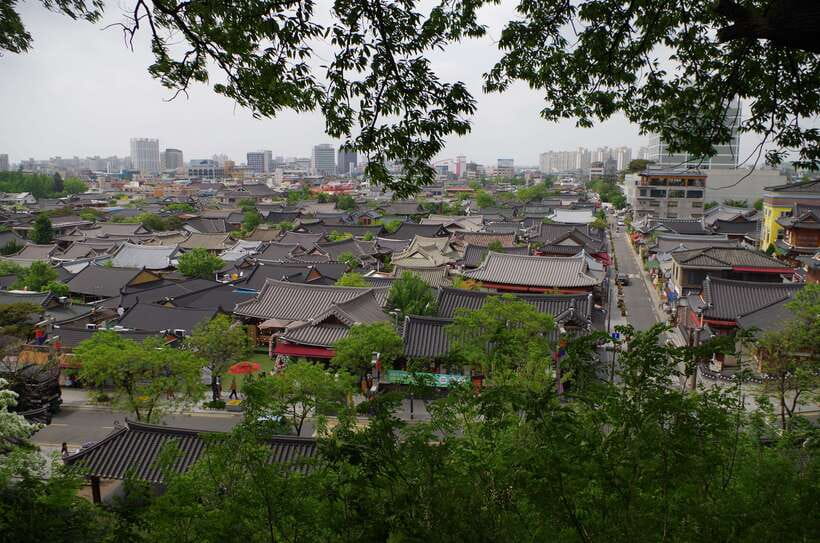
- Gongju’s royal tomb and fortress open the tour with two UNESCO-listed sites before you continue to Jeonju.
- Suncheon, Yeosu and Gwangju bring together a garden visit, Admiral Yi Sun-sin’s historic path and a memorial to the May 18 democratic movement.
- Busan’s Jagalchi Fish Market gives you a close look at the city’s seafood trade, followed by Haeundae Beach and Dongbaek Park.
- Gyeongju and Andong deliver temples, a grotto and a traditional village associated with Joseon-era life.
- Mt. Seorak is the final major stop, but October access can be limited and involve a 3.6-kilometer walk from the parking area.
- Four hotel nights, breakfast, selected entry tickets and transport are included in the $999 price; lunch, dinner and Seoul transfers are not.
What this five-day route does well
This is a broad loop through South Korea, not a slow stay in any one city. You leave from Gwanghwamun in central Seoul, travel through the southwest and southeast, then turn north toward Pyeongchang and Seorak before returning to the capital at about 5 p.m. on the last day.
That structure makes the tour useful if you have limited time and want a first look at several parts of the country. It also means you should expect early starts, long drives and a succession of hotel check-ins. You get help with the route and transport, but you trade the freedom to linger.
The program moves between different kinds of history rather than treating Korea’s past as one long parade of palaces. You see royal-era sites, Buddhist monuments, a preserved village, places connected to Admiral Yi Sun-sin and the May 18 movement. That range is one of the trip’s strongest features.
More day trips from Seoul:
- Full Day Tour In The Soop BTS Ver in PyeongChang Filming Location
★ 5.0 · 1,709 reviews - Mt. Seorak+Nami Island+Garden of Morning Calm Day Trip from Seoul
★ 5.0 · 959 reviews - From Seoul: Nami Island, K-drama Garden & Rail Bike Day Tour
★ 4.6 · 724 reviews
Day one: Gongju’s tomb and fortress, then Jeonju
Meet your guide outside the Donghwa Duty Free Shop Building at Gwanghwamun Intersection. The meeting point is near Exit 6 of Gwanghwamun Station, and the guide carries a K-shuttle sign. The tour does not include pickup from your Seoul hotel, so plan your own way to the start.
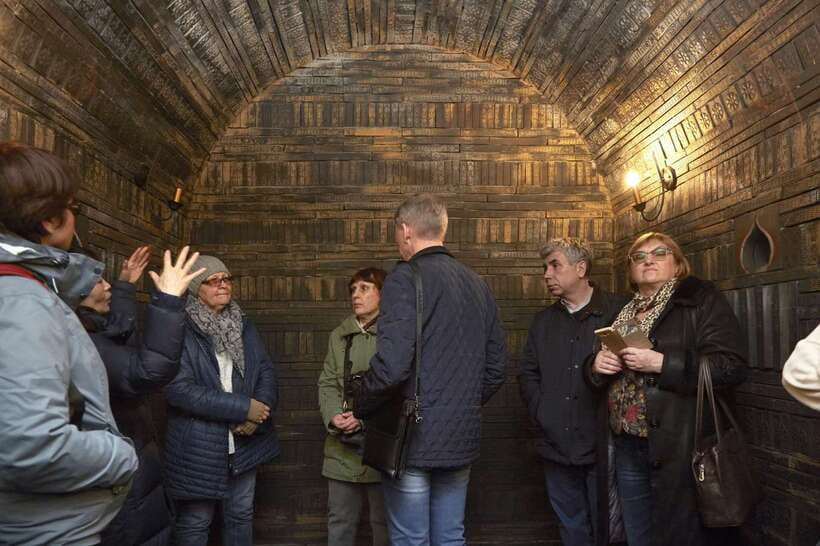
The first stop is the Tomb of King Muryeong in Gongju, a UNESCO World Heritage site. It offers an introduction to the Baekje kingdom through a royal burial site, followed by Gongsanseong Fortress, also UNESCO-listed. Together, they give the opening day a clear historical focus before the drive to Jeonju.
The two sites are meaningful stops, but the schedule puts them into a larger travel day. You then continue to Jeonju and check in at a hotel near Hanok Village, with the listed property being the Jeonju Ramada or a similar hotel. Being nearby is handy if you want to explore the neighborhood independently, though the program does not specify how much free time you will have.
Day two: modern memory, garden paths and Yeosu
After breakfast, the route heads to Gwangju, a city closely associated with Korea’s modern democratic movement. At the May 18th National Cemetery, the focus shifts from royal history to the people and events behind a defining period of civic struggle. This is a serious stop, and it gives the tour a wider view of the country than a route built only around ancient monuments would.
Next comes Suncheon Bay Garden. Its appeal is a change of pace and setting after the cemetery, with landscaped garden areas to walk through. Check that it will be open on your travel date: the garden has a monthly closure, and an unexpected closure can take away one of the day’s main visits.
The day ends in Yeosu, where you follow a historic path associated with Admiral Yi Sun-sin. The itinerary does not specify a long visit or a particular museum, so think of this as a short historical stop rather than a deep study of the admiral’s campaigns. You stay overnight at the Ramada Plaza by Wyndham Yeosu or a similar hotel.
Day three: a fortress, Busan’s fish market and the road to Gyeongju
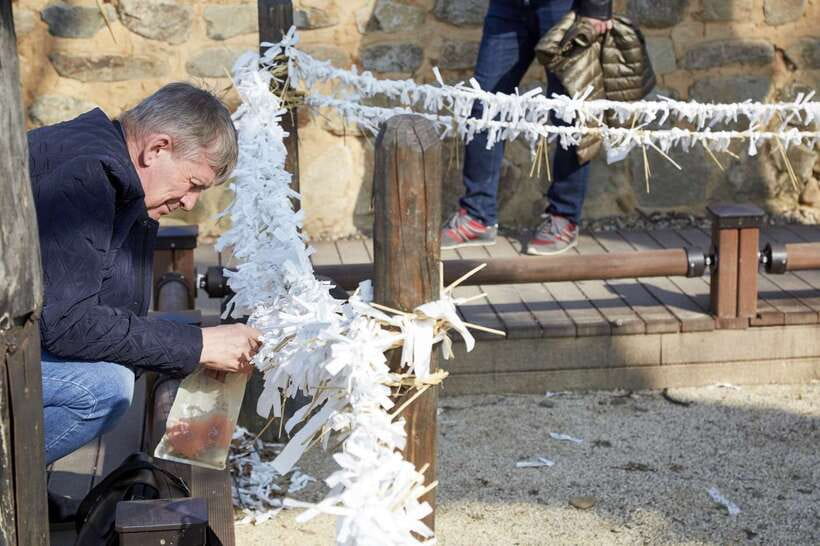
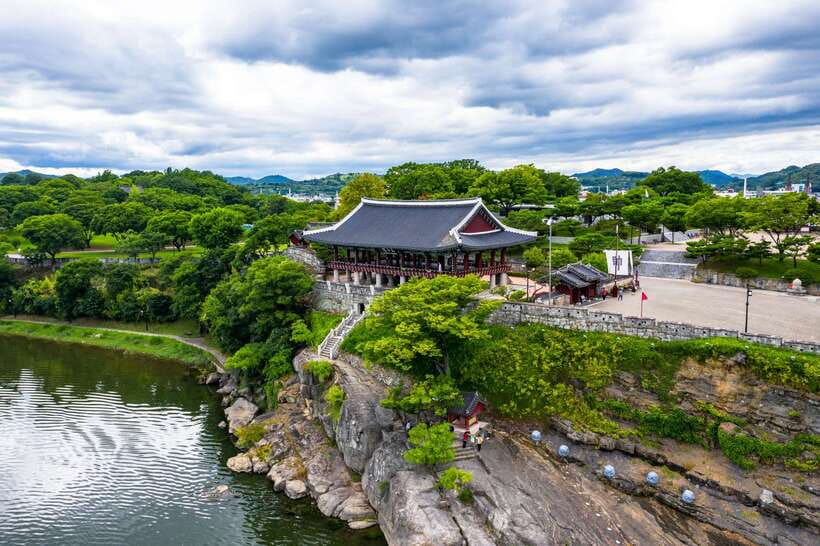
You begin at Jinjuseong Fortress, including Chokseoknu, an edifice linked to the Japanese invasion of 1592. As at the other fortress stops, the site rewards you most if you are interested in how Korea’s conflicts shaped its cities and defenses. The tour then moves to Busan.
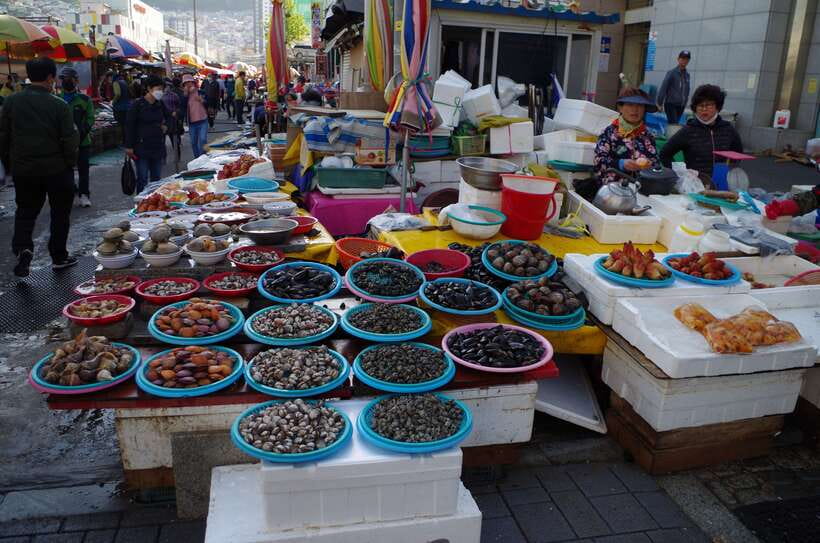
At Jagalchi Fish Market, you get a close look at the city’s largest seafood market. This is a practical, everyday place as well as a visitor stop, and it offers a different kind of cultural encounter from a temple or monument. Lunch is not included, so the market may be a convenient place to buy a meal, though the tour does not specify a meal arrangement or how long you will have there.
The afternoon includes Haeundae Beach and Dongbaek Park. The beach gives you a coastal view of Busan, while the park offers a greener walking stop nearby. Together, they provide a useful breather after the market and before the drive to Gyeongju, where you check in at the Gyeongju Commodore Hotel or a similar property.
The day has a lot of moving parts. If you are hoping for a relaxed beach afternoon or a long market visit, you may find the timing tight. The value here is seeing several sides of Busan without needing to arrange transport between them yourself.
More five-day trips in Seoul:
Day four: Gyeongju’s sacred sites and Andong Hahoe
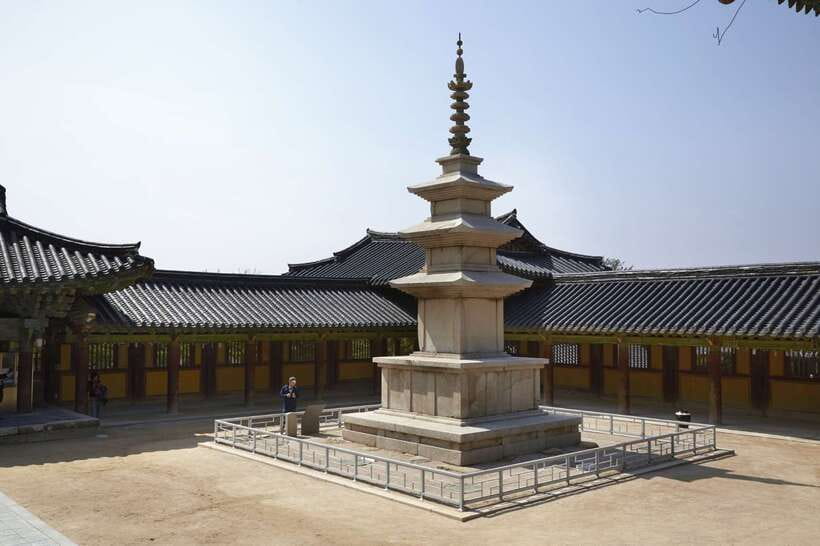
Gyeongju is the day’s first major focus, with visits to Seokguram Grotto and Bulguksa Temple, both UNESCO-listed. The grotto is a Buddhist monument, while Bulguksa is a temple complex; together, they are among the tour’s most important heritage stops. This is a strong day for anyone drawn to religious art, architecture and Korea’s earlier kingdoms.
Next, you travel to Andong Hahoe Folk Village, another UNESCO-listed site. Its traditional homes preserve the form and character of a Joseon-era settlement, and the village is noted for a visit by Queen Elizabeth II. Unlike a single monument, Hahoe gives you a sense of how a community and its houses fit together, though the available time will determine how much you can explore.
The final drive takes you to Pyeongchang, where you stay at the Ramada Hotel PyeongChang or a similar property. This is another substantial travel day, with several headline heritage sites before the evening check-in. Comfortable shoes matter: the tour specifically recommends them, and the route includes multiple sites where you will be on your feet.
Day five: Mt. Seorak, with an important October caveat
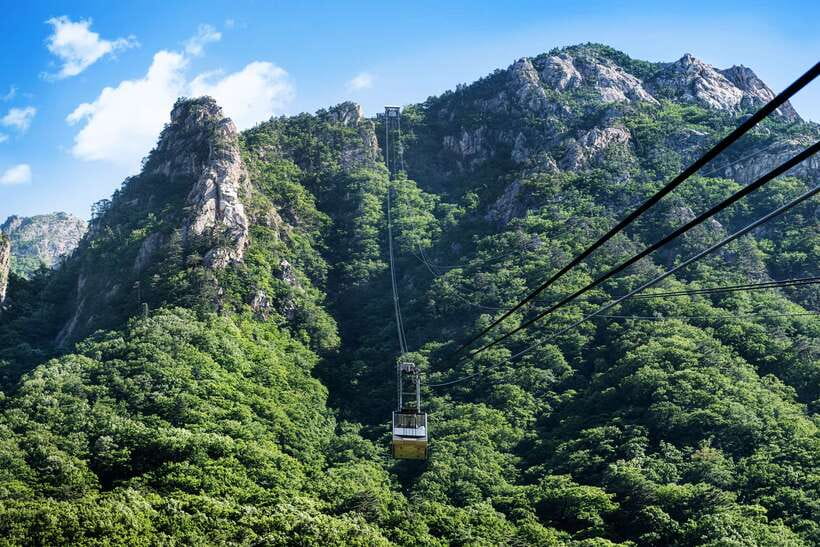
The final day is set aside for Mt. Seorak National Park, a UNESCO Biosphere Preservation District. The description points to mountain peaks and water running through valleys, a fitting natural counterpoint to the temples and historic towns earlier in the trip. If the park is accessible, this is the tour’s main chance to trade built heritage for mountain scenery.
There is a real caveat in October. Bus access may be restricted, and the stated alternative is a 3.6-kilometer walk from the parking area to the park entrance. The visit could also be skipped. Ask about current access before booking an October departure, and do not assume the cable car will make the whole visit effortless.
A cable car to Gwongeumseong Fortress is optional, with Shinheungsa Temple mentioned as another option. The information does not say that the cable car or any optional visit is included in the price, so budget for an extra charge if you plan to take it. The tour returns to Gwanghwamun at about 5 p.m., though the mountain access warning makes it sensible not to schedule an important onward connection too tightly.
What the $999 price covers, and what it does not
At $999 per person, the price includes four hotel nights, hotel breakfasts, an English-speaking guide, air-conditioned transportation and tickets for selected attractions. That is meaningful value on a route crossing so many regions: you avoid arranging intercity transport and hotel bookings yourself, and the included admissions cover at least some of the sites.
The accommodation is on a twin or triple-sharing basis. The named hotels are examples, with similar hotels possible, and the room category or view may vary. If a road or parking view would bother you, ask before booking whether room-category choices are available. The hotels and breakfast buffets have been a strength of the experience, but a good breakfast cannot make up for a room that disappoints you.
Lunch and dinner are not included, nor is travel insurance. Set aside money for meals, optional activities and any personal expenses. Also bring enough Korean won for the trip, since exchanging currency while on the route may be difficult.
The tour is not a bargain in the sense of covering every cost, but its price includes the major practical pieces: transport, lodging, breakfasts, guide service and selected entries. You will get the best value if you want an escorted circuit and are comfortable paying separately for two meals a day.
Pace, guide and practical choices
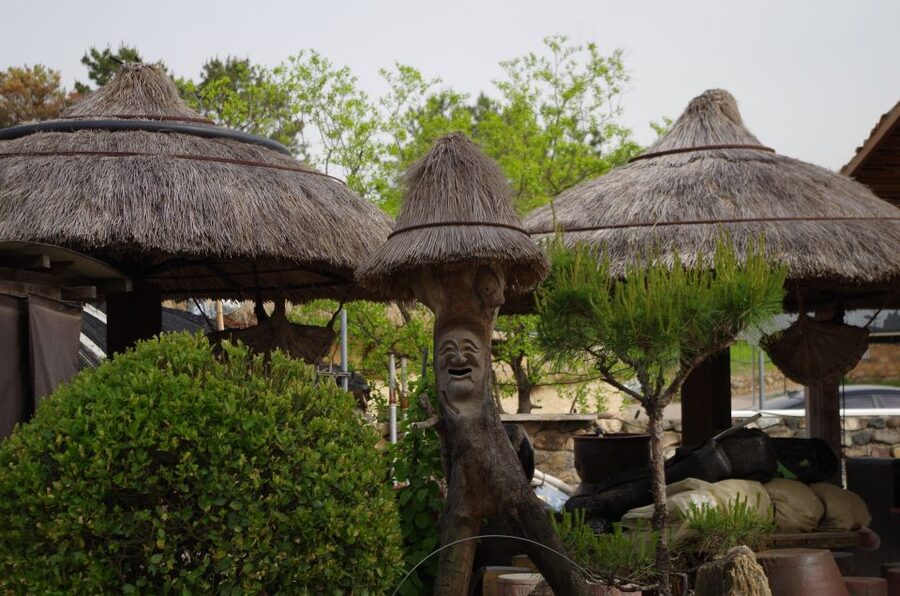
The tour’s greatest convenience is also its main compromise: an organized vehicle carries you across a large part of the country, but the itinerary leaves limited room to set your own pace. You should expect short visits at some stops and long stretches on the road. One traveler’s practical observation was that a sixth day or an extra day or two would make the schedule more comfortable; if you have that time, a slower trip is worth considering.
Guide service matters on a route with many transitions and historical contexts. Justin and Mr. Kim have both led the tour and received strong praise for their work. The guide’s role is especially useful when moving between sites, but the amount of personal time at each place remains shaped by the schedule.
Vehicle size can change according to how many people join. The tour does not promise a particular group size, so do not book on the assumption that you will have a small group or a specific type of vehicle.
Wear comfortable shoes, bring sufficient won, and keep your expectations flexible around the garden’s monthly closure and Seorak’s October restrictions. These are not minor details: either could change the feel of a full day.
Who should book this Korea tour?
I would consider this tour if you have five days, want to see a wide range of places, and prefer having hotels and long-distance transport handled for you. It suits a first visit focused on major heritage sites, regional contrasts and a sample of Korea beyond Seoul. It also works well if you value an English-speaking guide and can accept shared hotel rooms.
I would hesitate if you want slow mornings, lengthy museum visits or a free afternoon in Busan. The itinerary is ambitious, and some stops will be more of an introduction than a thorough visit. The most useful decision is whether you want breadth or depth. If breadth wins, $999 buys a well-supported route with a lot of ground covered. If you want more time in each place, choose a longer trip or plan a smaller number of stops yourself.
FAQ
Where does the tour start and finish?
It starts at the Donghwa Duty Free Shop Building at Gwanghwamun Intersection, near Exit 6 of Gwanghwamun Station. It returns to Gwanghwamun at about 5 p.m. on the final day.
Are Seoul hotel pickup and drop-off included?
No. You need to make your own way to the meeting point, and hotel pickup and drop-off in Seoul are not included.
What is included in the $999 price?
The price includes four hotel nights on a twin or triple-sharing basis, hotel breakfasts, an English-speaking guide, air-conditioned transportation and entry tickets for selected attractions.
Are lunch and dinner included?
No. Lunch and dinner are not included, so plan to pay for those meals yourself.
Can Mt. Seorak be skipped in October?
Yes. Access may be restricted in October, and the visit could be skipped. If buses cannot enter, you may need to walk 3.6 kilometers from the parking lot to the park entrance.
What should I bring?
Comfortable shoes are recommended. You should also prepare enough Korean won before departure, since currency exchange during the trip may be difficult.
Latest reviews from Seoul
- From Seoul: Hwacheon Ice Fishing and Lighting Festival Tour★ 4.5 · 4 reviews
- Unique Native Experience : Han River Picnic, Board game, BBQ★ 5.0 · 3 reviews
- You’re Invited to Our Home in Seoul: The Only Cooking Class!★ 5.0 · 8 reviews
- Seoul: Gangneung BTS K-Pop & K-Drama Filming Locations Tour★ 4.6 · 14 reviews
- Yun Korean Cooking Class in Seoul★ 5.0 · 6 reviews
- 2-Hour Private Kayaking and Paddleboarding Experience in Hanriver★ 5.0 · 3 reviews
- Day Trip to Yongin Daejanggeum and Korean Folk Village from Seoul★ 4.0 · 9 reviews
- K-Pop Making Class with a Producer!★ 5.0 · 3 reviews
Day Trips from Seoul, compared.
Full Day Tour In The Soop BTS Ver in PyeongChang Filming Location
Read our review →
Mt. Seorak+Nami Island+Garden of Morning Calm Day Trip from Seoul
Read our review →
Nami Island, K-drama Garden & Rail Bike Day Tour
Read our review →
Gangwon-do Day Trip with Alpaca World & Nami Island
Read our review →
Seoul City Private Full-Day Tour Including Lunch
Read our review →
Day Trip to Nami Island with Rail bike and The Garden of Morning Calm
Read our review →
Seoul City Half Day Tour-Gyeongbok Palace Guard Changing Ceremony
Read our review →
Full-day Customizable Private Seoul Highlight Tour
Read our review →Browse the lists this tour appears in