
Reviewed · INCHEON TOURS
Incheon Port History Tour by 19th Century Electric Car, KTourTOP10
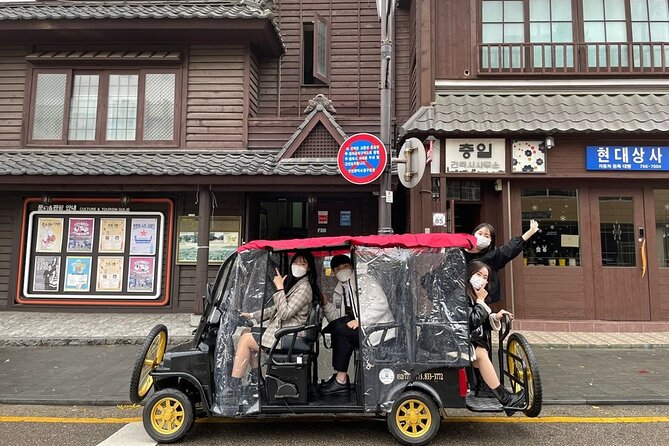
Incheon’s old port quarter packs several layers of Korean and immigrant history into a compact area. This 50-minute ride links red-brick port buildings, Chinese heritage sites, murals and the Jemulpo Club in a 19th-century-style electric car.
I like the car for two practical reasons: it gives you a quick look at several sights without a long walk, and the small-group format can make it easier to get a guide’s attention. The route also reaches beyond Chinatown’s main streets to places like the Jjajangmyeon Museum and Songwol-dong’s mural lanes.
The trade-off is depth. Fifty minutes is a sampler, not a slow visit, and the quality of live explanation may depend on who is guiding: one guide, Soonie, was praised for patient history, while another tour had prerecorded commentary and a driver who spoke no English. If a live English-speaking guide is essential, confirm that before booking.
What to know before you ride
- Old-port sights in one short loop: The route covers Incheon Art Platform, the Chinese-Japanese settlement area, Chinatown, Songwol-dong and Jemulpo Club.
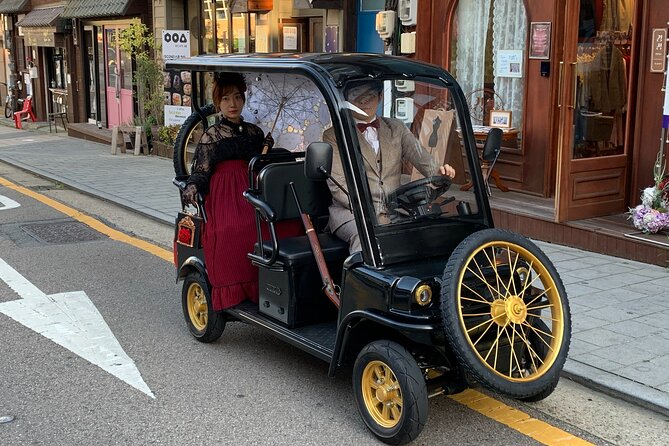
- A period look, modern power: The vehicle is an electric car styled like a 19th-century vehicle, not an antique car.
- A compact history lesson: Expect places linked to the 1883 opening of Incheon Port, Chinese immigration, colonial-era change and local food culture.
- A quick view of many stops: The short duration means some sights may be pointed out rather than explored on foot.
- A guide makes a difference: Soonie has been praised for patient explanations, but live commentary and English ability are not guaranteed by the tour details.
- Listed at $45 per group of up to three: The activity also allows a maximum of 20 travelers, so check the booking details to understand how your group will be arranged.
A short ride through Incheon’s open-port story
Incheon’s Open Port district is a good place to see how one city can hold several histories close together. The port opened in 1883, and the surrounding streets took shape as foreign residents and traders established themselves in the area. Chinese and Japanese buildings, a Chinese shrine, a Catholic church and a former foreign social club each point to different communities and eras.
The electric-car format makes sense if you want an introduction without committing to a long walking tour. You can get a broad outline of the district and see where the main sights sit in relation to one another. That is useful if you are short on time or want to decide which places deserve a longer visit later.
The compromise is built into the clock. At about 50 minutes, the tour cannot give every site a full visit and detailed explanation. Think of it as a guided overview, not a substitute for spending an afternoon inside the museums and walking the side streets.
More history tours in Incheon:
- Seoul: Evening Dark History, Folklore & Ghost Story Walking Tour
★ 5.0 · 593 reviews - Hanbok Photoshoot and History Tour at Gyeongbokgung Palace
★ 5.0 · 276 reviews - From Seoul: Dae Jang Geum Park Historic K-Drama Set Tour
★ 4.9 · 143 reviews
The electric car: a fun way to cover ground
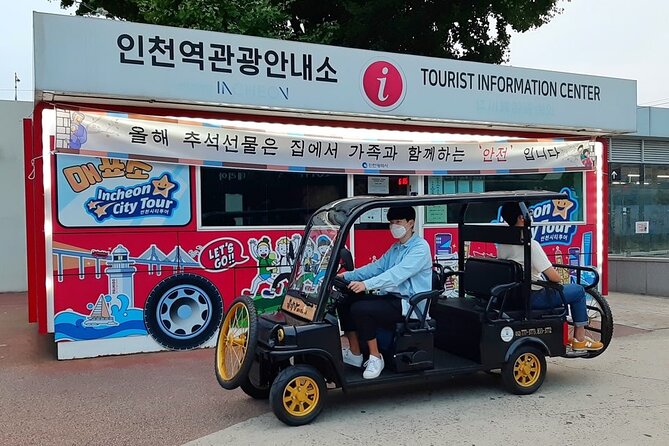
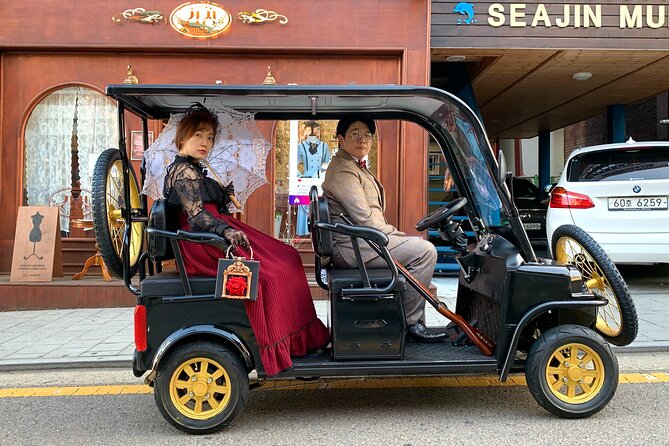
The vehicle is designed to look like a 19th-century car, which suits a district known for its open-port history. It is electric, so the old-fashioned appearance does not mean you are riding in a historic vehicle. The contrast is part of the appeal: a modern, low-emission ride through streets shaped by the port’s past.
For a group that includes people who would rather not walk continuously, the car offers an easy way to connect several parts of the neighborhood. It also gives you a moving view of the streets between the named sights. You will still get a better sense of individual buildings by walking around them, but the ride can help you orient yourself first.
The experience is designed for small groups, with a maximum of 20 participants. The listed price is $45 per group of up to three, which can be good value if you are booking with family or friends. Since the maximum group size and per-group price describe different things, check the booking screen carefully so you know what your $45 covers.
Incheon Art Platform and the old port buildings
The route includes Incheon Art Platform, a red-brick complex with ties to the history of the open port. Today it serves as a place for exhibitions and performances across art, music, literature and film. It is a useful first stop for understanding how the district’s historic buildings have found new uses.
The brickwork gives the area a distinct look, but the value is not just architectural. The platform links the port’s past to present-day cultural activity. If your tour only passes the buildings, you may not have time to see an exhibition or performance, so treat this as an outside introduction rather than a full cultural visit.
The stairs between Chinese and Japanese quarters

One of the area’s most telling features is the stairway associated with the Chinese and Japanese settlement areas. The term jogye refers to a designated area for foreign residents or trade, and the stairway connects toward Jayu Park. From the area, you can see the Incheon Sea.
This stop helps make the port’s international past concrete. Rather than presenting the old port as a single, uniform district, the route points to boundaries and neighborhoods shaped by different foreign communities. The view toward the water also brings you back to the reason this place mattered: Incheon’s connection to the sea.
The stairway and nearby streets are also places where a short car tour can feel limited. You may see the feature as part of the route without having time to explore every turn on foot. If the settlement history interests you most, consider returning afterward to walk the area at your own pace.
Fancy a different kind of day?
- Private Airport Transfer: Incheon Airport to Seoul City (1-5 pax)
★ 5.0 · 92 reviews - Private Layover Tour from Incheon Airport to Seoul
★ 5.0 · 78 reviews - Seoul Layover Private Tour from Incheon Airport
★ 5.0 · 65 reviews - (P/Transfer) Incheon Airport ↔ Seoul (Up to 5 Pax)
★ 5.0 · 61 reviews
Haean Catholic Church and Chinese community life
Haean Catholic Church adds a later chapter to the route. It was created in the 1960s for devoted Catholics among the overseas Chinese community. That date matters because the church’s story is not simply part of the port’s 19th-century beginnings. It reflects the continuing presence and changing needs of Chinese residents in Incheon.
The church gives the tour a more personal scale. Port history often focuses on trade, buildings and political shifts, but religious sites show how communities built daily life far from their original homes. The tour information does not promise an interior visit, so you should not count on entering the church during the ride.
Jjajangmyeon Museum and a familiar Korean dish
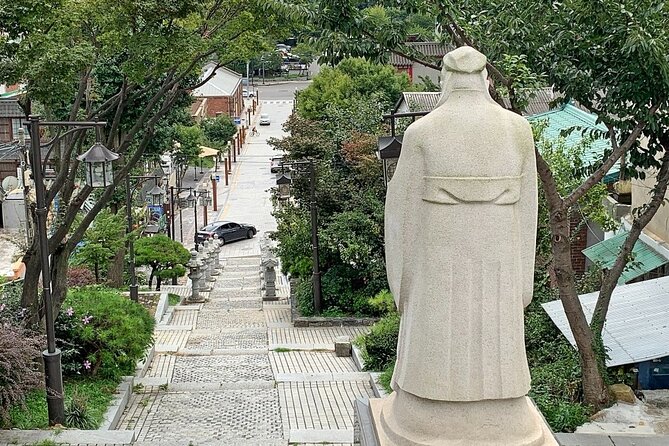
The Jjajangmyeon Museum occupies the site of Gonghwachun, identified as the first original restaurant associated with jjajangmyeon. The museum displays objects connected to the dish and the restaurant, and it offers a food-focused way into Incheon’s Chinese-Korean history.
This is one of the route’s most distinctive stops because it ties migration and local identity to something you can recognize on a menu. The dish is widely known, but the museum connects it to a specific place and restaurant. If you are curious about the story behind the food, this may be the stop you remember most.
The time limit is worth keeping in mind. A museum can reward a slower visit, while a 50-minute tour has several other places to cover. You may be shown the museum and hear an introduction rather than having time to examine every exhibit.
Euiseon-dang and the Chinatown streets
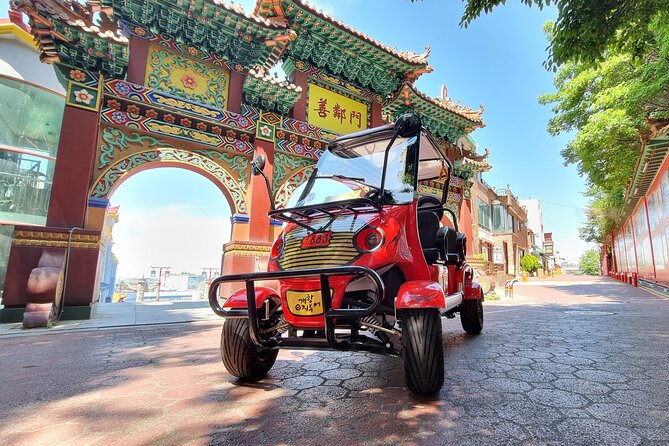
Inside Chinatown, Euiseon-dang is a Chinese-style shrine built by Chinese immigrants. It offered a place of comfort for people who had left home and faced the difficulties of settling elsewhere. That purpose gives the site a human dimension beyond the familiar red-and-gold Chinatown streets.
The route’s Chinatown portion is valuable because it places the shrine among the wider signs of Chinese community life. You can connect the port’s role in attracting migrants with the institutions people created after arriving. The tour’s short duration may mean you see some sights from the car or make only a brief stop, so it is not an in-depth Chinatown walk.
If you want to browse shops or spend time over a meal, plan extra time before or after the ride. Meals and snacks are not included in the tour price, and the experience is too short to serve as a food tour.
Songwol-dong’s murals and storybook streets
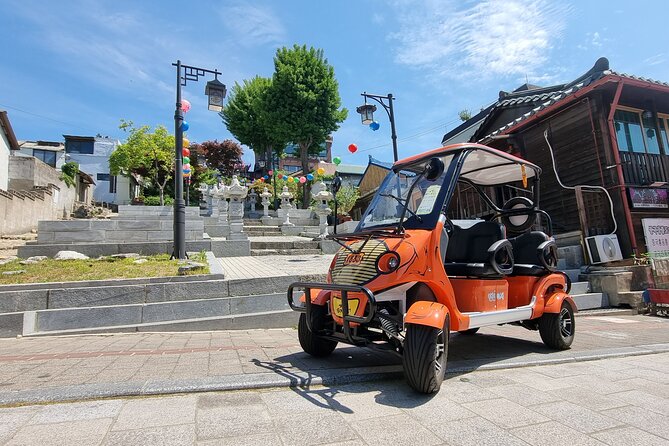
Songwol-dong grew into a prosperous area when foreigners settled there after Incheon Port opened. As younger residents moved away decades later, older people remained, and the neighborhood was later remade as Donghwa Village. The route includes its fairytale-themed streets as well as murals inspired by Chinese historical novels.
The Chohanji and Three Kingdoms mural streets bring well-known stories onto the neighborhood walls. They add color and a playful note to a tour otherwise focused on port history, immigration and old institutions. One highly positive account singled out the fairytale street as a highlight, though your own interest will depend on whether you enjoy painted story scenes.
These murals are best treated as a visual change of pace, not as evidence that the whole district is an untouched historic quarter. The village has been reshaped over time, and the tour gives you a brief look rather than a long visit. If you like taking photos, you may wish the car would stop longer.
Jemulpo Club, the final named stop
Jemulpo Club is the route’s most direct link to the foreign residents who lived in Incheon. It operated as a social club, with a social room, billiard room and reading room inside, plus a tennis court outside. In 1914, during Japanese colonial rule, its use changed.
The tour allows five minutes here, and admission is listed as free. That makes it a concise but useful stop: you can connect the club’s rooms and grounds to the social life of the port community without an added entry fee. Five minutes is still brief, so anyone wanting to explore the building in detail should check whether they can return independently.
Guide quality, timing and value
The strongest positive accounts focus on the guide’s warmth and explanations. Soonie, whose name may be spelled differently, was praised for accommodating a last-minute request to move to a later time and for patiently explaining the history of old Incheon. Other feedback also describes an enthusiastic, pleasant guide.
There is a real caveat: the experience can be less satisfying if you expect a live conversation in English. One tour used prerecorded commentary, and the driver did not speak English, which made it difficult to ask questions. The tour details do not guarantee a particular guide or language, so contact the operator before booking if those points matter to you.
At $45 per group of up to three, the price can work well for a small party seeking a short, guided orientation. It is less compelling if you expect a long tour or substantial time at each museum and landmark. One participant felt the ride was shorter than expected for the price, even though the stated duration was 50 minutes. Read that timing as a firm limit, not an hour-long excursion.
The tour is listed as mobile-ticket, near public transportation, and suitable for most travelers. Service animals are allowed. It depends on good weather and a minimum number of participants; if the operator cancels for either reason, you are offered another date or a full refund. You can cancel for a full refund up to 24 hours before the start time.
Should you book the Incheon electric-car tour?
Book it if you want a light, low-effort introduction to Incheon’s old port, especially if you have limited time or are traveling with people who prefer not to cover the district entirely on foot. The mix of Chinatown, the old port buildings, murals and Jemulpo Club gives you a useful first map of the area, and the unusual car adds some fun.
Skip it if you want a long, detailed history walk, guaranteed live English commentary or time to explore each museum at leisure. Before paying, confirm the guide language and how the per-group price applies to your booking. If those details check out and 50 minutes suits your plans, this is a practical sampler rather than a full immersion in Incheon’s past.
FAQ
How long is the tour?
The electric-car tour lasts approximately 50 minutes.
How much does the tour cost?
The listed price is $45 per group of up to three.
Where does the tour start and end?
It starts at 266 Jemullyang-ro, Jung-gu, Incheon, South Korea, and ends back at the meeting point.
Which sights are included?
The route includes Incheon Art Platform, the settlement-area stairway, Haean Catholic Church, the Jjajangmyeon Museum, Euiseon-dang, Songwol-dong mural areas and Jemulpo Club. Chinatown is also part of the experience.
Is admission to Jemulpo Club included?
Admission to the Jemulpo Club stop is listed as free. The tour information does not state admission arrangements for other sites.
Are meals or snacks included?
No. Meals and snacks are not included.
What is the maximum group size?
The activity has a maximum of 20 travelers. The listed price is for a group of up to three, so check your booking details for how the price applies.
Can I cancel for a refund?
You can cancel for a full refund at least 24 hours before the experience’s start time. If poor weather or the minimum traveler requirement causes the operator to cancel, you are offered another date or a full refund.
Latest reviews from Incheon
- Private DMZSPYTOUR from Incheon Airport★ 5.0 · 14 reviews
- 24/7 Private Airport Transfer: Incheon/Gimpo ↔ Seoul (Up To 10)★ 5.0 · 3 reviews
- Private Airport Transfer from/to Incheon Airport to/from Seoul★ 5.0 · 13 reviews
- Private Airport Transfer: Incheon Airport to Seoul City 1-12 pax★ 5.0 · 15 reviews
- Layover & Stopover in Seoul/private Tour★ 4.5 · 20 reviews
- Korea SIM Card with SKT Unlimited Local Data & Voice Calls★ 4.5 · 9 reviews
- Incheon Port Transfer to Seoul (NCL/CELEBRITY) or Vice Versa★ 5.0 · 11 reviews
- Layover Tour from Incheon Airport to Seoul with a Tour Specialist★ 5.0 · 5 reviews
Incheon Tours, compared.

Private Airport Transfer: Incheon Airport to Seoul City (1-5 pax)
Read our review →
Private Layover Tour from Incheon Airport to Seoul
Read our review →
(P/Transfer) Incheon Airport ↔ Seoul (Up to 5 Pax)
Read our review →
Private Arrival Transfer: Incheon International Airport to Hotel
Read our review →
Incheon Airport Transfer Service private transport to/from Seoul
Read our review →
Full-Day Seoul Top Attractions Tour for Incheon Cruise Guests
Read our review →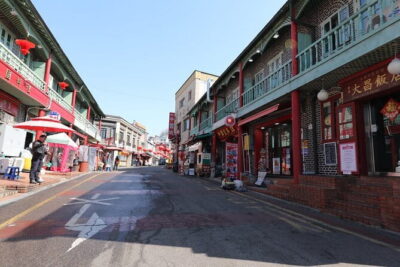
Seoul Layover Private Incheon Cultural Odyssey from Airport
Read our review →
Browse the lists this tour appears in