
Reviewed · SEOUL PALACE TOURS
Seoul: 4-Hour Guided Tour to Palace, Bukchon, Jogyesa Temple
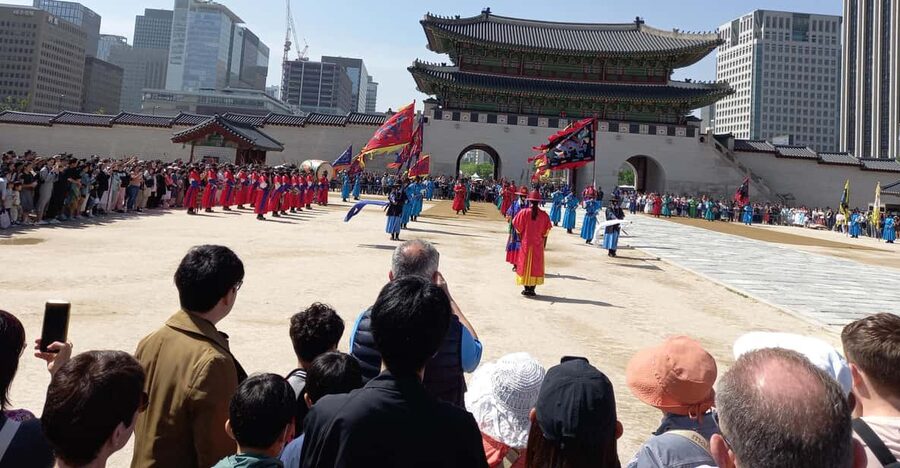
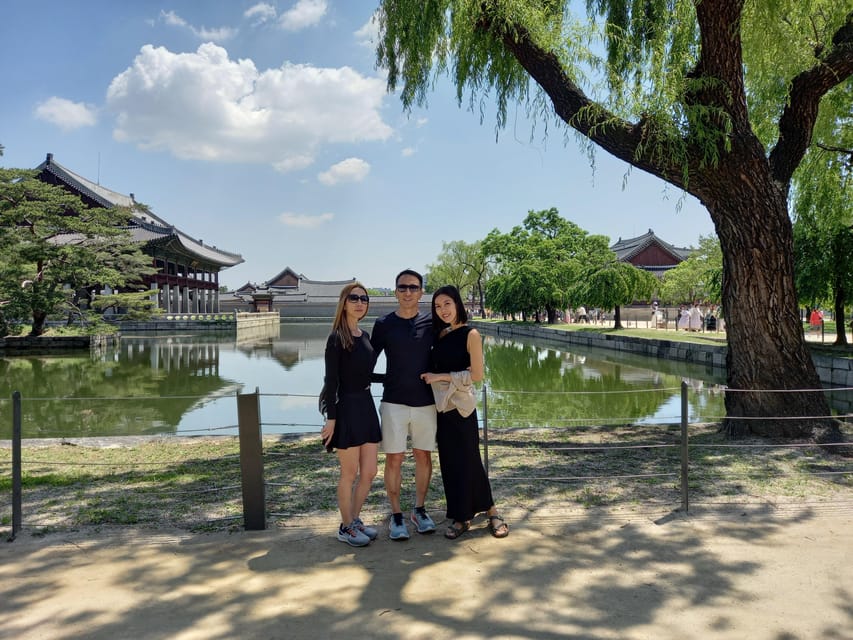
Gyeongbokgung makes this tour more than a palace photo stop. Its design reflects the Confucian ideas that shaped the Joseon Dynasty, and guide Paul Koo explains how those ideas show up in Korea’s traditional buildings and culture.
I like two things here: you get a focused look at both palace life and ordinary Joseon-era life at the Folk Museum, and the private format lets you choose a meeting place and time after booking. Bukchon adds a striking contrast between traditional homes and Seoul’s modern skyline.
One detail needs checking before you pay: Jogyesa Temple is named in the title and highlights, but not in the stated itinerary, which lists Insadong instead. Palace admission and transport are also extra, so confirm the exact route and budget before setting off.
At a glance
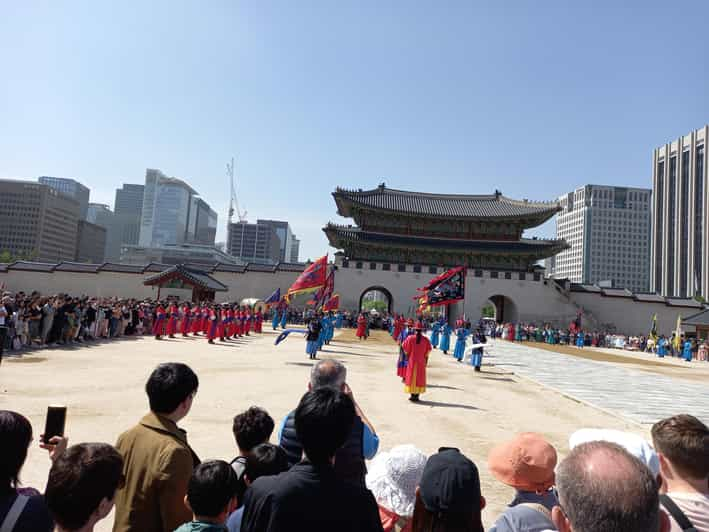
- Gyeongbokgung is the main event: Allow about two hours and twenty minutes for a guided visit to the Joseon Dynasty’s largest palace.
- Confucian ideas give the buildings context: Paul Koo explains the cultural principles behind palace design and traditional Korean architecture.
- The Folk Museum shifts focus to everyday life: Its exhibits cover customs and life stages, from birth and marriage to illness and death.
- Bukchon brings old and new Seoul together: The hanok district has about 1,000 traditional houses, with modern buildings and N Seoul Tower in the background.
- Check the temple stop: Jogyesa is promoted, but no temple visit appears in the timed route; Bongeunsa is also mentioned only among the highlights.
- The $152 price covers the private guide for up to two: Admission, transport, food and drink, and insurance are not included.
A palace tour shaped by Confucian thought
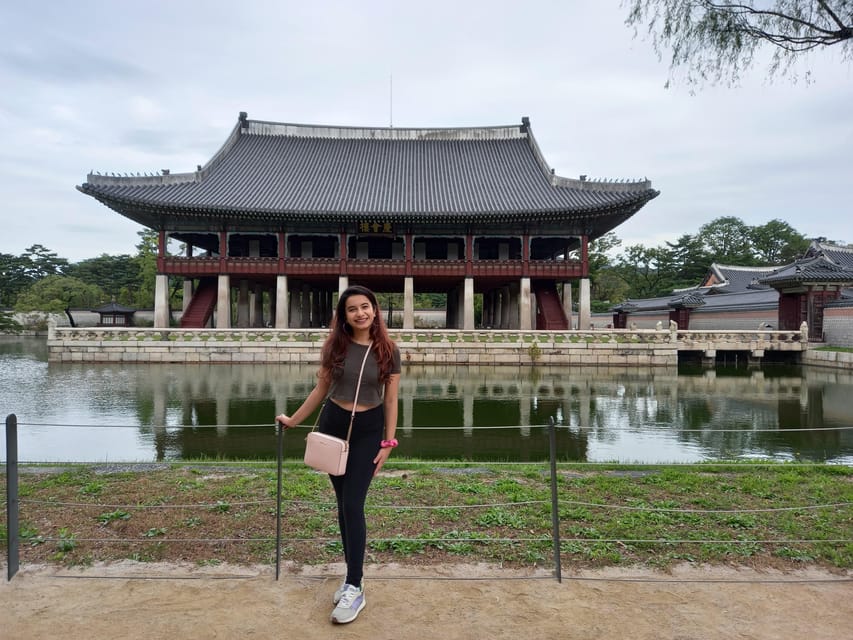
Seoul’s old buildings are easier to read when you know what their builders valued. This tour makes that idea its central thread: the Joseon Dynasty was guided by Confucianism, and the palaces and traditional homes reflect that culture. Instead of treating architecture as decoration, Paul Koo explains how a building’s form can point to the beliefs and social order of its time.
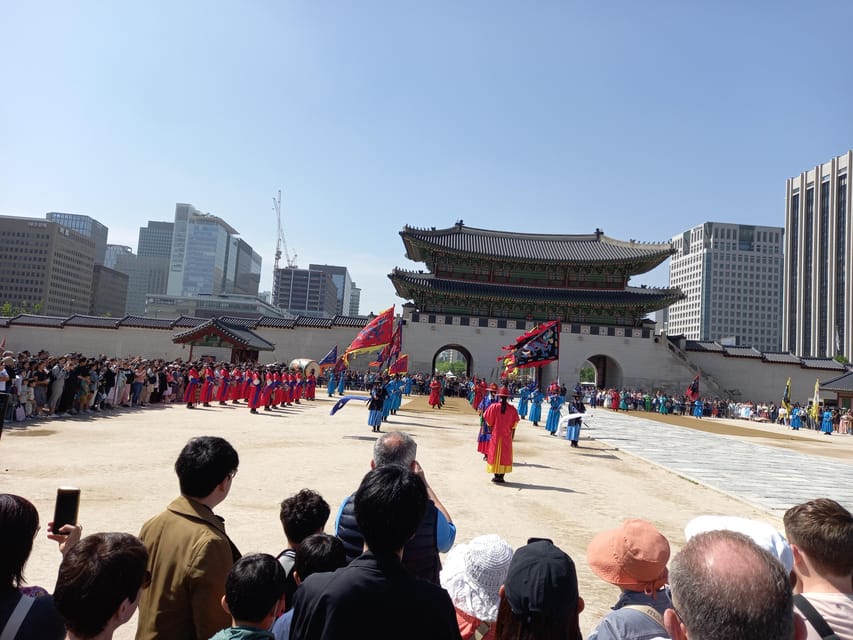
That approach can make Gyeongbokgung more meaningful than a walk through grand gates and courtyards. You’ll hear why it was built as the main palace and why its layout matters. The tour describes it as the largest and most magnificent of Korea’s palaces, and the only one built on flat land according to an authentic Confucian palace plan.
Paul is identified as a guide specializing in Korean Confucian culture. The focus is a useful fit if you want more than dates and names: one visitor praised how his explanations connected history, culture and religion, while another singled out his detailed accounts of Korean history and advice on photo angles. You can expect interpretation that helps put the places in context, along with help framing pictures.
The trade-off is that a four-hour tour has a lot to cover. Gyeongbokgung alone is allotted about two hours and twenty minutes, leaving less time for the museum, Bukchon and Insadong. If you prefer to linger in every gallery or explore a neighborhood at your own pace, this schedule may feel brisk. If you want a guided overview that connects several sites, the focused format makes sense.
More palace tours in Seoul:
- Seoul: Gyeongbok Palace, Bukchon Village, and Gwangjang Tour
★ 4.9 · 2,321 reviews - Best Seoul City Tour (Gyeongbokgung Palace,Insadong,Namsan Tower)
★ 5.0 · 1,647 reviews - Small-Group Royal Palace and Seoul City Tour (hotel pick-up)
★ 5.0 · 1,474 reviews
Gyeongbokgung: the heart of the visit
The tour begins at Gwanghwamun Square, unless you arrange a different meeting point after booking. From there, Gyeongbokgung is the main stop and the clearest place to see the tour’s architectural theme at work. Built in 1395 as the Joseon Dynasty’s main palace, it was designed to express the values of the state, not simply to provide a home for the royal family.
That context changes what you look for. Rather than only admiring a gate or snapping a courtyard photo, you can ask how the palace’s layout reflects Confucian thought and what the buildings say about the period that produced them. The point is not to turn the visit into a lecture. It is to give you a framework for noticing more than the surface.
The tour allots 2 hours and 20 minutes to Gyeongbokgung, a substantial share of the four-hour outing. That’s sensible for the key site, but the timetable’s listed stop lengths add up to about four hours and ten minutes. Treat the schedule as a guide, and ask how the timing works if you need to make another appointment afterward.
Palace admission is not included in the tour price. Factor that extra cost into your plans, and check the current admission details before you go. The information provided does not give an entry fee or explain whether the guide arranges tickets, so it’s worth asking directly.
The Folk Museum: everyday Joseon life
The National Folk Museum of Korea adds a welcome change of scale. After a palace built to represent a ruling dynasty, the museum turns to the lives of ordinary people. Its exhibits cover folk customs and seasonal activities, along with the stages of life: birth, growing up, marriage, aging, illness and treatment, and death.
Ceremonies and commemorative rituals help show how those stages were marked. This matters because a palace can tell you a great deal about political ideals, but not everything about how people lived. The museum gives the tour a broader view of Joseon society and helps connect grand architecture to the customs of daily life.
The guided visit is scheduled for 30 minutes. That is enough for an introduction, especially with a guide pointing out themes to watch for, but it is not a long museum visit. If you enjoy reading every display, you may want to return independently for more time. No separate museum admission information is provided, so confirm any costs when you check the palace arrangements.
Bukchon: traditional roofs against a modern skyline
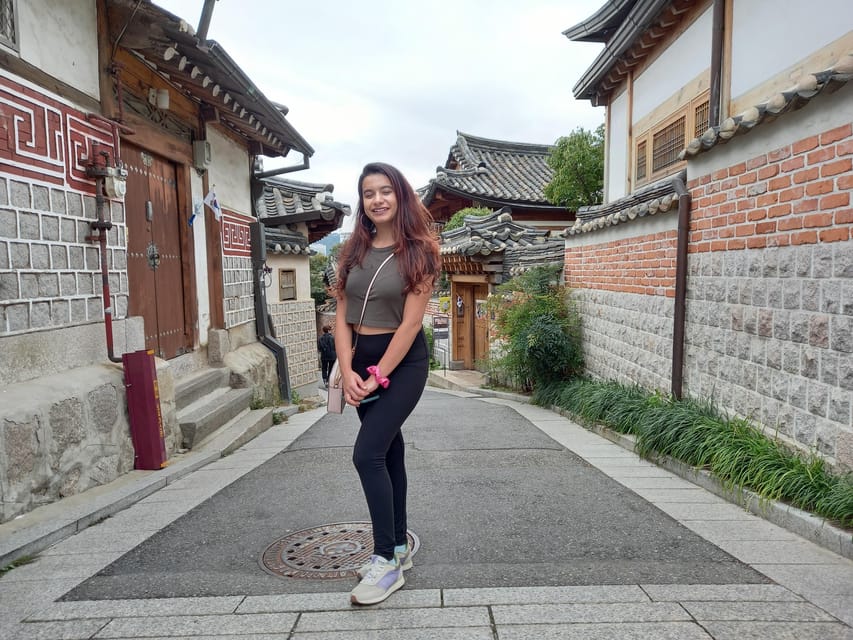
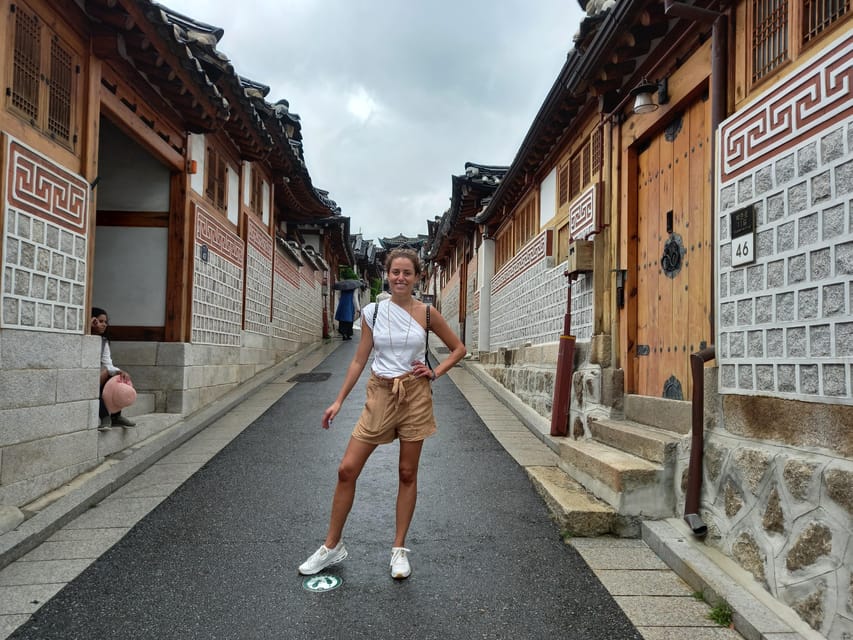
Bukchon Hanok Village offers one of the tour’s most distinctive views. The district has a cluster of about 1,000 hanoks, traditional Korean houses, and its setting lets you see old and new Seoul in the same frame. Modern high-rises and N Seoul Tower appear behind the traditional roofs, making the contrast part of the experience rather than a detail to ignore.
The 40-minute guided stop is short, but it gives you time to understand why Bukchon matters as a historic residential area and to take in its visual character. Paul’s eye for photo angles may be useful here; a previous visitor specifically appreciated his help finding good spots for pictures. That can save you from leaving with a camera roll full of the same hurried shot.
The tour information does not describe the walking route or how much free time you’ll have, so ask if those details matter to you. The village is a lived-in neighborhood, not just a backdrop. Keep your voice low and be considerate around homes as you explore.
N Seoul Tower is mentioned as part of the view, and its admission is listed among the exclusions. But the stated itinerary does not include a visit to the tower. If you’re hoping to go up, treat it as a separate plan and ask whether there is time or transport for it. Neither is included in the tour price.
More Bukchon tours in Seoul:
- Seoul City Sightseeing Tour Including Gyeongbokgung Palace, N Seoul Tower, and Namsangol Hanok Village
★ 5.0 · 1,423 reviews - Seoul: Gyeongbok Palace, Bukchon Village, and Gwangjang Tour
★ 5.0 · 1,044 reviews - Seoul: Gyeongbok Palace and Bukchon Hanok Walking Tour
★ 4.8 · 157 reviews - Best Walking Tour to Gyeongbok Palace Bukchon Hanok Village
★ 5.0 · 138 reviews
Insadong, Jogyesa and the route to confirm
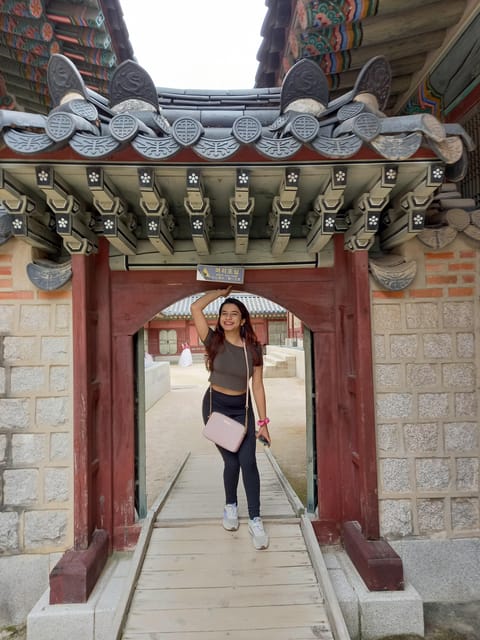
The last listed stop is Insadong, with 30 minutes for a guided visit. It gives the route a final neighborhood stop after the palace, museum and hanok district. But the information does not describe specific shops, exhibits or activities there, so it’s best to think of this as a short introduction rather than a detailed exploration.
The temple details need special attention. Jogyesa is described as the headquarters of a Korean Buddhist organization and is featured in the tour title and highlights. Yet the timed itinerary names Insadong, not Jogyesa. It also gives no separate stop length for the temple. Since the tour’s promotional description and its route do not line up clearly, ask Paul or the provider whether Jogyesa is part of your four hours.
Bongeunsa appears in the highlights as another temple where old and new Seoul meet, but it is not named in the itinerary either. Do not assume it is included. Likewise, there is no scheduled visit to N Seoul Tower, despite its mention in the information about admission. A quick confirmation can prevent a mismatch between the places you expect to see and the places you actually have time to visit.
What $152 buys, and what it doesn’t
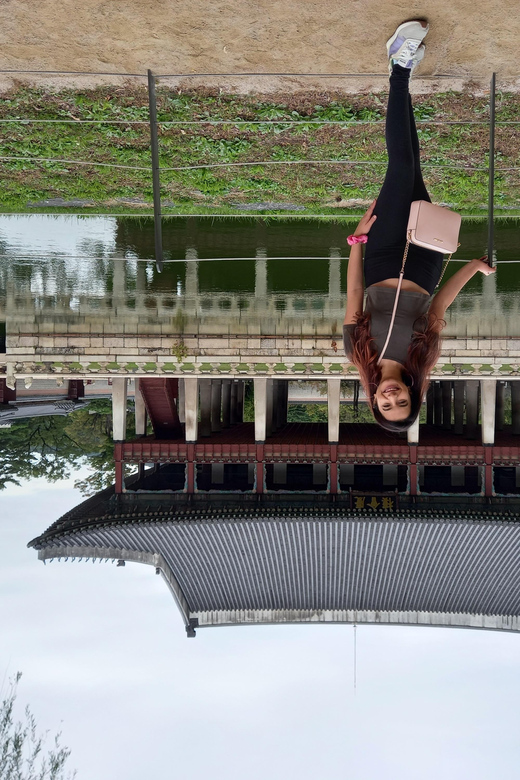
The price is $152 for a private group of up to two people, and it covers a four-hour guide service. For a pair who want a personal explanation of Korean history and culture, that can be worthwhile: you are paying for focused interpretation, not just a list of stops. It may be especially valuable if Confucianism, architecture or Joseon-era life are new to you and you want someone to connect the pieces.
The price does not include palace admission, transport between stops, food or drinks, or insurance. Those costs can change the overall value, particularly if you are comparing this tour with a larger group option or planning several paid activities in one day. Ask about transport expectations and current entry fees before you book; neither is specified here.
The private format offers flexibility, but not unlimited flexibility. You can choose a meeting place and time after booking, and the guide can meet you at your hotel. The route and duration still have limits, so discuss any must-see stop in advance, especially Jogyesa. The tour is in English, and it is listed as a private group.
Who should book this tour?
I’d consider this tour if you want a clear cultural frame for Seoul’s historic sites and prefer a guide to explain why the architecture matters. It suits first-time visitors, couples and small private groups who want the main Joseon-era story in one half-day. The combination of palace, folk culture and traditional homes gives you more range than a palace-only visit.
It is also a good fit if you enjoy learning through details. Paul’s emphasis on Confucian culture and the reported care he takes with historical explanations and photo spots point to a guide-led visit rather than a quick escort from one landmark to the next. You’ll get the most from it if you’re willing to ask questions and look closely.
I would hesitate if your top priority is a definite Jogyesa or Bongeunsa visit, a long museum session, or a stop at N Seoul Tower. Those places are not clearly included in the timed route. Confirm the temple plan first, then decide whether the private guide fee plus admission and transport fit your budget.
FAQ
How long is the tour?
The tour lasts four hours. The listed stop times add up to about four hours and ten minutes, so confirm the schedule with the guide if you have a tight day.
Which places are named in the itinerary?
The route lists Gyeongbokgung, the National Folk Museum of Korea, Bukchon Hanok Village and Insadong, beginning at Gwanghwamun Square. Jogyesa is mentioned in the title and highlights, but not in the timed itinerary.
Is admission included in the price?
No. Palace admission is excluded. Transport, food and drinks, and insurance are also not included.
Is this a private tour, and what language is it in?
Yes. It is a private group tour, priced for up to two people, with an English-speaking guide.
Can I choose the meeting place?
Yes. You can choose the meeting place and time after booking, and the guide can meet you at your hotel.
Can I cancel, or reserve without paying now?
You can cancel up to 24 hours in advance for a full refund. A reserve-now, pay-later option is also offered.
More temple tours in Seoul
- Seoul: Mt Seorak + Naksansa Temple or Nami Island Group Tour
★ 4.7 · 422 reviews - Best Things to Do – Half Day Seoul Trip (Seoul Palace & Temple)
★ 5.0 · 190 reviews - Mount Seorak and Naksansa Temple One Day Tour from Seoul
★ 4.5 · 167 reviews - Day Tour of Suwon Hwaseong Fortress Starfield Waujeongsa Temple
★ 5.0 · 61 reviews
Latest reviews from Seoul
- From Seoul: Hwacheon Ice Fishing and Lighting Festival Tour★ 4.5 · 4 reviews
- Unique Native Experience : Han River Picnic, Board game, BBQ★ 5.0 · 3 reviews
- You’re Invited to Our Home in Seoul: The Only Cooking Class!★ 5.0 · 8 reviews
- Seoul: Gangneung BTS K-Pop & K-Drama Filming Locations Tour★ 4.6 · 14 reviews
- Yun Korean Cooking Class in Seoul★ 5.0 · 6 reviews
- 2-Hour Private Kayaking and Paddleboarding Experience in Hanriver★ 5.0 · 3 reviews
- K-Pop Making Class with a Producer!★ 5.0 · 3 reviews
- Day Trip to Yongin Daejanggeum and Korean Folk Village from Seoul★ 4.0 · 9 reviews
Seoul Palace Tours, compared.
Gyeongbok Palace, Bukchon Village, and Gwangjang Tour
Read our review →
Best Seoul City Tour (Gyeongbokgung Palace,Insadong,Namsan Tower)
Read our review →
Small-Group Royal Palace and Seoul City Tour (hotel pick-up)
Read our review →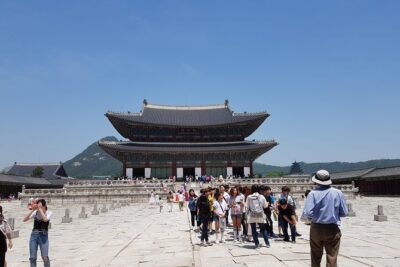
Seoul City Sightseeing Tour Including Gyeongbokgung Palace, N Seoul Tower, and Namsangol Hanok Village
Read our review →
Seoul Highlights: Gyeongbok Palace, Insadong & N Seoul Tower
Read our review →
Seoul City Half Day Tour-Gyeongbok Palace Guard Changing Ceremony
Read our review →
Browse the lists this tour appears in