
Reviewed · SEOUL PALACE TOURS
Seoul: Deoksugung Palace Night Tour
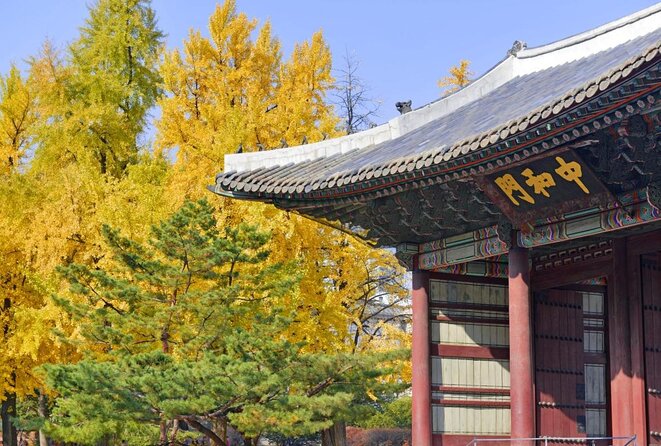
Deoksugung is a palace of contrasts: royal halls and a western-style stone building share a compact site shaped by Korea’s push toward modern rule and the pressures of Japanese invasion. At night, its illuminated buildings and quieter grounds offer a different mood from a daytime palace visit.
I like two things in particular: the chance to hear the story of the Korean Empire from a guide, and the unusual mix of architectural styles that makes Deoksugung unlike Seoul’s other palaces. The famous stone wall nearby is another good reason to linger after the tour.
The main consideration is timing. The palace is closed on Mondays, and the tour can be canceled if fewer than four people sign up. Confirm the meeting time and place by email or WhatsApp, since the published details give both a 6:20 p.m. meeting time and a 6:30 p.m. start.
- Night lighting changes the palace’s character: The buildings are lit around dusk and into the evening, lending the grounds a calmer feel.
- The Korean Empire takes center stage: The guide connects the palace to the era when Korea was neither Joseon nor modern South Korea.
- Traditional and western-style architecture share the grounds: Seokjojeon is a striking contrast to the palace’s royal halls.
- The route ends at Jeonggwanheon: This former royal retreat is also called Jungkwanhun in the tour details.
- The group can reach 20 people: The tour requires at least four participants to run.
- It costs $35 per person: The palace admission is listed as free, so much of the value lies in having a guide explain the site and its history.
Why Deoksugung’s evening visit feels different
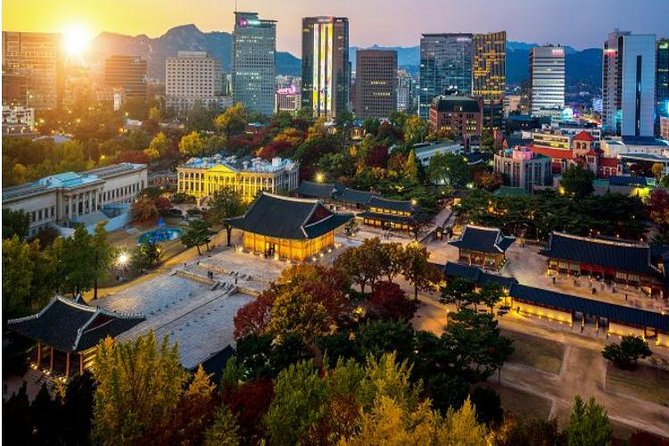
Deoksugung is near City Hall and Gwanghwamun Station, right in central Seoul, but stepping through its gates gives you a clear change of pace from the surrounding streets. The palace is smaller and less sprawling than some of Seoul’s royal complexes, which suits a two-hour guided walk. You can focus on a handful of buildings rather than trying to cover an enormous site.
The setting also tells a distinct story. Deoksugung served as the main palace during a period of intense change, when Korea was known as the Korean Empire. That era brought attempts to modernize the country, while Japanese invasion brought lasting pain and upheaval. A guide can help you connect the buildings to those events instead of treating the palace as a pretty backdrop.
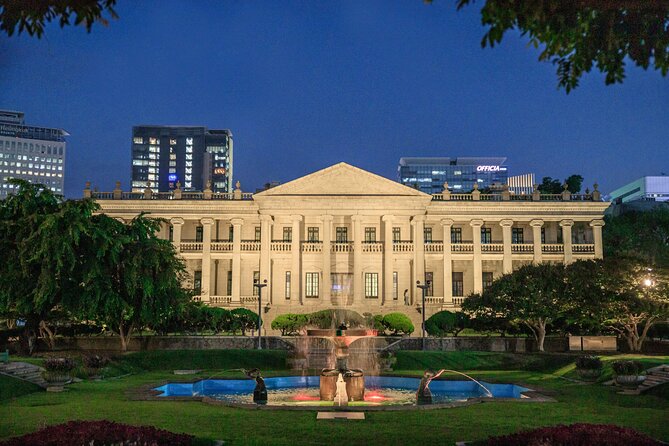
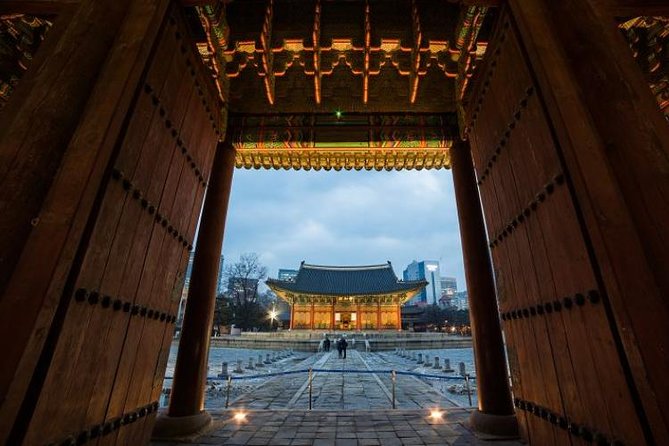
Night is part of the appeal. The buildings are lit around dusk and in the evening, bringing out their forms in a way that differs from a daytime visit. I like that this setting encourages you to slow down and look closely, though the trade-off is that evening light may not suit visitors who prefer seeing architectural details in full daylight.
Meeting near City Hall, then entering the palace
The group meets near Exit 1 of City Hall Station, which serves subway Lines 1 and 2. The listed meeting address is 362-1 Taepyeongno 2(i)-ga, Jung District, while the start time is shown as 6:30 p.m. The itinerary also says to meet at 6:20 p.m. Treat the earlier time as the safer target and check the operator’s email or WhatsApp message for the final instructions.
That confirmation matters because the tour requires you to arrive before the group sets off. Late joining is not allowed once the walk has begun, and the operator says it is not responsible if you miss the tour because your contact number was wrong or could not be reached in Korea. Leave a working phone number or a usable contact through a service such as WeChat or Line.
The route ends at Jeonggwanheon inside the palace grounds. The supplied details also call the building Jungkwanhun, so the different spellings refer to the same final stop. Since the tour ends there rather than returning to the station, plan your next step from that point.
More palace tours in Seoul:
- Seoul: Gyeongbok Palace, Bukchon Village, and Gwangjang Tour
★ 4.9 · 2,321 reviews - Best Seoul City Tour (Gyeongbokgung Palace,Insadong,Namsan Tower)
★ 5.0 · 1,647 reviews - Small-Group Royal Palace and Seoul City Tour (hotel pick-up)
★ 5.0 · 1,474 reviews
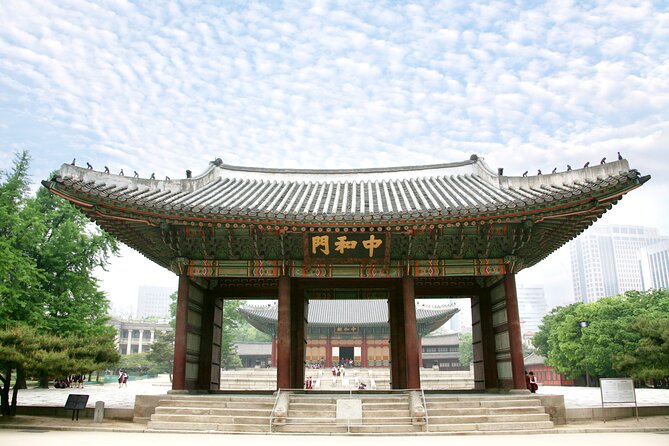
Junghwajeon, the throne hall at the heart of the visit
Junghwajeon is the main throne hall and a natural place to begin understanding Deoksugung as a royal palace. This is where the guide can explain the formal role of the hall and the wider political setting of the Korean Empire. The building’s importance is not just architectural: it gives you a point of reference for the royal authority that the palace represented.
A guided explanation is particularly useful here because palace names and dynastic shifts can blur together on a first visit. The tour focuses on the transition from the Joseon era to the Korean Empire, and on the story of a country attempting to modernize under severe pressure. If you have already toured other Korean palaces on your own, this historical frame can make Deoksugung feel less like another sequence of halls and courtyards.
Seokjojeon and the palace’s western-style face
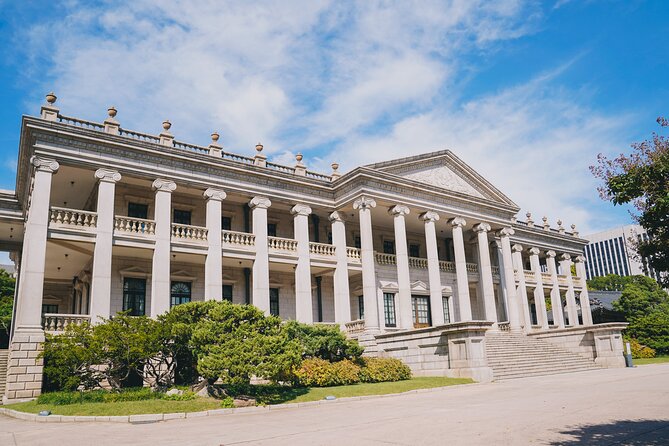
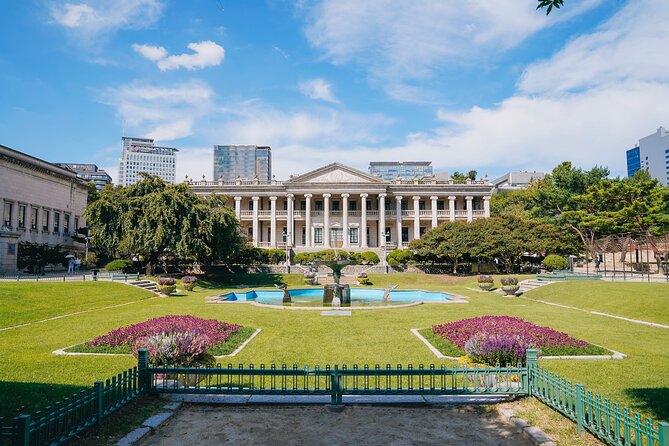
Seokjojeon is the palace’s western-style building, and its presence alongside traditional structures is what makes Deoksugung especially distinctive. Rather than presenting one architectural language, the grounds show two styles in close conversation. The contrast helps explain the palace’s connection to an era of modernization.
This is one of the tour’s strongest stops for anyone interested in architecture. You can compare the building with the traditional royal halls nearby and ask the guide how the palace’s design fits into its history. The tour specifically encourages questions, so bring them along rather than saving them for later.
The building’s western style may be the most visually surprising part of the route, but it also needs context. Without explanation, you might notice the contrast without understanding why it matters. A guide can help tie the structure to the larger story of the Korean Empire and the changes taking place at the time.
Seokeodang and Hamnyeongjeon, a more personal view of palace life
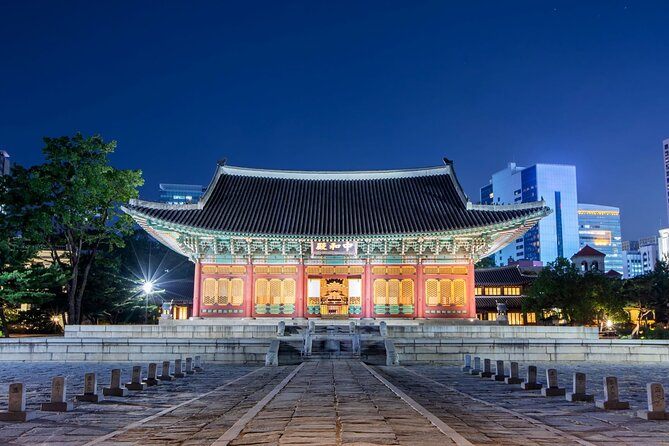
Seokeodang is described as King Gojong’s most beloved building. That detail gives the tour a more personal note after the formal scale of the throne hall and the architectural contrast of Seokjojeon. Instead of looking only at institutions and political events, you get a glimpse of a building with a close association to the king.
Hamnyeongjeon was the king’s bedchamber. Its purpose shifts your attention from public ceremony to private royal life, making it a useful counterpoint to Junghwajeon. Together, these stops give you a broader sense of how the palace served both the visible duties of a ruler and the quieter routines of royal life.
The itinerary does not promise a long stop at each building, so expect a guided overview rather than an extended visit to every interior. Still, the sequence makes sense: the throne hall establishes power, Seokeodang adds a personal connection, and Hamnyeongjeon brings the route into the private side of palace life.
More night tours in Seoul:
- Seoul: Night Market Food Tour with Local Guide
★ 4.9 · 943 reviews - Seoul: Evening Dark History, Folklore & Ghost Story Walking Tour
★ 5.0 · 593 reviews - Seoul Night Palace & Market Food Tour with Vehicle
★ 5.0 · 275 reviews - Special City Night Tour
★ 5.0 · 162 reviews
Ending at Jeonggwanheon and the palace stone wall
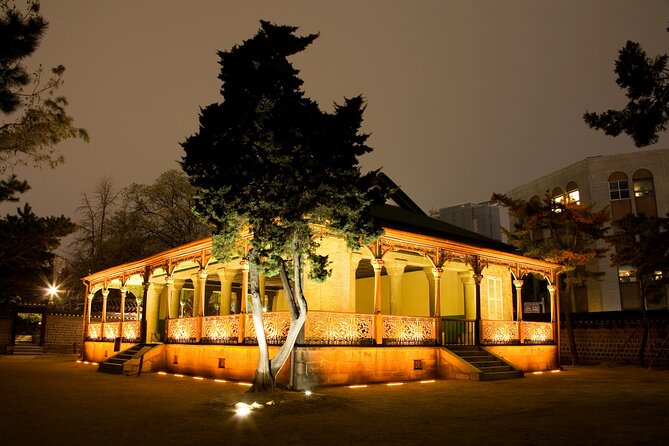
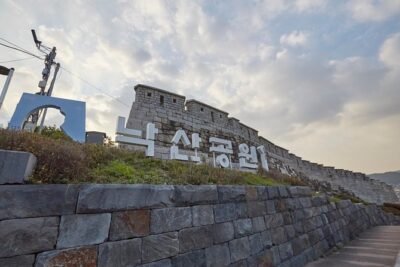
The tour finishes at Jeonggwanheon, identified in the route as a cafeteria and also known as Jungkwanhun in the supplied details. Its place at the end gives the walk a quieter closing point after the main halls and western-style building. The palace’s famous stone wall is another feature worth noticing, especially if you have time to look around after the guided portion.
The wall is a practical reason not to rush off immediately. Deoksugung’s setting beside central Seoul makes it easy to visit, but the boundary between palace and city is part of its appeal. A short pause lets you take in that contrast before returning to the nearby streets.
The tour ends at Jeonggwanheon rather than at the original meeting point. If you are coordinating dinner or another activity, keep that in mind when estimating your evening. The walk itself is about two hours, but your plans should allow a little room for the end point and any lingering around the grounds.
What a guide adds, and what the $35 price buys
At $35 per person, this is not simply a ticket to enter a palace. Admission is listed as free, so the main value is the guided interpretation: the connection between buildings, the Korean Empire, modernization, and the history of Japanese invasion. For someone who wants more than a self-guided stroll, that context is the reason to pay.
There are specific guides associated with the tour, including Alan Han and Mr. Lee. The operator does not guarantee which guide will lead your visit, but the tour is built around a professional guide who can explain the palace in English or Chinese and answer questions. That personal exchange is useful when a place’s history raises questions that a sign or map cannot resolve.
The group size has a ceiling of 20, and the tour needs at least four participants to proceed. A smaller group can make it easier to ask questions, but the minimum also introduces some uncertainty: if too few people book, the operator may cancel and offer another date or experience, or a refund. The tour is often booked about 45 days ahead, so advance planning is sensible if your Seoul dates are fixed.
Practical details before you book
The tour lasts about two hours and uses a mobile ticket. It is near public transportation, and most people can participate. Monday is the exception: Deoksugung is closed, and the operator offers a Gyeongbokgung Palace tour instead.
The operator sends meeting details by email or WhatsApp, so check both before the day of the tour. Use a contact number or messaging account that works in Korea. If you are considering a private tour, the supplied information says to request an estimate by email.
A few restrictions are worth knowing. Recording or filming the tour is not allowed, and pets cannot join because there is no place to look after them. The experience also depends on good weather. If poor weather cancels it, you can be offered another date or a full refund.
You can cancel for a full refund up to 24 hours before the start time. Changes or cancellations made less than 24 hours ahead are not accepted for a refund, and cut-off times follow local time. Those terms make it worth checking your evening plans before booking.
Is the Deoksugung night tour a good fit?
Book this tour if you want a compact, guided introduction to a palace that tells a different story from Seoul’s better-known royal sites. It is especially suited to visitors interested in Korean history, royal architecture, or the period when Korea was trying to modernize as the Korean Empire. The English- and Chinese-language explanations, plus the chance to ask questions, make it a stronger choice than wandering the grounds without context.
Choose another plan if Monday is your only available evening, if you need a guaranteed small group, or if you prefer to explore at your own pace. Also keep the minimum group requirement and the 6:20 p.m. versus 6:30 p.m. timing difference in mind. For the right visitor, the combination of illuminated buildings, a focused route, and a guide’s historical framing makes $35 a reasonable price for a thoughtful two-hour stop in central Seoul.
FAQ
How long is the Deoksugung Palace night tour?
The tour lasts about two hours.
What time does the tour start?
The start time is listed as 6:30 p.m., while the meeting instructions say to meet at 6:20 p.m. Confirm the exact time and location in the operator’s email or WhatsApp message.
Where does the tour meet and end?
The meeting point is near Exit 1 of City Hall Station, on Lines 1 and 2. The tour ends at Jeonggwanheon inside Deoksugung Palace.
Which languages are offered?
The tour offers explanations in English and Chinese.
Is Deoksugung open on Mondays?
No. Deoksugung Palace is closed on Mondays. The operator says you can book a Gyeongbokgung Palace tour instead.
How many people are needed for the tour to run?
At least four people must participate. The maximum group size is 20.
Can I get a refund if I cancel?
You can cancel at least 24 hours before the experience for a full refund. Cancellations or changes made less than 24 hours before the start time are not accepted for a refund.
Latest reviews from Seoul
- From Seoul: Hwacheon Ice Fishing and Lighting Festival Tour★ 4.5 · 4 reviews
- Unique Native Experience : Han River Picnic, Board game, BBQ★ 5.0 · 3 reviews
- You’re Invited to Our Home in Seoul: The Only Cooking Class!★ 5.0 · 8 reviews
- Seoul: Gangneung BTS K-Pop & K-Drama Filming Locations Tour★ 4.6 · 14 reviews
- Yun Korean Cooking Class in Seoul★ 5.0 · 6 reviews
- 2-Hour Private Kayaking and Paddleboarding Experience in Hanriver★ 5.0 · 3 reviews
- Day Trip to Yongin Daejanggeum and Korean Folk Village from Seoul★ 4.0 · 9 reviews
- K-Pop Making Class with a Producer!★ 5.0 · 3 reviews
Seoul Palace Tours, compared.
Gyeongbok Palace, Bukchon Village, and Gwangjang Tour
Read our review →
Best Seoul City Tour (Gyeongbokgung Palace,Insadong,Namsan Tower)
Read our review →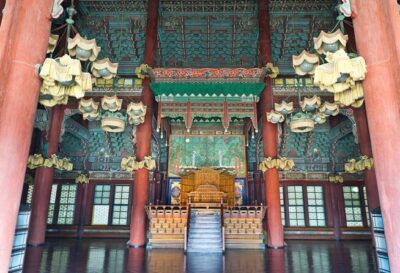
Small-Group Royal Palace and Seoul City Tour (hotel pick-up)
Read our review →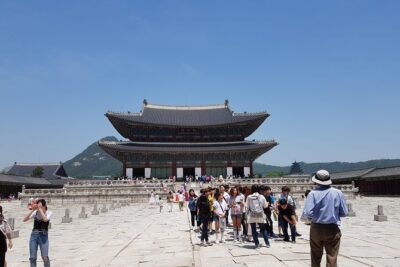
Seoul City Sightseeing Tour Including Gyeongbokgung Palace, N Seoul Tower, and Namsangol Hanok Village
Read our review →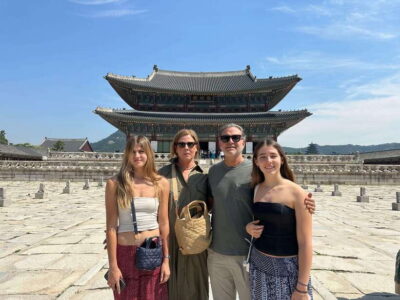
Seoul Highlights: Gyeongbok Palace, Insadong & N Seoul Tower
Read our review →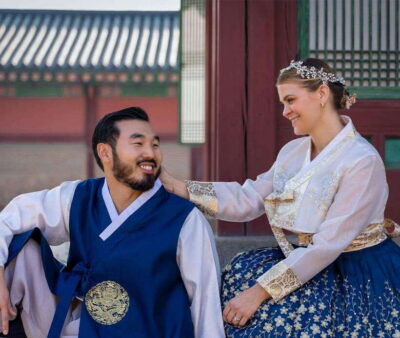
Seoul City Half Day Tour-Gyeongbok Palace Guard Changing Ceremony
Read our review →
Browse the lists this tour appears in