
Reviewed · SEOUL MARKET TOURS
Cook 3 Authentic Korean Dishes with Local Market Tour
Mangwon Market is more than a shopping stop on this Seoul cooking class. Jomin uses the walk to introduce ingredients you’ll cook with later, so the market visit gives the meal a welcome sense of place. Back at the studio, you make three dishes yourself rather than watch a chef do all the work.
I especially like the market-to-kitchen format, which connects unfamiliar ingredients to the finished dishes, and the individual cooking stations, which give you room to follow each step at your own pace. You also take home a professionally designed recipe book, a useful souvenir if you want to recreate the meal.
One thing to consider: the class takes about three and a half hours, and the menu can vary. The class is described as a maximum of four people, though the activity information also gives a maximum of 11, so ask about the expected group size if that matters to you.
What Makes This Class Worth Your Time
- Start at Mangwon Station, then walk through Mangwon Market. Meet at Exit 2, where Jomin introduces local ingredients and gives you a chance to try street food.
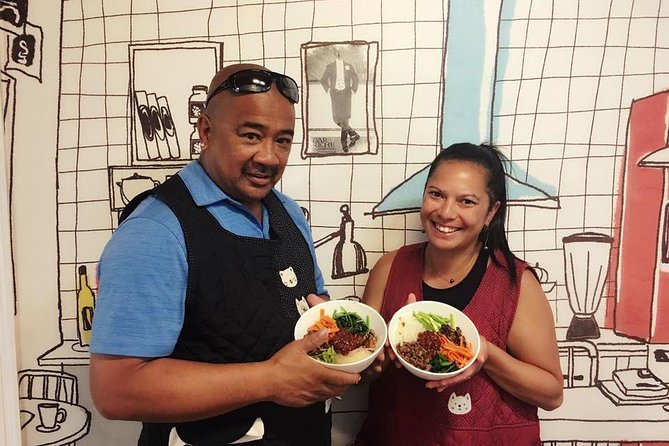
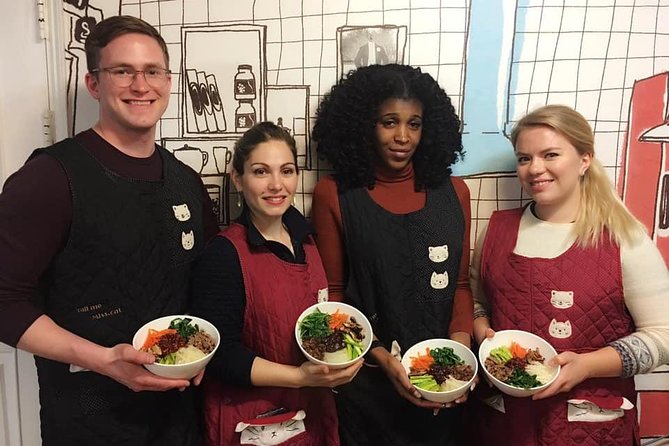
- Cook three dishes yourself. This is a hands-on class with a personal table and cooker, not a demonstration.
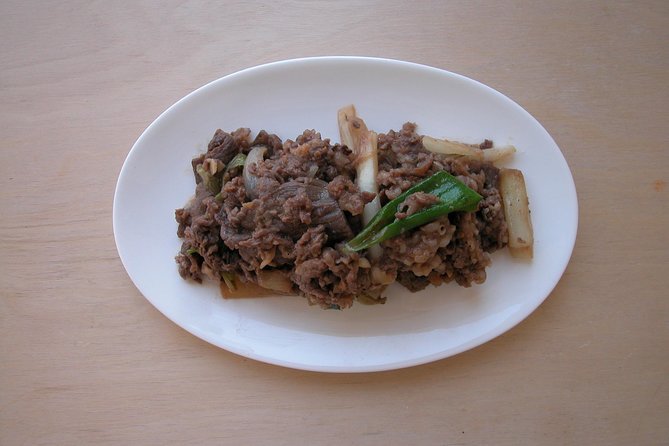
- Expect a menu that can change. Dishes may include soft tofu stew, bibimbap, bulgogi, kimchi stew, japchae, or stir-fried pork.
- Get help as you cook. Jomin gives clear, step-by-step instructions and can accommodate vegetarian, vegan, and other dietary needs.
- Eat what you make, then take home recipes. The meal is part of the class, and you can take leftovers with you.
- Allow three and a half hours. Choose a lunch or dinner session and check the group size if you want a particularly small class.
From Mangwon Station Into the Market
The class begins at Mangwon Station, Line 6, Exit 2. From there, Jomin leads the walk to Mangwon Market, a working neighborhood market where food is part of daily life, not a display arranged for visitors. You’ll see ingredients up close before using some of them at the stove.
This short walk helps make the cooking session more meaningful. Rather than meet a bowl of tofu stew as an unfamiliar recipe, you can connect it to the tofu, seafood, vegetables, and seasonings you saw in the market. Jomin explains ingredients used in class and shares context about Korean food customs. There’s also time to taste street food and, in some cases, buy something that catches your eye.
The market is a real public space, so its stalls and pace may change with the day. One class has gone ahead during Chuseok even though some stalls were closed. That’s worth keeping in mind if your visit falls on a holiday: the walk can still offer a useful introduction, but you shouldn’t expect every shop to be open.
This is not a long market tour, and it isn’t meant to cover every corner. Its value is in the practical details: seeing ingredients before cooking with them, asking what they are, and learning how they fit into Korean food. If you enjoy food markets, that context is a welcome part of the class rather than an add-on.
More market tours in Seoul:
- Seoul: Gyeongbok Palace, Bukchon Village, and Gwangjang Tour
★ 4.9 · 2,321 reviews - Seoul Street Food Market Tour
★ 5.0 · 1,226 reviews - Seoul: Gyeongbok Palace, Bukchon Village, and Gwangjang Tour
★ 5.0 · 1,044 reviews
A Personal Station, Not a Cooking Show
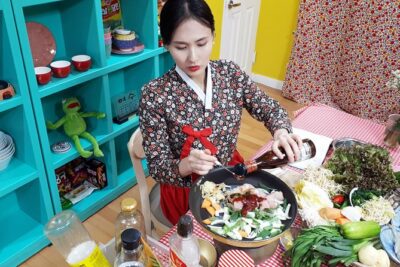
After the market, you return to Jomin’s cooking studio. The setup is clean and organized, with fresh ingredients and a personal cooking table and cooker for each participant. That matters if you’re new to Korean cooking: you can follow along by doing each task yourself, while Jomin moves between students to guide the work.
The lesson is designed for different skill levels. You don’t need to arrive with cooking experience, and the instructions are described as clear and manageable for beginners. More confident cooks still get something from the ingredient explanations and the chance to learn recipes they may not know. One useful detail from the class format is that the meal is prepared in stages, so you aren’t simply handed a recipe and left to figure out the timing alone.
Expect active participation. You’ll handle ingredients, prepare the dishes, and use your own cooker. The pace may feel more structured than a casual cooking-at-home session, but that structure helps keep three dishes on track within the time available. Jomin is also described as a strict chef by one participant, which is a fair reminder that this is a lesson, not just a social meal. If you like clear instructions and a well-run class, that should suit you. If you prefer to improvise freely, you may need to save the experimentation for your own kitchen.
Three Korean Dishes, With Room for Variation
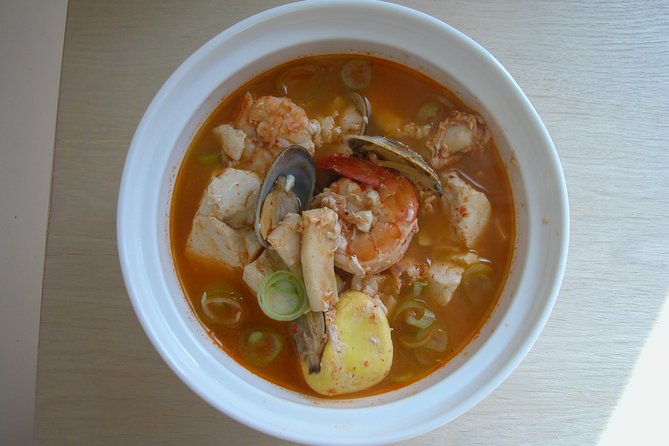
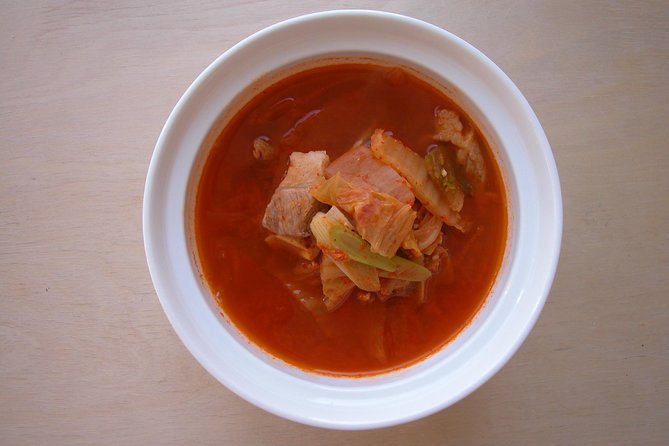
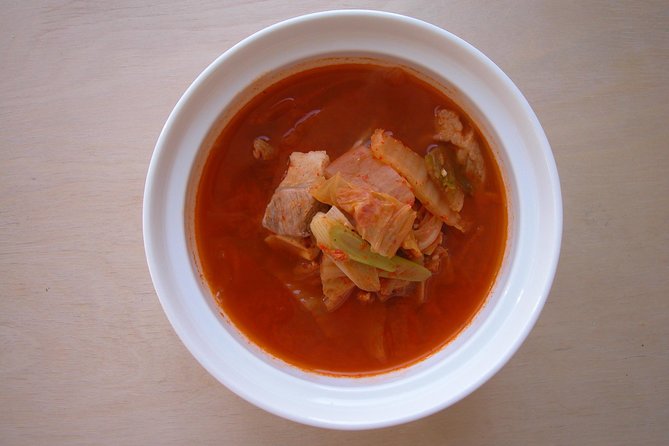
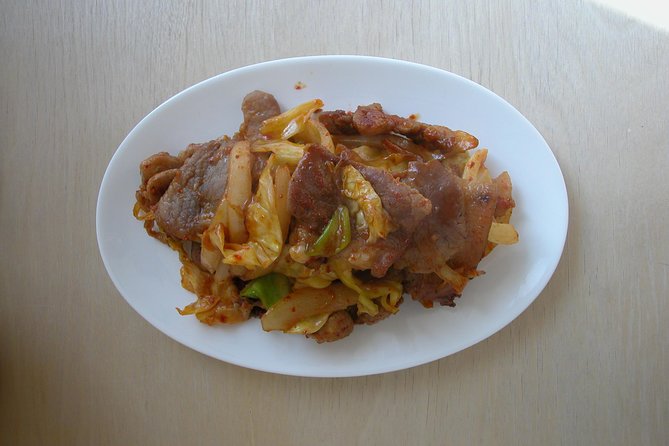
The menu may include soft tofu stew, bibimbap, bulgogi, kimchi stew, japchae, or stir-fried pork. The exact three dishes can vary, so don’t book expecting a guaranteed set menu unless you confirm it before the class. A commonly described combination is sundubu jjigae, or soft tofu stew, bibimbap, and bulgogi.
These dishes make a useful introduction to different parts of Korean cooking. A stew offers a lesson in broth and seasoning. Bibimbap brings together rice and prepared toppings, while bulgogi introduces marinated beef. Other possible dishes, such as japchae or kimchi stew, offer a different balance of ingredients and methods. The point is not to master an entire cuisine in one afternoon; it’s to leave with a few dishes you can recognize, prepare, and talk about.
The class also gives you a chance to ask about ingredients that may be unfamiliar. Depending on the menu, you might work with seafood, tofu, anchovies, prawns, or local vegetables. One class included making stock from scratch, which shows how the lesson can go beyond simply combining pre-measured ingredients. The specific details will depend on the dishes prepared that day.
When the cooking is done, you sit down to eat what you made. That shared meal gives the class a natural finish and lets you taste how the dishes work together. If you can’t finish everything, take-home containers for leftovers have been provided in class. It’s a practical touch, especially when three courses add up to a generous meal.
What You Learn Alongside the Recipes
The strongest part of this experience is the link between food and context. Jomin doesn’t just tell you what to chop; she explains the ingredients and the food culture around them. Questions about kimchi, banchan, or what you’re seeing at the market fit naturally into the lesson.
The recipe book extends that learning beyond the class. It includes the dishes you prepare as well as other recommended favorites, so you leave with more than a few snapshots of your cooking station. If you enjoy trying recipes at home, the book is a practical part of the value, not a decorative extra.
You also get a chance to learn by tasting. The market walk may include street food samples, while the studio meal lets you compare the flavors of the dishes you have just made. The experience is especially useful if you’re still getting your bearings with Korean food. You can ask questions in a small setting, then see how ingredients become a complete meal.
More shopping tours in Seoul:
- Local Home Korean Cooking Class & Market Adventure in Seoul
★ 5.0 · 1,024 reviews - Seoul: Night Market Food Tour with Local Guide
★ 4.9 · 943 reviews - Downtown Seoul Guided Food & Market Tour with 8+ Local Tastings
★ 5.0 · 580 reviews - Seoul: Korean Cooking Class at a Local Home and Market Tour
★ 5.0 · 348 reviews
Timing, Group Size, and Dietary Needs
Plan for about three hours and 30 minutes from meeting to return at Mangwon Station. That’s enough time for the market walk, cooking, and meal, but it will take a substantial part of your day. Choose the lunch or dinner class that fits your plans, and avoid scheduling a tight commitment immediately afterward.
The class is promoted as a maximum of four people, a size that can make it easier to ask questions and get individual help. However, the additional activity details state a maximum of 11 travelers. Because those figures don’t match, contact the provider before booking if the precise group size is important to you.
Vegetarian and vegan options are available, and the instructor has accommodated other food restrictions. Tell the provider about your needs in advance rather than waiting until you arrive. The menu depends on the class, and that advance notice gives the instructor a better chance to plan a suitable meal.
The class requires a minimum number of participants and may be rescheduled or canceled if that minimum is not met. The stated minimum is four. If the provider cancels for that reason, you’re offered another date or experience, or a full refund. You can cancel for a full refund up to 24 hours before the start time; changes or cancellations inside that period are not accepted.
Is $79 a Fair Price?
At $79 per person, this costs more than simply ordering a meal in Seoul. But you’re paying for a three-and-a-half-hour activity that combines a guided market visit, ingredients, instruction, a meal, and a take-home cookbook. If you want to learn rather than just eat, those parts make the price easier to justify.
The individual station is also part of the value. You’re not standing at the edge of a demonstration or sharing one pan with a large group. You get to cook the dishes yourself, with help when needed, then sit down to eat them. The market walk adds a local food perspective that a studio-only class would lack.
It’s less compelling if your main goal is a quick, inexpensive meal, or if you already know the recipes and don’t care about the market visit. The value is strongest for curious eaters, beginner cooks, and anyone who wants a hands-on way to understand Korean ingredients. A 4.9 rating from 231 reviews and a 98% recommendation rate suggest the experience has been well received, though the menu and group size are still details worth confirming.
Who Should Book This Seoul Cooking Class?
I’d consider this a good fit if you like food enough to ask questions, but don’t need to be an expert in the kitchen. The personal stations and step-by-step instruction make it approachable for beginners, while the market walk gives confident cooks a reason to come along too. It also works well for a pair or family member with different cooking interests: one person can be keen on the stove, while the other enjoys the market and the meal.
Book it if you want an activity that combines eating with learning. The three dishes, market visit, and recipe book give you several ways to remember the experience after you leave Seoul. It’s also a sensible choice early in a trip, when learning the names and uses of common ingredients can make later meals more rewarding.
Look elsewhere if you want a short activity, a guaranteed specific menu, or a class with a confirmed group size of four or fewer. The published group-size details conflict, and the menu can change. If those points are not deal-breakers, this is a practical, tasty way to spend an afternoon or evening in Seoul.
FAQ
Where does the class meet?
Meet Jomin at Mangwon Station, Line 6, Exit 2, in Seoul. The activity ends back at the meeting point.
How long does the experience last?
The class lasts about three hours and 30 minutes, including the market walk, cooking, and meal.
Which dishes will I cook?
You’ll prepare three dishes. Possible options include soft tofu stew, bibimbap, bulgogi, kimchi stew, japchae, and stir-fried pork. The exact menu may vary.
Is this a demonstration or a hands-on class?
It’s hands-on. You have your own cooking table and cooker, and prepare the dishes with Jomin’s guidance.
Are vegetarian or vegan options available?
Yes. Vegetarian and vegan options are available. Tell the provider about dietary needs in advance.
How many people are in the class?
The class is described as having a maximum of four people, but the activity details also state a maximum of 11 travelers. Confirm the expected group size with the provider if this is important to you.
Is a cookbook included?
Yes. You take home a professionally designed recipe book with the dishes you made and other recommended recipes.
Can I choose lunch or dinner?
Yes. You can choose between a lunch class and a dinner class.
What happens if the class does not meet its minimum number?
The class may be rescheduled or canceled if the minimum number of participants is not met. If it is canceled for that reason, you’ll be offered another date or experience, or a full refund.
Latest reviews from Seoul
- From Seoul: Hwacheon Ice Fishing and Lighting Festival Tour★ 4.5 · 4 reviews
- Unique Native Experience : Han River Picnic, Board game, BBQ★ 5.0 · 3 reviews
- You’re Invited to Our Home in Seoul: The Only Cooking Class!★ 5.0 · 8 reviews
- Seoul: Gangneung BTS K-Pop & K-Drama Filming Locations Tour★ 4.6 · 14 reviews
- Yun Korean Cooking Class in Seoul★ 5.0 · 6 reviews
- 2-Hour Private Kayaking and Paddleboarding Experience in Hanriver★ 5.0 · 3 reviews
- Day Trip to Yongin Daejanggeum and Korean Folk Village from Seoul★ 4.0 · 9 reviews
- K-Pop Making Class with a Producer!★ 5.0 · 3 reviews
Seoul Market Tours, compared.

Gyeongbok Palace, Bukchon Village, and Gwangjang Tour
Read our review →
Local Home Korean Cooking Class & Market Adventure in Seoul
Read our review →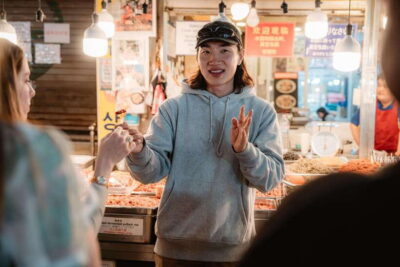
Downtown Seoul Guided Food & Market Tour with 8+ Local Tastings
Read our review →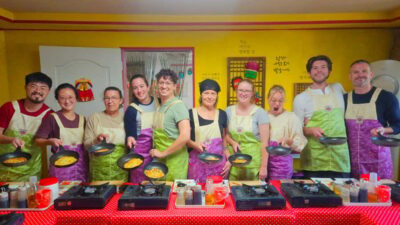
Korean Cooking Class at a Local Home and Market Tour
Read our review →
Seoul Night Palace & Market Food Tour with Vehicle
Read our review →
Korean Palace and Market Tour in Seoul Including Insadong and Gyeongbokgung Palace
Read our review →Browse the lists this tour appears in