
Reviewed · BUKCHON HANOK VILLAGE TOURS
Tour Seoul’s oldest district with a storyteller from Bukchon
Bukchon’s alleys hold more than a pretty row of hanok roofs. With Dong, a storyteller born and raised here, you follow the district’s changing role in Korean life, from royal politics to the modern city. I like that the tour connects major events to specific streets and buildings, and that Dong’s memories add a personal view of how the neighborhood has changed.
The main trade-off is that this is a story-led walk, not a tour built around lengthy visits inside attractions. The listed stops are brief, and you’ll need to be comfortable walking for two to three hours. Children 12 and under may find the storytelling challenging, and the tour may be canceled if fewer than two people join.
What makes this Bukchon walk worth your time
- A guide with local roots: Dong grew up in Bukchon, so the route includes personal memories of a neighborhood that has changed quickly.
- History beyond the hanok roofs: The stories range from Joseon royal power and feng shui to Korea’s independence movement and modern politics.
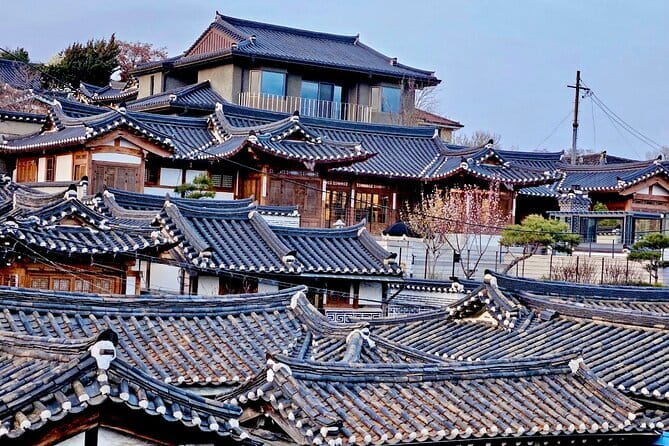
- A mix of famous and quieter sites: You’ll pass Bukchon Hanok Village and Choong Ang High School, as well as a historic well and the Bukchon Traditional Culture Center.
- A relaxed pace: The walk is designed around storytelling, with guests describing it as unhurried rather than a race between landmarks.
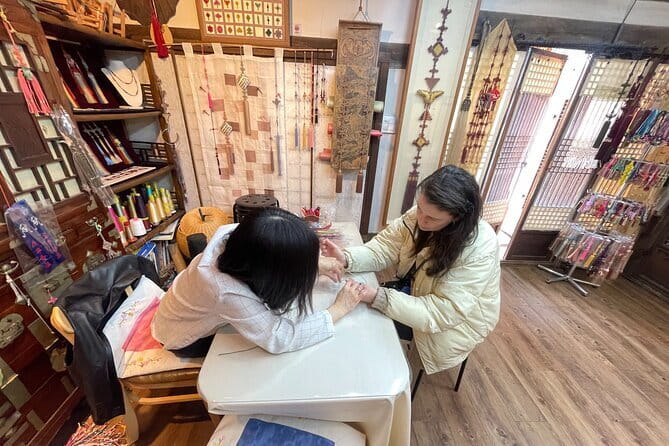
- An optional hands-on extra: The Plus Tour includes a traditional Korean handicraft experience, with hopae tags mentioned as a craft activity.
- A clear morning start: Meet at Anguk Station Exit 4 at 10 am. The tour finishes elsewhere, so plan to continue your day from the end point rather than returning to the station.
Starting at Unhyeongung, where royal history turns personal
The first stop is Unhyeongung, where the tour opens with a story about an 11-year-old royal boy who became Joseon’s 26th king after the death of a king without a crown prince. For the following decade, the boy’s father ruled from here. It is a strong start because it frames Bukchon not simply as a preserved old quarter, but as a place where decisions about the country were made.
You’ll have about 20 minutes at this stop. That is enough time for a focused account, but it is not a long palace visit. If you want to explore Unhyeongung at length, allow extra time before or after the tour. The value here is the guide’s explanation of why this place mattered, not an extended independent tour of its rooms.
Dong’s approach is rooted in storytelling. Rather than leave you with a list of dates, he links the neighborhood to the people who lived and exercised power there. That suits you if you like history delivered through character and place. If you prefer a formal lecture or detailed architectural analysis at every stop, the short format may feel light.
More Bukchon tours in Seoul:
- Seoul: Gyeongbok Palace, Bukchon Village, and Gwangjang Tour
★ 4.9 · 2,321 reviews - Seoul City Sightseeing Tour Including Gyeongbokgung Palace, N Seoul Tower, and Namsangol Hanok Village
★ 5.0 · 1,423 reviews - Seoul: Gyeongbok Palace, Bukchon Village, and Gwangjang Tour
★ 5.0 · 1,044 reviews
Reading Bukchon’s architecture at Cafe Onion Anguk
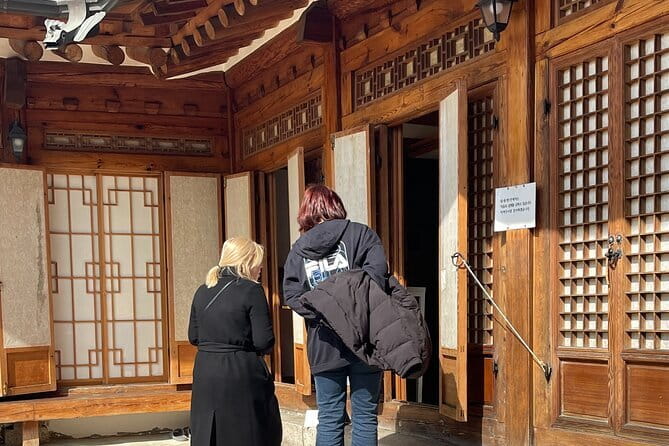
At Cafe Onion Anguk, you’ll pause for about 10 minutes to look at buildings from three different eras: roughly 600, 100, and 50 years old. The point is to notice how layers of Seoul’s past sit together in the same district, not just to admire a single traditional style.
The cafe itself is known as a stop along the route, but coffee and tea are not included. Treat it as an architectural pause rather than a scheduled café break. If you want to buy a drink, that will be an extra expense and may take time away from the walk.
This is one of the tour’s useful habits: it encourages you to look closely at everyday surroundings. Bukchon’s appeal can be reduced to rooflines and photo stops if you wander without context. Dong’s explanations help you connect the buildings to the neighborhood’s changing status and residents.
Seeing hanok through the lives of the yangban
The Bukchon Traditional Culture Center offers a short introduction to hanok homes associated with the yangban, the ruling class that commonly lived in Seoul. You’ll spend about 10 minutes here, learning to read traditional homes as part of a social order, rather than as attractive backdrops.
That context matters. A hanok is not just a recognizable roof and wooden frame; it reflects how people lived and how status shaped domestic space. The stop is brief, so think of it as a primer for the surrounding streets. You are not promised a long architectural workshop or an extended visit inside a residence.
Bukchon’s houses have also changed with the district. The tour later addresses the person who altered the area’s appearance in the 1920s and 1930s, giving you a way to think about how today’s traditional neighborhood took shape. That is a welcome counterpoint to the idea that the village has remained untouched for centuries.
At Seokjeong Boreum Well, local memory meets history
At Seokjeong Boreum Well, Dong tells stories about wells that people may remember from childhood and considers what historical evidence has revealed about them. You’ll spend around 10 minutes here.
A well is a modest landmark, but that is exactly why this stop can work. It shifts attention away from palaces and grand houses toward the practical features that shaped everyday life. The tour description does not promise a long archaeological account, so expect a compact story rather than a technical lesson.
This kind of detail is a good fit for Dong’s local perspective. Several people who joined the walk valued hearing what Bukchon was like when he was growing up, before rapid change altered the neighborhood. A well can become a point of entry into that lived experience, even if the stop itself is short.
More Seoul tours and experiences:
- Best DMZ Tour Korea from Seoul (Red Suspension Bridge Optional)
★ 5.0 · 41,422 reviews - DMZ Tour: 3rd Tunnel, Option(Suspension Bridge, Boat) from Seoul
★ 5.0 · 21,373 reviews - DMZ tour south Korea from Seoul (NK experience hall, defector)
★ 5.0 · 20,599 reviews - Seoul: DMZ Tour with Optional Suspension Bridge
★ 4.8 · 5,277 reviews
Choong Ang High School and the stories behind familiar images
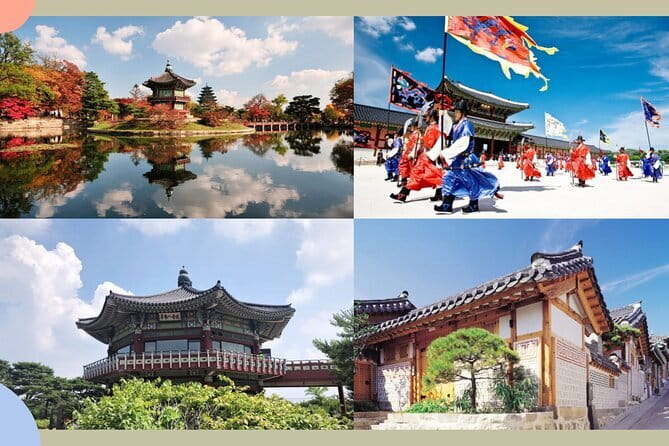
Choong Ang High School is known as a filming location for dramas and music videos, including Winter Sonata. The tour gives the site about 10 minutes, but the focus is not only screen fame. Dong also explains its historic role and the part it played in shaping modern Korea.
That combination gives the stop more weight than a quick photo opportunity. You’ll hear how a place familiar from popular culture also belongs to a larger national story, including the history of Korea’s independence movement. The school is still a school, so approach it as a historic site and respect its working environment.
If you came mainly for drama locations, this is a pleasant addition. If you came to understand Seoul beyond its modern entertainment image, the historical layer is the more valuable part. The tour balances both without making the stop the center of the day.
Samcheongdong, Bukchon, and the pull of feng shui
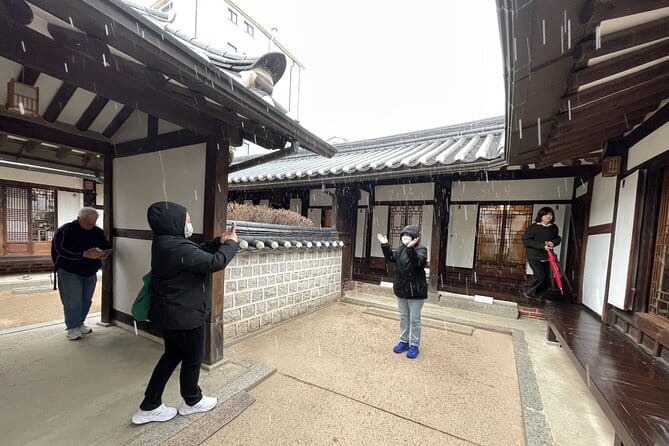
The walk through Samcheongdong and Bukchon takes about 20 minutes and looks at the rise and fall of politicians and business figures who once held land in the district. Bukchon was selected as a capital area according to principles of feng shui, and the guide explains why this was seen as an auspicious place.
Feng shui is one of the subjects that can make this tour especially interesting. It gives you a different lens on why power gathered in particular places and how people understood the relationship between land, prosperity, and political authority. You do not need prior knowledge of the subject; the point is to see how beliefs about place affected choices and status.
This section also puts Bukchon’s geography into context. The district was not simply a scenic residential pocket. Its location and reputation made it important to powerful people, and the stories of those who gained or lost influence give the streets a political edge.
Bukchon Hanok Village and the neighborhood’s changing face
The final listed stop is Bukchon Hanok Village, where Dong explains the person who changed the district’s appearance during the 1920s and 1930s. You’ll spend about 15 minutes here, bringing together the tour’s interest in traditional homes, social history, and the forces that shaped the Bukchon you see now.
The stop is useful because it complicates the picture of a perfectly preserved old Seoul. The neighborhood has a history of change, and what looks timeless from a distance has also been shaped by people and events in the recent past. Dong’s own memories add another layer: he can speak not only about earlier centuries, but about growing up in a place that has continued to transform.
The tour ends at a different location from its starting point. The exact end point is not specified here, so keep your plans flexible and check the final details before arranging a tight connection or a timed booking afterward.
The pace, format, and what your fare covers
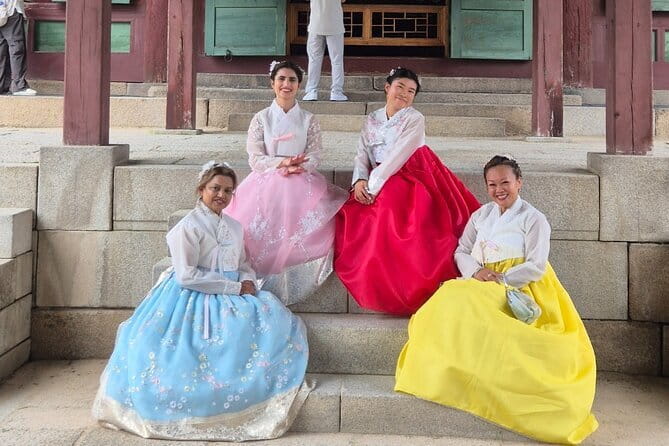
The walk lasts about two to three hours. The listed stop times add up to roughly 95 minutes, which leaves time for moving between locations and hearing the stories along the way. It is described as a private activity, meaning only your group participates, but the tour may be canceled if fewer than two people join. Confirm how that minimum applies to your booking.
At $39.20 per person, the price is reasonable if you want more than a self-guided stroll and value a local voice. You are paying for Dong’s storytelling and the time he spends connecting Bukchon’s landmarks to its broader past. The price does not include coffee, tea, personal expenses, insurance, or hotel pickup.
A traditional handicraft experience is included with the Plus Tour only. A hopae tag, a traditional name tag, is mentioned as an activity, but check the option details before booking if making one is important to you. The standard tour is still centered on walking and stories.
The meeting point is Anguk Station Exit 4, with a 10 am start. The route is near public transportation, but you will need to make your own way there and onward from the ending point. Moderate physical fitness is recommended. Wear comfortable walking shoes and leave room in your schedule for a walk that may last closer to three hours.
Who will get the most from Dong’s storytelling
This tour suits you if you enjoy history told through people, neighborhoods, and personal recollections. It is especially useful early in a Seoul visit: you’ll get an introduction to Bukchon’s royal, political, and residential past, along with local tips that can help you decide what else to explore.
It also works well if you want a quieter counterpoint to Seoul’s modern districts. One person who joined the walk contrasted Bukchon with a stay in Gangnam, and that is a useful way to think about the experience. You are moving from a contemporary city setting into an older part of Seoul, where the story is carried by streets and buildings rather than high-rise landmarks.
The tour is not the best fit if you want extensive interior visits, a fast-paced checklist, or a child-focused activity. It is strongly recommended for people aged 12 and older; children 12 and under may find the storytelling walk challenging. The handicraft option may add variety, but it is available only with the Plus Tour.
Dong’s background as a filmmaker and university screenwriting professor helps explain the tour’s emphasis on narrative. His personal connection is the bigger draw: he grew up in Bukchon and can link the past to his own experience of the neighborhood’s changes. The walk is designed to make you listen, notice, and ask questions.
Should you book the Bukchon Storytelling Tour?
Book it if you want Bukchon explained by someone who grew up there, and if you prefer a relaxed walk with historical context to a quick pass through the hanok lanes. The strongest reasons to go are Dong’s personal perspective, the range of subjects, and the way less obvious places such as a well and a school fit into a larger account of Seoul.
Skip it if your priority is a long visit inside monuments, a family outing for young children, or a route with a guaranteed finish time and location. At $39.20, it offers good value for a private, story-focused outing, provided the minimum of two participants is met and you are comfortable with a two-to-three-hour walk.
FAQ
Where does the tour start?
It starts at Anguk Station Exit 4 in Unni-dong, Jongno District, Seoul. The start time is 10 am.
How long does the tour last?
Allow about two to three hours. The tour ends at a different location from where it begins.
Is the tour private?
Yes. The activity is private, so only your group participates. The tour may be canceled if fewer than two people join.
Is the tour suitable for children?
The tour is strongly recommended for people aged 12 and older. Children aged 12 and under may find the storytelling walk challenging.
What is included in the price?
The tour includes a professional guide from Bukchon. A traditional Korean handicraft experience is available with the Plus Tour only.
Can I cancel for a refund?
You can cancel up to 24 hours before the experience for a full refund.
Latest reviews from Seoul
- From Seoul: Hwacheon Ice Fishing and Lighting Festival Tour★ 4.5 · 4 reviews
- Unique Native Experience : Han River Picnic, Board game, BBQ★ 5.0 · 3 reviews
- You’re Invited to Our Home in Seoul: The Only Cooking Class!★ 5.0 · 8 reviews
- Seoul: Gangneung BTS K-Pop & K-Drama Filming Locations Tour★ 4.6 · 14 reviews
- Yun Korean Cooking Class in Seoul★ 5.0 · 6 reviews
- 2-Hour Private Kayaking and Paddleboarding Experience in Hanriver★ 5.0 · 3 reviews
- Day Trip to Yongin Daejanggeum and Korean Folk Village from Seoul★ 4.0 · 9 reviews
- K-Pop Making Class with a Producer!★ 5.0 · 3 reviews
Bukchon Hanok Village Tours, compared.
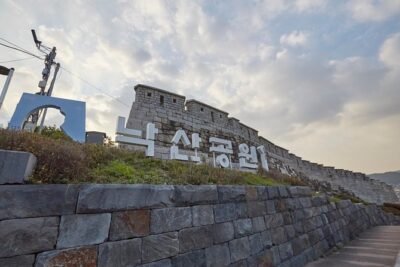
Gyeongbok Palace, Bukchon Village, and Gwangjang Tour
Read our review →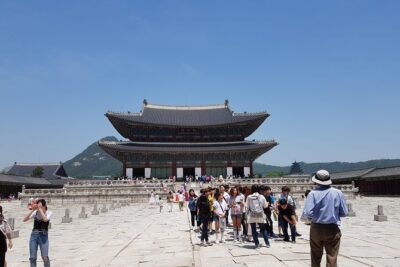
Seoul City Sightseeing Tour Including Gyeongbokgung Palace, N Seoul Tower, and Namsangol Hanok Village
Read our review →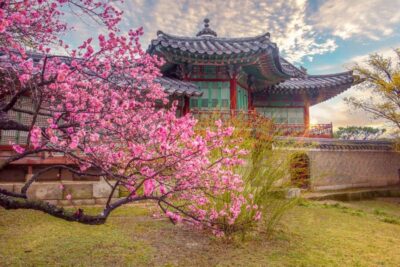
Gyeongbok Palace and Bukchon Hanok Walking Tour
Read our review →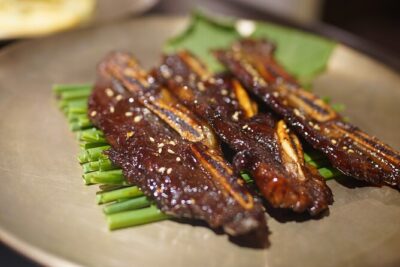
Royal Seoul Cooking Class in a 100-Year-Old Hanok
Read our review →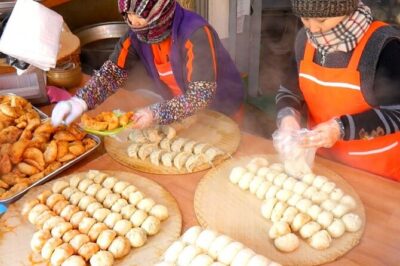
Afternoon Seoul: Hanok Vibes, Netflix Street Food & N Seoul Tower
Read our review →
Seoul Morning Tour: Seoul Tower, Namsan Hanok Village, The War Memorial of Korea
Read our review →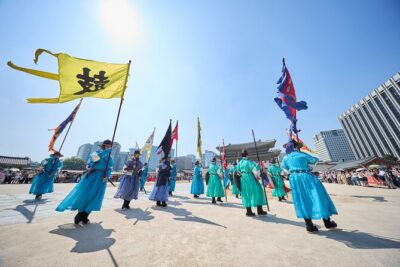
Seoul Royal Palace,Bukchon Hanok Village & Gwangjang Market Feast
Read our review →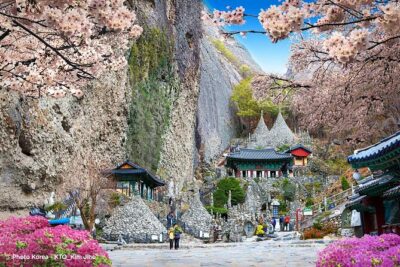
Browse the lists this tour appears in